


Colonoscopy utilization and outcomes in older adults: Data from the New Hampshire Colonoscopy Registry
Supporting Files

-
3-2022
-

File Language:
English
Details
-
Alternative Title:J Am Geriatr Soc
-
Personal Author:
-
Description:Background:
Colonoscopy is frequently performed in older adults, yet data on current use, and clinical outcomes of and follow-up recommendations after colonoscopy in older adults are lacking.
Methods:
This was an observational study using the New Hampshire Colonoscopy Registry of adults age ≥65 years undergoing colonoscopy for screening, surveillance of prior polyps, or evaluation of symptoms. The main outcomes were clinical findings of polyps and colorectal cancer and recommendations for future colonoscopy by age.
Results:
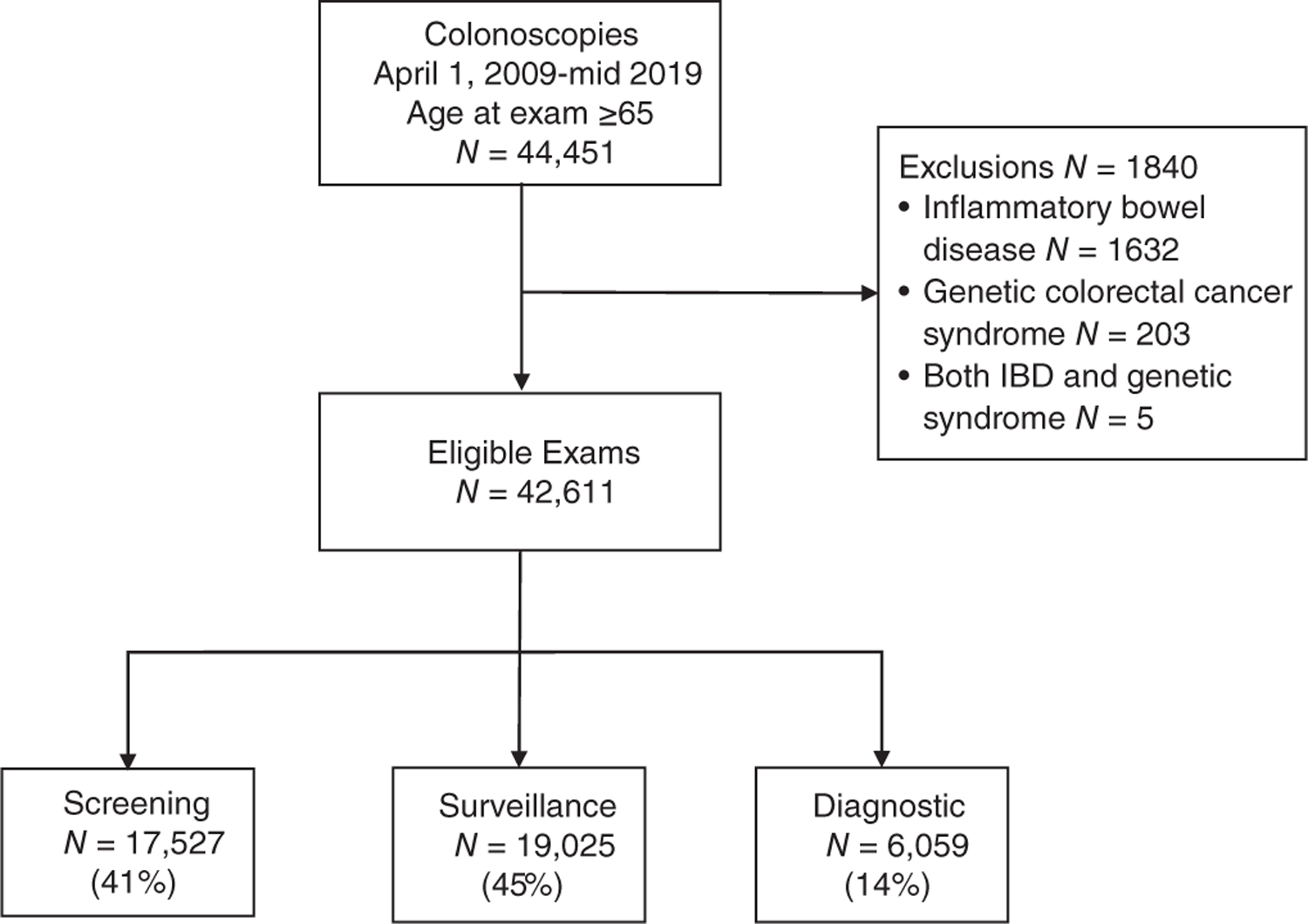
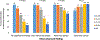
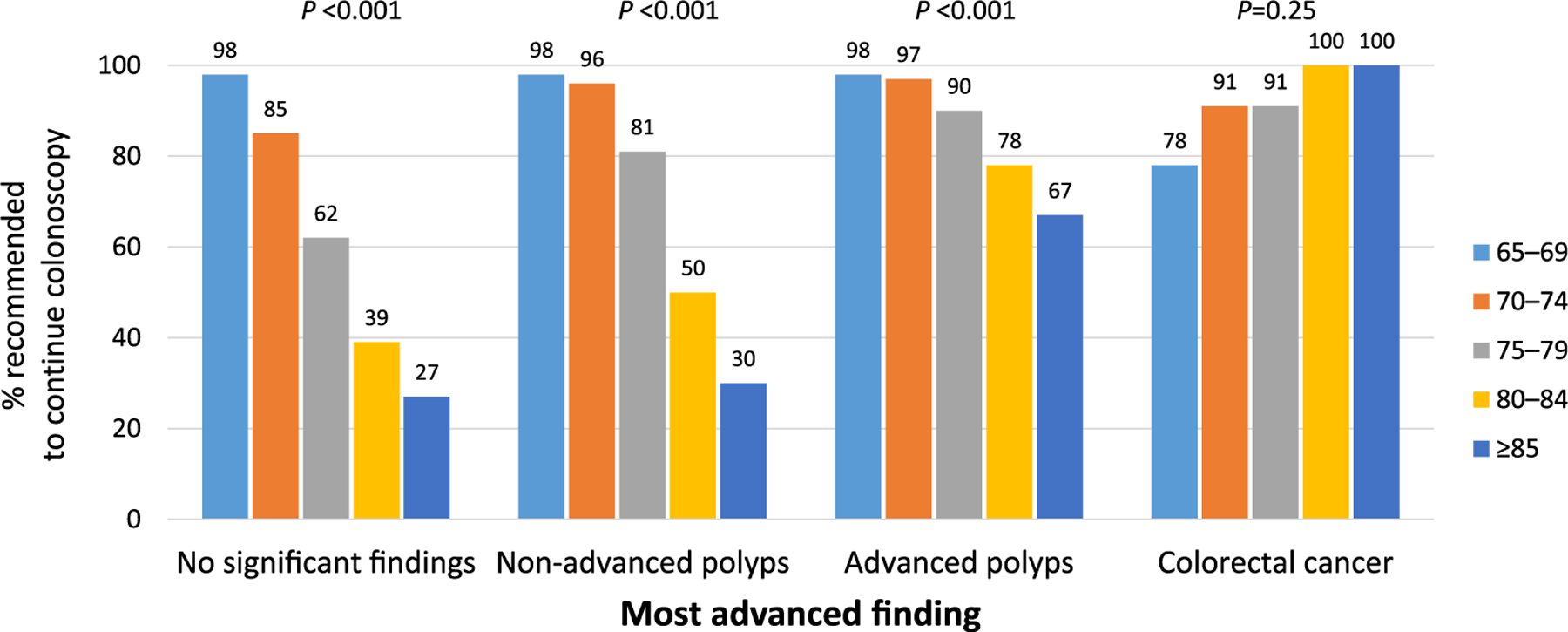
Between 2009 and 2019, there were 42,611 colonoscopies, of which 17,527 (41%) were screening, 19,025 (45%) surveillance, and 6059 (14%) for the evaluation of symptoms. Mean age was 71.1 years (SD 5.0), and 49.3% were male. The finding of colorectal cancer was rare (0.71%), with the highest incidence among diagnostic examinations (2.4%). The incidence of advanced polyps increased with patient age from 65–69 to ≥85 years for screening (7.1% to 13.6%; p = 0.05) and surveillance (9.4% to 12.0%; p < 0.001). Recommendations for future colonoscopy decreased with age and varied by findings at current colonoscopy. In patients without any significant findings, 85% aged 70–74 years, 61.9% aged 75–79 years, 39.1% aged 80–84 years, and 27.4% aged ≥85 years (p < 0.001) were told to continue colonoscopy. Among patients with advanced polyps, 97.2% aged 70–74 years, 89.6% aged 75–79 years, 78.4% aged 80–84 years, and 66.7% aged ≥85 years were told to continue colonoscopy (p < 0.001).
Conclusions:
Within this comprehensive statewide registry, clinical findings during colonoscopy varied by indication and increased with age. Overall rates of finding advanced polyps and colorectal cancer are low. Older adults are frequently recommended to continue colonoscopy despite advanced age and insignificant clinical findings on current examination. These data inform the potential benefits of ongoing colonoscopy, which must be weighed with the low but known potential immediate and long-term harms of colonoscopy, including cost, psychological distress, and long lag time to benefit exceeding life expectancy.
-
Subjects:
-
Source:J Am Geriatr Soc. 70(3):801-811
-
Pubmed ID:34859887
-
Pubmed Central ID:PMC8904292
-
Document Type:
-
Funding:5U58DP003930/CC/CDC HHSUnited States/ ; R21 CA227776/CA/NCI NIH HHSUnited States/ ; P30 CA023108/CA/NCI NIH HHSUnited States/ ; UL1 TR001086/TR/NCATS NIH HHSUnited States/ ; UL1TR001086/TR/NCATS NIH HHSUnited States/ ; U58 DP003930/DP/NCCDPHP CDC HHSUnited States/ ; 5P30CA023108/CA/NCI NIH HHSUnited States/
-
Place as Subject:
-
Volume:70
-
Issue:3
-
Collection(s):
-
Main Document Checksum:urn:sha256:a689263c22281a4ab4a06f17a15bd4fcbd16528e07d8ef86612873624b5c475e
-
Download URL:
-
File Type:
 [PDF
- 603.60 KB
]
[PDF
- 603.60 KB
]

Supporting Files


File Language:
English
ON THIS PAGE



CDC STACKS serves as an archival repository of CDC-published products including
scientific findings,
journal articles, guidelines, recommendations, or other public health information authored or
co-authored by CDC or funded partners.
As a repository, CDC STACKS retains documents in their original published format to ensure public access to scientific information.
As a repository, CDC STACKS retains documents in their original published format to ensure public access to scientific information.
You May Also Like
COLLECTION
CDC Public Access