



Changes in colorectal cancer incidence rates in young and older adults in the United States: what does it tell us about screening
Supporting Files

-
2014/02/01
-
Available in CDC Stacks on April 13, 2015, 12:00 AM
File Language:
English
Details
-
Alternative Title:Cancer Causes Control
-
Personal Author:
-
Description:Purpose
Colorectal cancer (CRC) incidence rates have increased among young adults and have decreased among older adults. We re-evaluated these trends using more recent data covering about 96 % of the United States population.
Methods
Colorectal cancer incidence rates were abstracted from the National Program of Cancer Registries and the Surveillance Epidemiology and End Results analytic files for diagnosis years 1998-2009. We report rates for young adults (age<50 years) and for older adults (age 50 years or older) by four race/ethnicity groupings. We examined CRC incidence rates by stage at diagnosis, tumor subsite, and state. We calculated the correlation between state-specific CRC incidence and prevalence of colonoscopy reported in the Behavioral Risk Factor Surveillance System.
Results
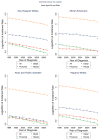
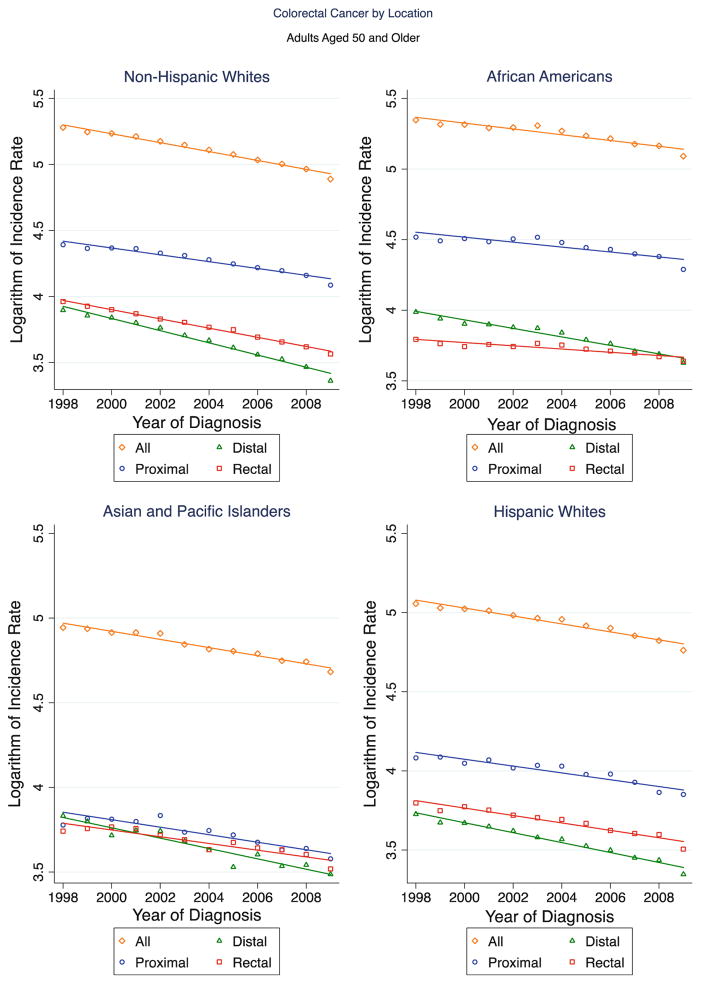
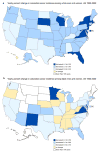
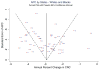
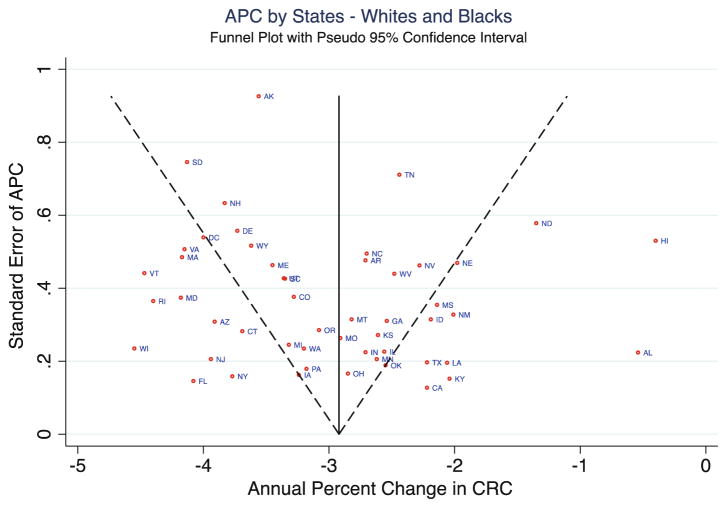
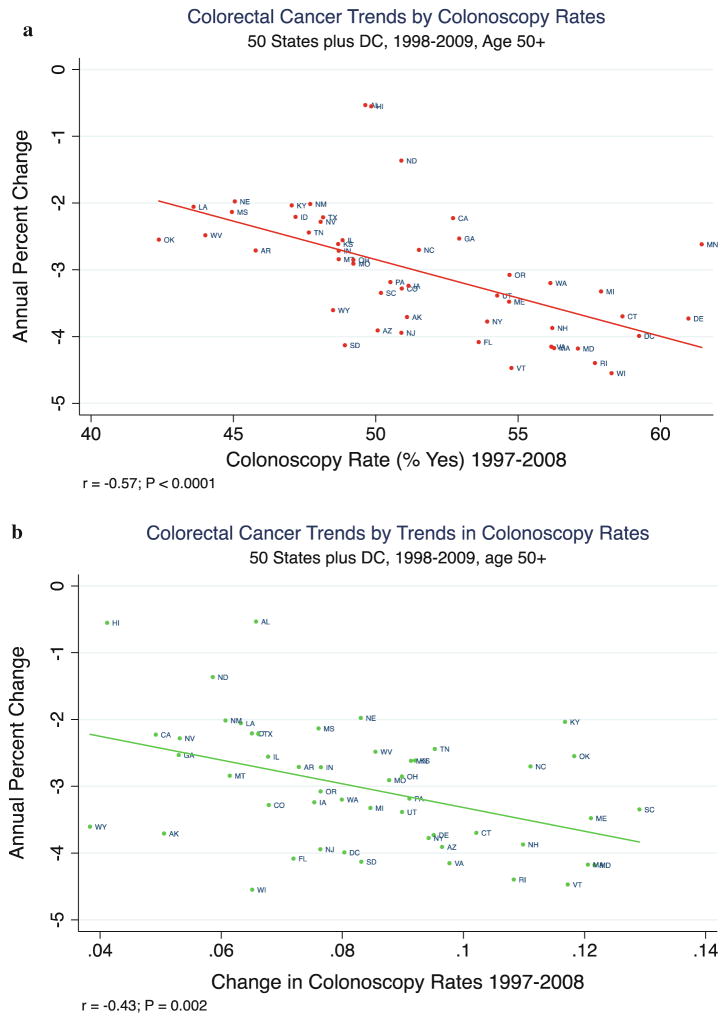
Rectal cancer incidence rates increased from 1998 through 2009 among young non-Hispanic white adults and young blacks. Among older adults, CRC incidence rates decreased among all four race/ethnicity groupings and in all states. The decline was apparent for all stages and for all subsites. States with greater decreases in CRC incidence rates had higher colonoscopy screening rates.
Conclusion
Rectal cancer is increasing among younger adults, for reasons largely unknown. Among older adults, CRC incidence continues to decrease, probably because of increasing uptake of colonoscopy screening. Decreases in CRC incidence are correlated with increased use of colonoscopy, indicating that CRC may be largely preventable through colonoscopy screening. Efforts to increase screening rates in underserved populations would help reduce health disparities associated with this type of cancer. -
Keywords:
-
Source:Cancer Causes Control. 2013; 25(2):191-201
-
Pubmed ID:24249437
-
Pubmed Central ID:PMC4394895
-
Document Type:
-
Funding:
-
Genre:
-
Volume:25
-
Issue:2
-
Download URL:
-
File Type:
 [PDF - 717.73 KB]
 -
Collection(s):
-
Main Document Checksum:urn:sha-512:83c43f3b55e0bbeb5195938c77ccc6407fc888d606685c31b8c4288589d04004fb0febb70f8bcc928eaed278388b2cfd04611132d3dcf4985c4d787200307c12
Supporting Files


File Language:
English
 Was this page helpful?
 Found an issue?


CDC STACKS serves as an archival repository of CDC-published products including
scientific findings, journal articles, guidelines, recommendations, or other public health information authored or
co-authored by CDC or funded partners.
As a repository, CDC STACKS retains documents in their original published format to ensure public access to scientific information.
As a repository, CDC STACKS retains documents in their original published format to ensure public access to scientific information.
You May Also Like
COLLECTION
CDC Public Access