


Occupational exposure to high-frequency electromagnetic fields and brain tumour risk in the INTEROCC study: An individualized assessment approach
Supporting Files

-
10 2018
-
File Language:
English
Details
-
Alternative Title:Environ Int
-
Personal Author:Vila, Javier ; Turner, Michelle C ; Gracia-Lavedan, Esther ; Figuerola, Jordi ; Bowman, Joseph D ; Kincl, Laurel ; Richardson, Lesley ; Benke, Geza ; Fleming, Sarah ; Hours, Martine ; Krewski, Daniel ; McLean, Dave ; Parent, Marie-Elise ; Sadetzki, Siegal ; Schlaefer, Klaus ; Schlehofer, Brigitte ; Schüz, Joachim ; Siemiatycki, Jack ; van Tongeren, Martie ; Cardis, Elisabeth
-
Description:Introduction:
In 2011, the International Agency for Research on Cancer evaluated the epidemiological evidence for the association between occupational exposure to radiofrequency (RF) electromagnetic fields (EMF) and cancer as inadequate, due in part to limitations in exposure assessment. This study examines the relation between both occupational RF and intermediate frequency (IF) EMF exposure and brain tumour risk in the INTEROCC multinational case-control study population (nearly 10,000 subjects), using a novel exposure assessment approach.
Methods:
Individual indices of cumulative exposure to RF and IF-EMF were assigned to study participants using a source-exposure matrix and detailed interview data on work with or nearby EMF sources, both overall and in specific exposure time windows. Conditional logistic regression models were used to investigate associations with glioma and meningioma risk.
Results:
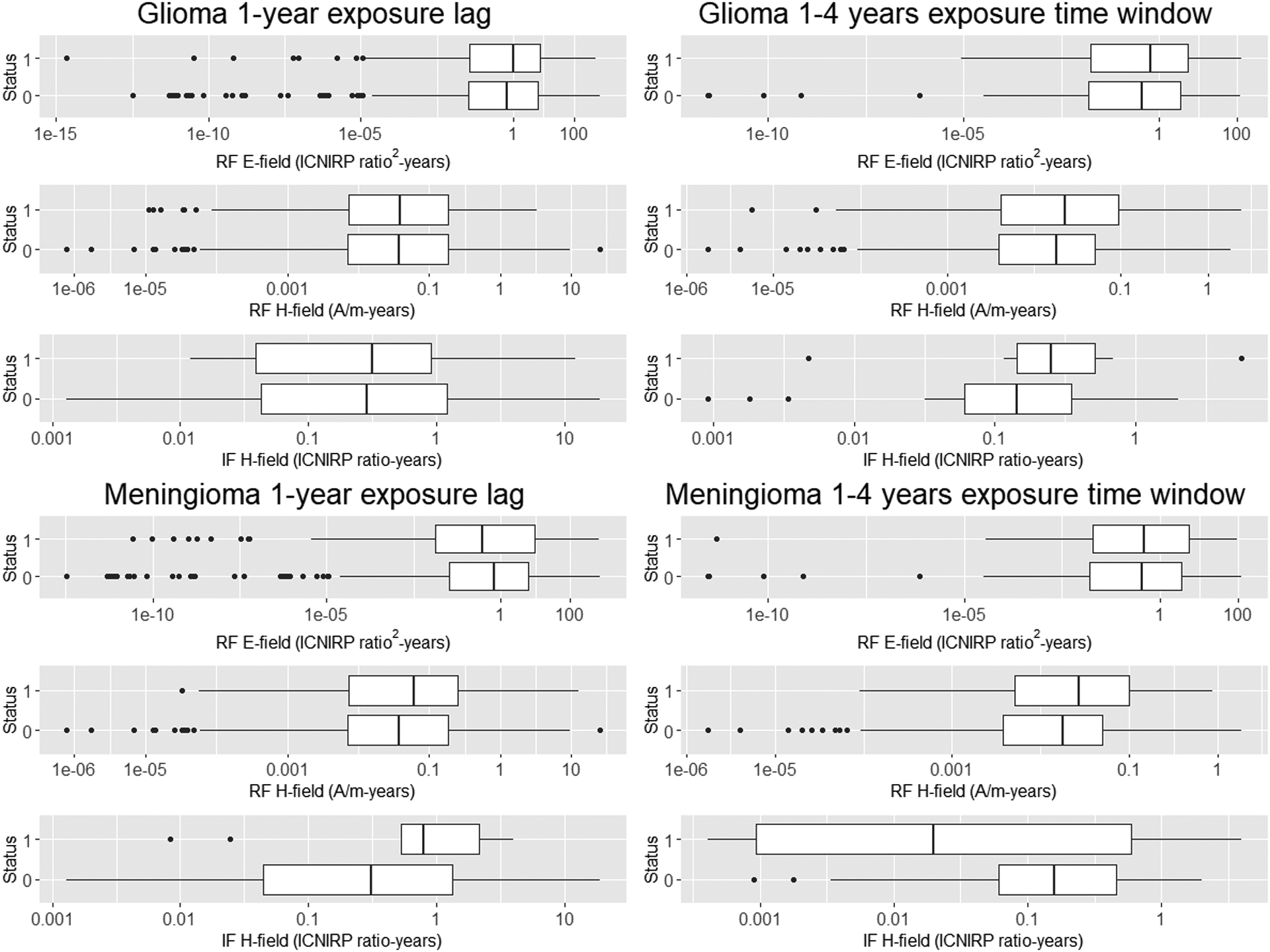
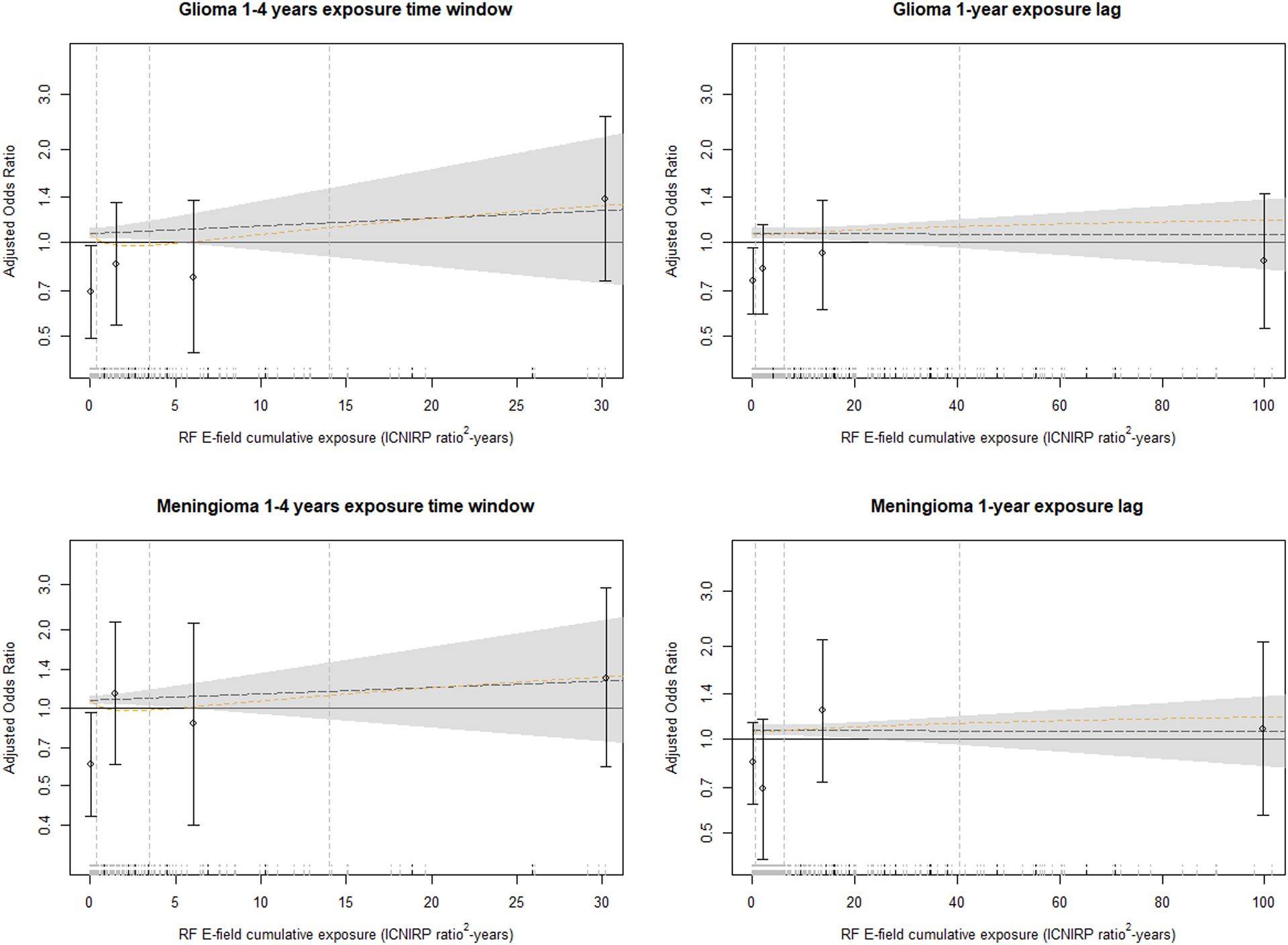
Overall, there was no clear evidence for an association between RF or IF-EMF and the brain tumours studied, with the vast majority of analyses showing no associations and in fact odds ratios (ORs) below one. The largest adjusted ORs were obtained for RF magnetic fields in the highest exposed category for the most recent exposure time window (1–4 years before the diagnosis or reference date) for both glioma (OR=1.62 (95% confidence interval (CI): 0.86, 3.01)) and meningioma (1.52 (CI: 0.65, 3.55)). Similar results were obtained using a continuous analysis.
Conclusion:
Despite the individualized approach used in this study, the largest case-control on brain tumours and EMF occupational exposures, no clear associations were identified. However, RF magnetic fields should be further investigated using more exposed participants and alternative exposure/dose metrics.
-
Subjects:
-
Source:Environ Int. 119:353-365
-
Pubmed ID:29996112
-
Pubmed Central ID:PMC8851381
-
Document Type:
-
Funding:
-
Volume:119
-
Collection(s):
-
Main Document Checksum:urn:sha256:c215b8911c75b43453f779bad8f916d7eba3327eba888476410bf8623f4fbff6
-
Download URL:
-
File Type:
 [PDF
- 909.61 KB
]
[PDF
- 909.61 KB
]
Supporting Files


File Language:
English
ON THIS PAGE

CDC STACKS serves as an archival repository of CDC-published products including
scientific findings,
journal articles, guidelines, recommendations, or other public health information authored or
co-authored by CDC or funded partners.
As a repository, CDC STACKS retains documents in their original published format to ensure public access to scientific information.
As a repository, CDC STACKS retains documents in their original published format to ensure public access to scientific information.
You May Also Like
COLLECTION
CDC Public Access