


Prevalence of Influenza A Virus in Exhibition Swine during Arrival at Agricultural Fairs
Supporting Files

-
9 2016
-
File Language:
English
Details
-
Alternative Title:Zoonoses Public Health
-
Personal Author:
-
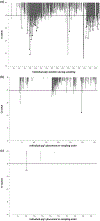
Description:The exhibition swine at agricultural fairs provides a critical human-swine interface that allows for the bidirectional transmission of influenza A virus (IAV). Previous IAV surveillance at the end of fairs has resulted in frequent detection of IAV-infected swine; little is known, however, about the frequency with which swine arrive at fairs already infected with IAV. We investigated the IAV prevalence among exhibition swine entering fairs to better understand the epidemiology of IAV in this unique human-swine interface. In 2014, snout wipes were collected from 3547 swine during the first day of nine agricultural exhibitions in Indiana and Ohio. Samples were screened for IAV using rRT-PCR and positive samples were inoculated into cultured cells for virus isolation. The overall IAV prevalence detected among swine arriving at exhibitions was 5.3% (188/3547) via rRT-PCR and 1.5% (53/3547) via virus isolation, with IAV being detected and recovered from swine at 5 of the 9 exhibitions. Within the fairs with IAV-positive swine, the individual exhibition IAV prevalence ranged from 0.2% (1/523) to 34.4% (144/419) using rRT-PCR and 0.2% (1/523) to 10.3% (43/419) with virus isolation. Single IAV subtypes were detected at three of the fairs but subtype diversity was detected among the pigs at two fairs as both H1N1 and H3N2 were recovered from incoming swine. At two of the exhibitions, a temporal relationship was observed between the order of the individual swine in sampling and the associated IAV rRT-PCR results, indicating the fomite transmission of IAV through common contact surfaces may occur. With the knowledge that a small proportion of swine arrive at fairs shedding IAV, resources should be directed towards preventive strategies focused on limiting transmission during fairs to protect swine and humans during exhibitions.
-
Subjects:
-
Source:Zoonoses Public Health. 63(6):477-485
-
Pubmed ID:26750204
-
Pubmed Central ID:PMC8634047
-
Document Type:
-
Funding:
-
Volume:63
-
Issue:6
-
Collection(s):
-
Main Document Checksum:urn:sha256:72b32e69ff013d00927416a51a87ebedd3f8cf0dc668b66c83fd61b74d007505
-
Download URL:
-
File Type:
 [PDF
- 170.35 KB
]
[PDF
- 170.35 KB
]
Supporting Files


File Language:
English
ON THIS PAGE


CDC STACKS serves as an archival repository of CDC-published products including
scientific findings,
journal articles, guidelines, recommendations, or other public health information authored or
co-authored by CDC or funded partners.
As a repository, CDC STACKS retains documents in their original published format to ensure public access to scientific information.
As a repository, CDC STACKS retains documents in their original published format to ensure public access to scientific information.
You May Also Like
COLLECTION
CDC Public Access