



Engineered NS1 for Sensitive, Specific Zika Virus Diagnosis from Patient Serology
Supporting Files
Public Domain

-
May 2021
-
File Language:
English
Details
-
Alternative Title:Emerg Infect Dis
-
Personal Author:
-
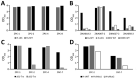
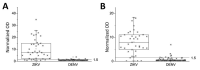
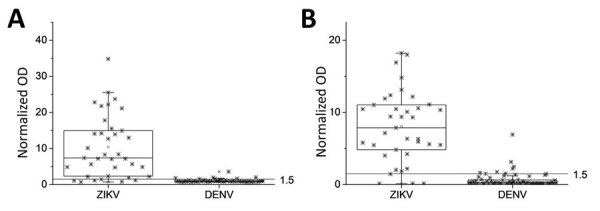
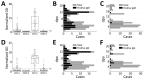
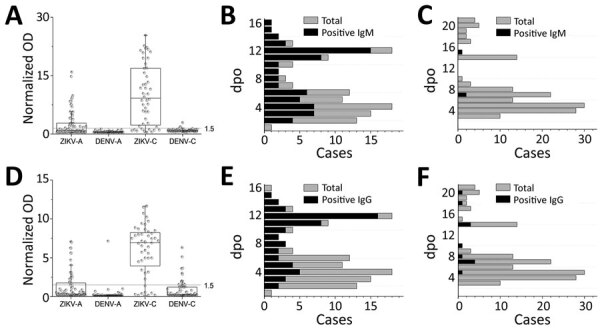
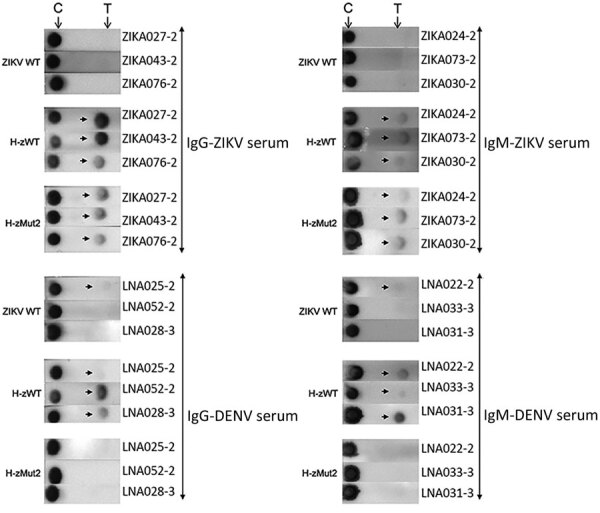
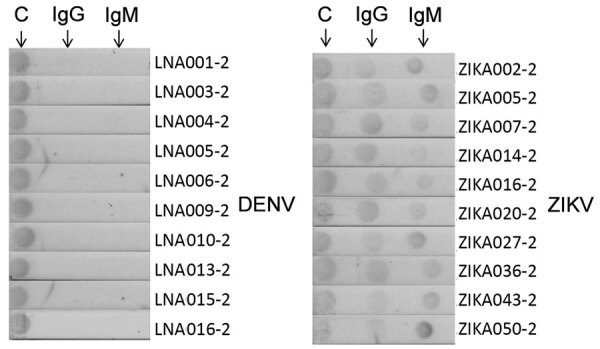
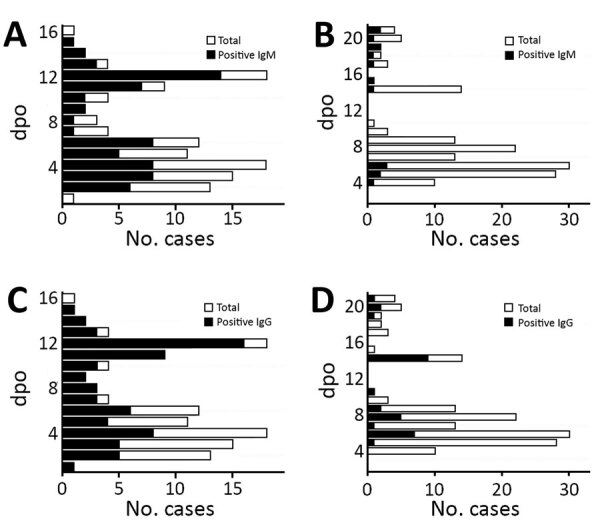
Description:Dengue virus (DENV) and Zika virus (ZIKV) belong to the Flaviviridae family of viruses spread by Aedes aegypti mosquitoes in tropical and subtropical areas. Accurate diagnostic tests to differentiate the 2 infections are necessary for patient management and disease control. Using characterized ZIKV and DENV patient plasma in a blind manner, we validated an ELISA and a rapid immunochromatographic test for ZIKV detection. We engineered the ZIKV nonstructural protein 1 (NS1) for sensitive serologic detection with low cross reactivity against dengue and developed monoclonal antibodies specific for the ZIKV NS1 antigen. As expected, the serologic assays performed better with convalescent than acute plasma samples; the sensitivity ranged from 71% to 88%, depending on the performance of individual tests (IgM/IgG/NS1). Although serologic tests were generally less sensitive with acute samples, our ZIKV NS1 antibodies were able to complement the serologic tests to achieve greater sensitivity for detecting early infections.
-
Subjects:
-
Source:Emerg Infect Dis. 27(5):1427-1437
-
Pubmed ID:33900180
-
Pubmed Central ID:PMC8084482
-
Document Type:
-
Volume:27
-
Issue:5
-
Collection(s):
-
Main Document Checksum:urn:sha256:be1e3c1745f3a0b5b8cc8e3b83387f8661df519182c0194cf74340a28f8416d2
-
Download URL:
-
File Type:
 [PDF
- 1.92 MB
]
[PDF
- 1.92 MB
]
Supporting Files


File Language:
English
 Was this page helpful?
 Found an issue?


CDC STACKS serves as an archival repository of CDC-published products including
scientific findings,
journal articles, guidelines, recommendations, or other public health information authored or
co-authored by CDC or funded partners.
As a repository, CDC STACKS retains documents in their original published format to ensure public access to scientific information.
As a repository, CDC STACKS retains documents in their original published format to ensure public access to scientific information.
You May Also Like
COLLECTION
Emerging Infectious Diseases