



A comparison of performance metrics for cloth face masks as source control devices for simulated cough and exhalation aerosols
Supporting Files

-
February 19 2021
File Language:
English
Details
-
Alternative Title:medRxiv
-
Personal Author:Lindsley, William G. ; Blachere, Francoise M. ; Beezhold, Donald H. ; Law, Brandon F. ; Derk, Raymond C. ; Hettick, Justin M. ; Woodfork, Karen ; Goldsmith, William T. ; Harris, James R. ; Duling, Matthew G. ; Boutin, Brenda ; Nurkiewicz, Timothy ; Noti, John D.
-
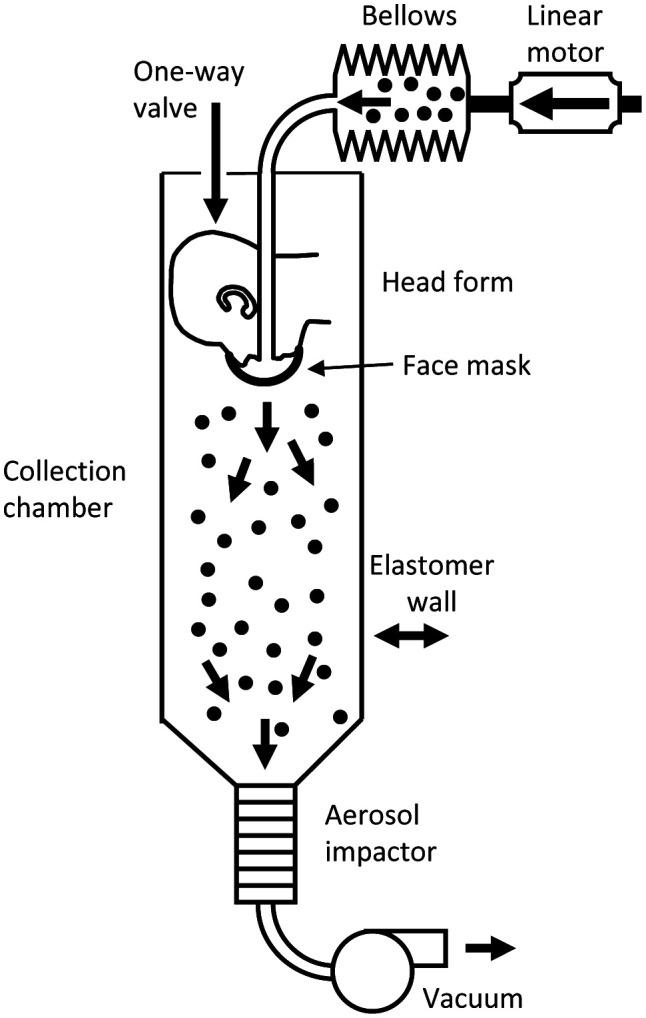
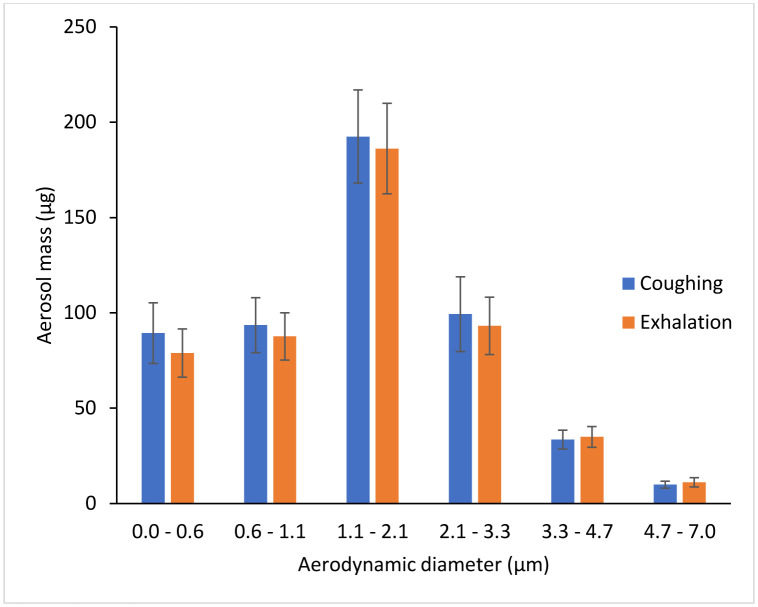
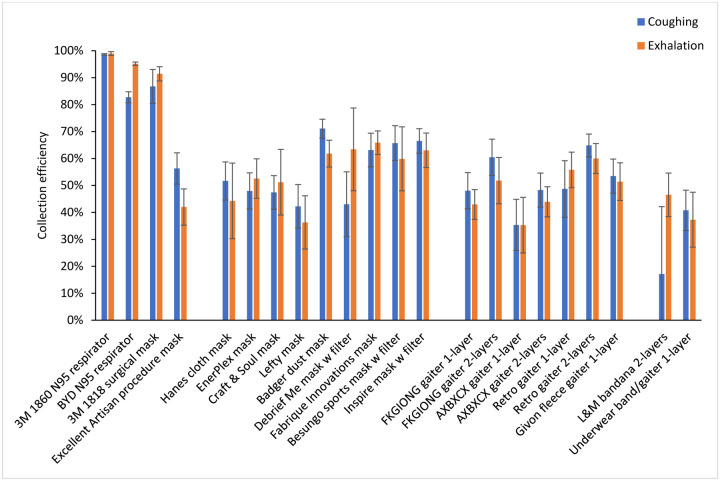
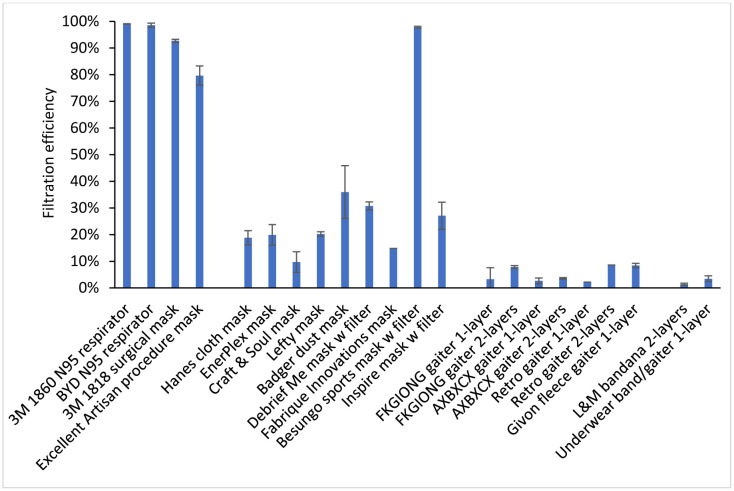
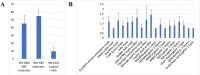
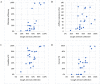
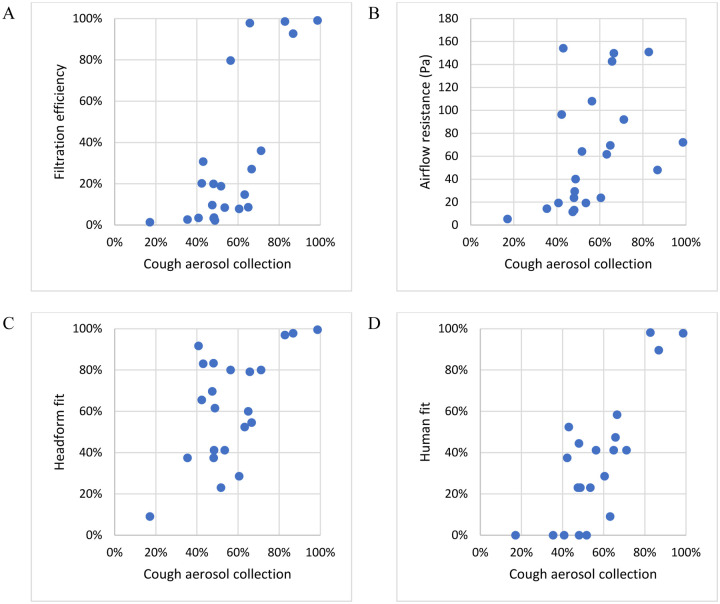
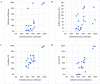
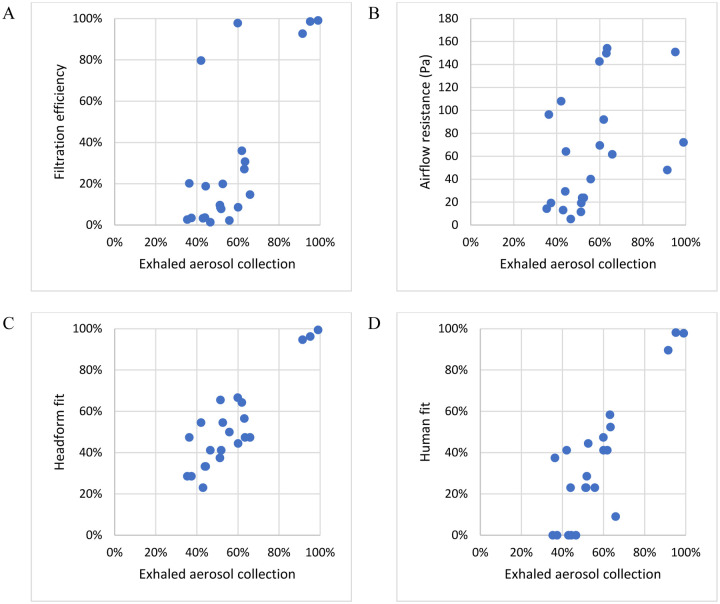
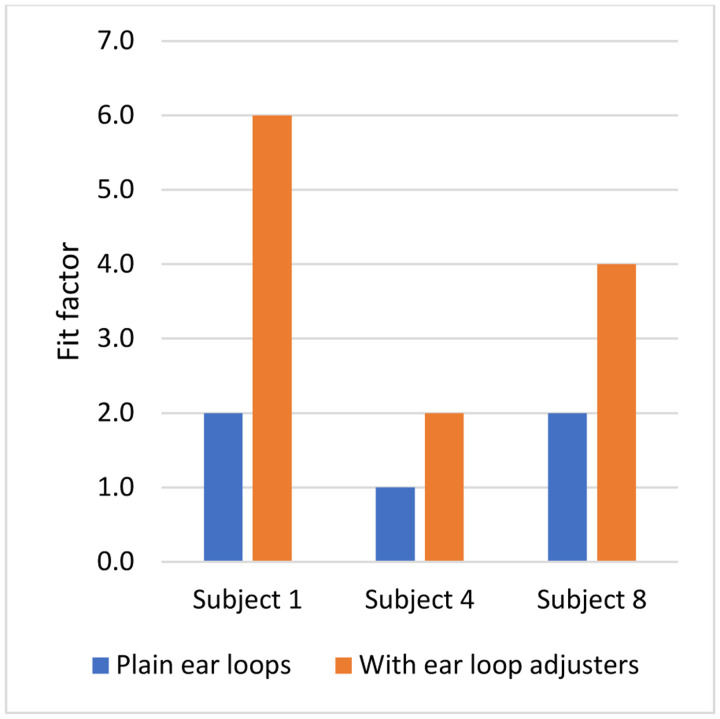
Description:Universal mask wearing is recommended by the Centers for Disease Control and Prevention to help control the spread of COVID-19. Masks reduce the expulsion of respiratory aerosols (called source control) and offer some protection to the wearer. However, masks vary greatly in their designs and construction materials, and it is not clear which are most effective. Our study tested 15 reusable cloth masks (which included face masks, neck gaiters, and bandanas), two medical masks, and two N95 filtering facepiece respirators as source control devices for aerosols ≤ 7 µm produced during simulated coughing and exhalation. These measurements were compared with the mask filtration efficiencies, airflow resistances, and fit factors. The source control collection efficiencies for the cloth masks ranged from 17% to 71% for coughing and 35% to 66% for exhalation. The filtration efficiencies of the cloth masks ranged from 1.4% to 98%, while the fit factors were 1.3 to 7.4 on an elastomeric manikin headform and 1.0 to 4.0 on human test subjects. The correlation coefficients between the source control efficacies and the other performance metrics ranged from 0.31 to 0.66 and were significant in all but one case. However, none of the alternative metrics were strong predictors of the source control performance of cloth masks. Our results suggest that a better understanding of the relationships between source control performance and metrics like filtration efficiency, airflow resistance, and fit factor are needed to develop simple methods to estimate the effectiveness of masks as source control devices for respiratory aerosols.
-
Subjects:
-
Source:medRxiv.
-
Pubmed ID:33619500
-
Pubmed Central ID:PMC7899465
-
Document Type:
-
Funding:
-
Download URL:
-
File Type:
 [PDF - 1.32 MB]
 -
Collection(s):
-
Main Document Checksum:urn:sha256:ac0d4c344eb3c22b928713b0fa0ee7463bc787e90580d183af5e8d3a77ffa15e
Supporting Files


File Language:
English
 Was this page helpful?
 Found an issue?


CDC STACKS serves as an archival repository of CDC-published products including
scientific findings, journal articles, guidelines, recommendations, or other public health information authored or
co-authored by CDC or funded partners.
As a repository, CDC STACKS retains documents in their original published format to ensure public access to scientific information.
As a repository, CDC STACKS retains documents in their original published format to ensure public access to scientific information.
You May Also Like
COLLECTION
CDC Public Access