



Etymologia: Falciparum
Supporting Files
Public Domain

-
February 2021
File Language:
English
Details
-
Alternative Title:Emerg Infect Dis
-
Personal Author:
-
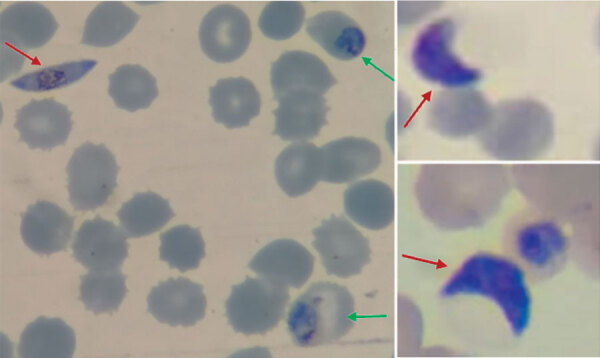
Description:From the Latin falx or falci (sickle or scythe- shaped) and parum (like or equal to another) or parere (to bring forth or bear). The species fal- ciparum in the genus Plasmodium is the parasite that causes malignant tertian malaria in humans. ; There were many terms suggested for this parasite, such as Ematozoo falciforme by Antolisei and Angelini in 1890 and Haemotozoon falci- forme by Thayer and Hewetson in 1895, because of its sickle-shaped gametocytes, the sexual stage of falciparum parasites. However, the term falci- parum, suggested by William Henry Welch in 1897, was eventually accepted. In 1954, Plasmodium falciparum (previously Laverania malariae) was approved by International Commission on Zoological Nomenclature.
-
Subjects:
-
Source:Emerg Infect Dis. 27(2):470
-
Pubmed Central ID:PMC7853582
-
Document Type:
-
Genre:
-
Volume:27
-
Issue:2
-
Download URL:
-
File Type:
 [PDF - 428.56 KB]
 -
Collection(s):
-
Main Document Checksum:urn:sha256:e002439071db0033d377755d6d6c2bd1ad767aef3c5ea9771c66ffcca890418f
Supporting Files


File Language:
English
 Was this page helpful?
 Found an issue?


CDC STACKS serves as an archival repository of CDC-published products including
scientific findings, journal articles, guidelines, recommendations, or other public health information authored or
co-authored by CDC or funded partners.
As a repository, CDC STACKS retains documents in their original published format to ensure public access to scientific information.
As a repository, CDC STACKS retains documents in their original published format to ensure public access to scientific information.
You May Also Like
COLLECTION
Emerging Infectious Diseases