



Plasmodium falciparum Histidine-Rich Protein 2 and 3 Gene Deletions in Strains from Nigeria, Sudan, and South Sudan
Supporting Files
Public Domain

-
Feb 2021
File Language:
English
Details
-
Alternative Title:Emerg Infect Dis
-
Personal Author:
-
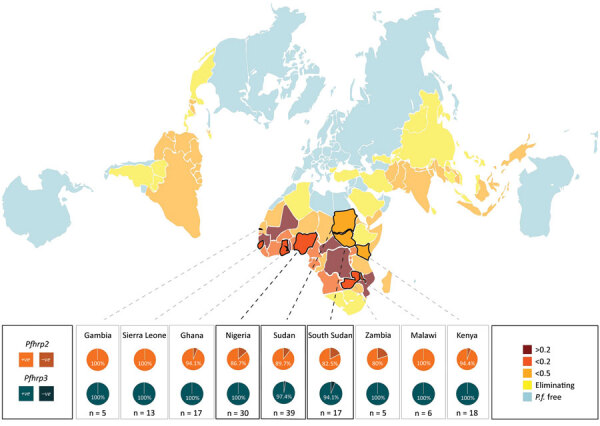
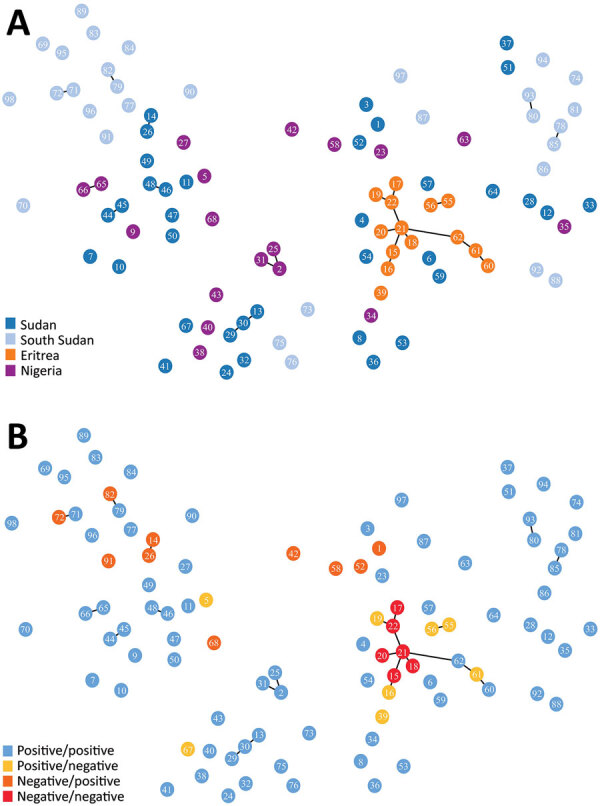
Description:Deletion of histidine-rich protein genes pfhrp2/3 in Plasmodium falciparum causes infections to go undetected by HRP2-based malaria rapid diagnostic tests. We analyzed P. falciparum malaria cases imported to Australia (n = 210, collected 2010-2018) for their pfhrp2/3 status. We detected gene deletions in patients from 12 of 25 countries. We found >10% pfhrp2-deletion levels in those from Nigeria (13.3%, n = 30), Sudan (11.2%, n = 39), and South Sudan (17.7%, n = 17) and low levels of pfhrp3 deletion from Sudan (3.6%) and South Sudan (5.9%). No parasites with pfhrp2/3 double deletions were detected. Microsatellite typing of parasites from Nigeria, Sudan, and South Sudan revealed low relatedness among gene-deleted parasites, indicating independent emergences. The gene deletion proportions signify a risk of false-negative HRP2-RDT results. This study's findings warrant surveillance to determine whether the prevalence of gene-deleted parasites justifies switching malaria rapid diagnostic tests in Nigeria, Sudan, and South Sudan.
-
Subjects:
-
Source:Emerg Infect Dis. 27(2):471-479
-
Pubmed ID:33496220
-
Pubmed Central ID:PMC7853540
-
Document Type:
-
Place as Subject:
-
Volume:27
-
Issue:2
-
Download URL:
-
File Type:
 [PDF - 1.27 MB]
 -
Collection(s):
-
Main Document Checksum:urn:sha256:21ec0df396dcd048c40d2499aef3100b6364be653b34d2cf9f1125a554bef608
Supporting Files


File Language:
English
 Was this page helpful?
 Found an issue?



CDC STACKS serves as an archival repository of CDC-published products including
scientific findings, journal articles, guidelines, recommendations, or other public health information authored or
co-authored by CDC or funded partners.
As a repository, CDC STACKS retains documents in their original published format to ensure public access to scientific information.
As a repository, CDC STACKS retains documents in their original published format to ensure public access to scientific information.
You May Also Like
COLLECTION
Emerging Infectious Diseases