



Optimizing respondent driven sampling to find undiagnosed HIV-infected people who inject drugs
Supporting Files

-
3-01-
-
File Language:
English
Details
-
Alternative Title:AIDS
-
Personal Author:
-
Description:Objective
We evaluated whether identification of undiagnosed HIV-infected people who inject drugs (PWID) via respondent-driven sampling (RDS) can be enhanced through a precision RDS (pRDS) approach.
Design/Methods
First, using prior RDS data from PWID in India, we built a prediction algorithm for recruiting undiagnosed HIV-infected PWID. pRDS was tested in Morinda, Punjab where participants were randomly assigned to standard or pRDS. In the standard RDS approach, all participants received 2 recruitment coupons. For pRDS, the algorithm determined an individual’s probability of recruiting an undiagnosed PWID, and individuals received either 2 (low probability) or 5 (high probability) coupons. Efficiency in identifying undiagnosed HIV-infected PWID for the RDS approaches was evaluated in two ways: the number needed to recruit (NNR) and identification rate/week.
Results
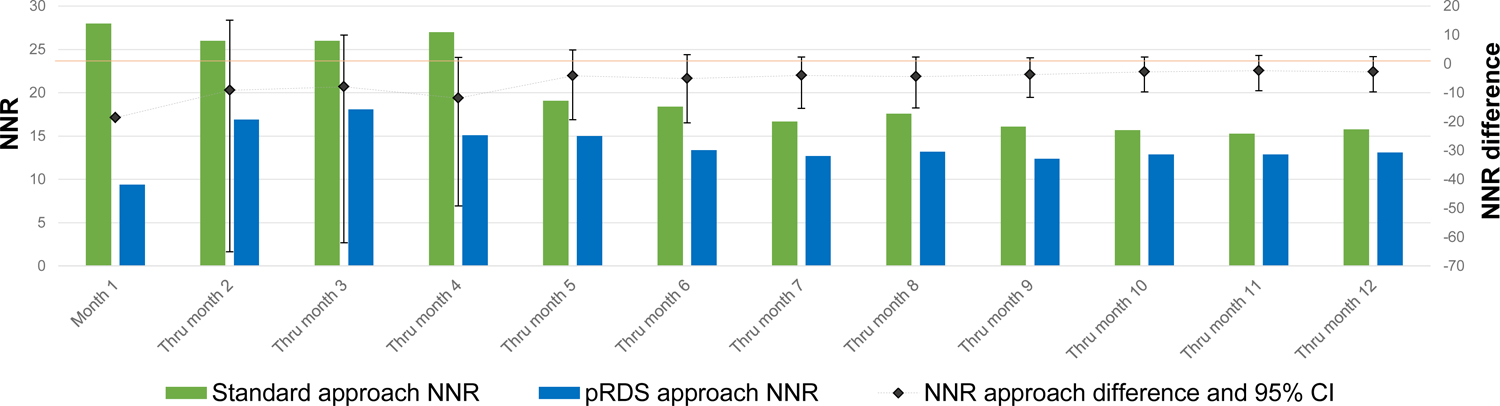
Predictors of recruiting undiagnosed PWID included HIV/HCV infection, network size, syringe services utilization, and injection environment. 1631 PWID were recruited in Morinda. From the standard RDS approach, 615 were recruited, including 39 undiagnosed; from pRDS, 1012 were recruited, including 77 undiagnosed. In pRDS, those with higher predicted probability were more likely to recruit others with HIV/HCV co-infection, undiagnosed and viremic HIV, and who utilized services. pRDS had a significantly higher identification rate of undiagnosed PWID (1.5/week) compared to the standard (0.8/week). The NNR for pRDS (13.1) was not significantly lower than the standard approach (15.8).
Conclusions
pRDS identified twice as many undiagnosed and viremic PWID significantly faster than the standard approach. Leveraging RDS or similar network-based strategies should be considered alongside other strategies to ensure meeting UNAIDS targets.
-
Subjects:
-
Source:AIDS. 35(3):485-494
-
Pubmed ID:33252482
-
Pubmed Central ID:PMC7842595
-
Document Type:
-
Funding:K24 DA035684/DA/NIDA NIH HHSUnited States/ ; P30 AI094189/AI/NIAID NIH HHSUnited States/ ; DP2 DA040244/DA/NIDA NIH HHSUnited States/ ; F31 DA044046/DA/NIDA NIH HHSUnited States/ ; R01 CE003021/CE/NCIPC CDC HHSUnited States/ ; R01 DA032059/DA/NIDA NIH HHSUnited States/ ; R01 DA041034/DA/NIDA NIH HHSUnited States/ ; T32 AI102623/AI/NIAID NIH HHSUnited States/
-
Place as Subject:
-
Volume:35
-
Issue:3
-
Collection(s):
-
Main Document Checksum:urn:sha256:67ebb8dbaf0d2d585074c54290ebb78e7e2963e3453e53b7e78274674d617fd0
-
Download URL:
-
File Type:
 [PDF
- 656.08 KB
]
[PDF
- 656.08 KB
]
Supporting Files


File Language:
English
 Was this page helpful?
 Found an issue?




CDC STACKS serves as an archival repository of CDC-published products including
scientific findings,
journal articles, guidelines, recommendations, or other public health information authored or
co-authored by CDC or funded partners.
As a repository, CDC STACKS retains documents in their original published format to ensure public access to scientific information.
As a repository, CDC STACKS retains documents in their original published format to ensure public access to scientific information.
You May Also Like
COLLECTION
CDC Public Access