



High Prevalence of Indications for Pre-Exposure Prophylaxis Among People Who Inject Drugs in Boston, Massachusetts
Supporting Files

-
3 2021
-
File Language:
English
Details
-
Alternative Title:Am J Prev Med
-
Personal Author:
-
Description:Introduction:
In Massachusetts, recent outbreaks of HIV have been fueled by injection and sexual exposures among people who inject drugs (PWID). Understanding pre-exposure prophylaxis (PrEP) need, knowledge, and use among PWID will help inform and evaluate interventions.
Methods:
In 2019, investigators analyzed 2018 National HIV Behavioral Surveillance data from PWID in Boston, Massachusetts, who met eligibility criteria. Proportions of PWID with U.S Preventive Services Task Force–based PrEP indication were estimated by types of HIV acquisition risk in the past year: injection exposure only, sexual exposure only, and overlapping injection and sexual exposures. Investigators then evaluated PrEP awareness, conversations with healthcare providers about PrEP, and self-reported PrEP use among those with and without PrEP indications.
Results:
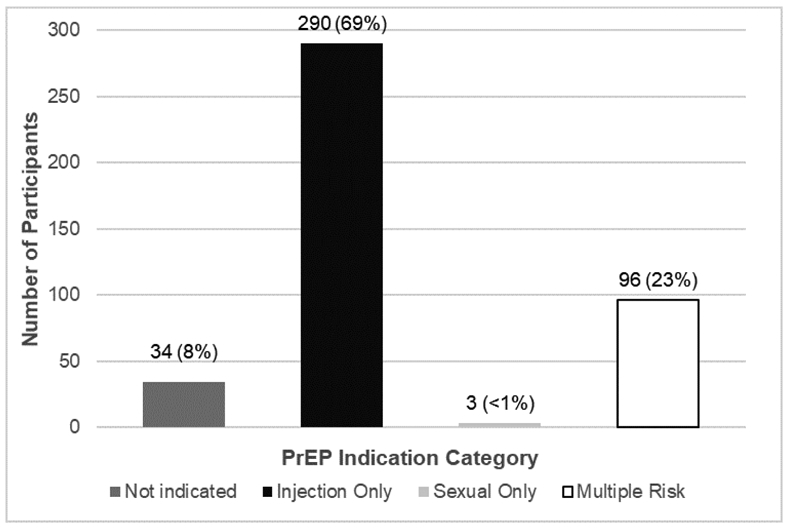
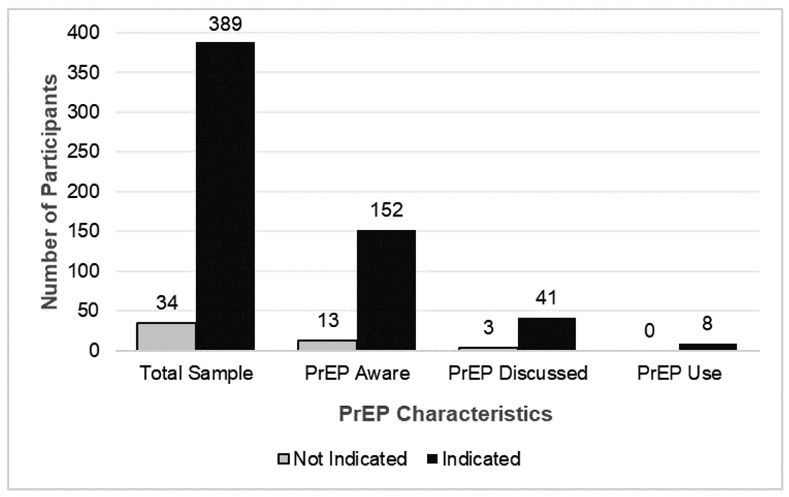
The prevalence of PrEP indication was 92% overall (389/423), with 290 (69%) indicated for injection exposures only, 3 (<1%) indicated for sexual exposures only, and 96 (23%) indicated for both injection and sexual exposures. Among those indicated for PrEP (n=389), 152 (39%) reported being aware of PrEP, 41 (11%) had discussed PrEP with a healthcare provider, and 8 (2%) had used PrEP in the past year. There were no statistically significant differences between PrEP-indicated and non-indicated PWID with respect to PrEP awareness, discussion with a healthcare provider, and PrEP use.
Conclusions:
Indication for PrEP was high but awareness was low, conversations about PrEP with healthcare providers were uncommon, and PrEP use was extremely low. These findings highlight important areas for clinical and community-based interventions to improve PrEP uptake among and delivery to PWID.
-
Subjects:
-
Source:Am J Prev Med. 60(3):369-378
-
Pubmed ID:33229144
-
Pubmed Central ID:PMC7902399
-
Document Type:
-
Funding:
-
Place as Subject:
-
Volume:60
-
Issue:3
-
Collection(s):
-
Main Document Checksum:urn:sha-512:116784bd66d9fbf2c1761fda13f19cd6654f9c874a237ed2ba6c7247a2dad3c2d7c973e303021fc4f12e94da7a80bb17d7e50a2492086a98e5b091ad5299098a
-
Download URL:
-
File Type:
 [PDF
- 179.94 KB
]
[PDF
- 179.94 KB
]
Supporting Files


File Language:
English
 Was this page helpful?
 Found an issue?
CDC STACKS serves as an archival repository of CDC-published products including
scientific findings,
journal articles, guidelines, recommendations, or other public health information authored or
co-authored by CDC or funded partners.
As a repository, CDC STACKS retains documents in their original published format to ensure public access to scientific information.
As a repository, CDC STACKS retains documents in their original published format to ensure public access to scientific information.
You May Also Like
COLLECTION
CDC Public Access