


Sociodemographic factors and social determinants associated with toxicology confirmed polysubstance opioid-related deaths
Supporting Files

-
May 08 2019
-
File Language:
English
Details
-
Alternative Title:Drug Alcohol Depend
-
Personal Author:
-
Description:Background and Aims:
While prescribed and illicit opioid use are primary drivers of the national surges in overdose deaths, opioid overdose deaths in which stimulants are also present are increasing in the U.S. We determined the social determinants and sociodemographic factors associated with opioid-only versus polysubstance opioid overdose deaths in Massachusetts. Particular attention was focused on the role of stimulants in opioid overdose deaths.
Methods:
We analyzed all opioid-related overdose deaths from 2014–2015 in an individually-linked population database in Massachusetts. We used linked postmortem toxicology data to identify drugs present at the time of death. We constructed a multinomial logistic regression model to identify factors associated with three mutually exclusive overdose death groups based on toxicological results: opioid-related deaths with (1) opioids only present, (2) opioids and other substances not including stimulants, and (3) opioids and stimulants with or without other substances.
Results:
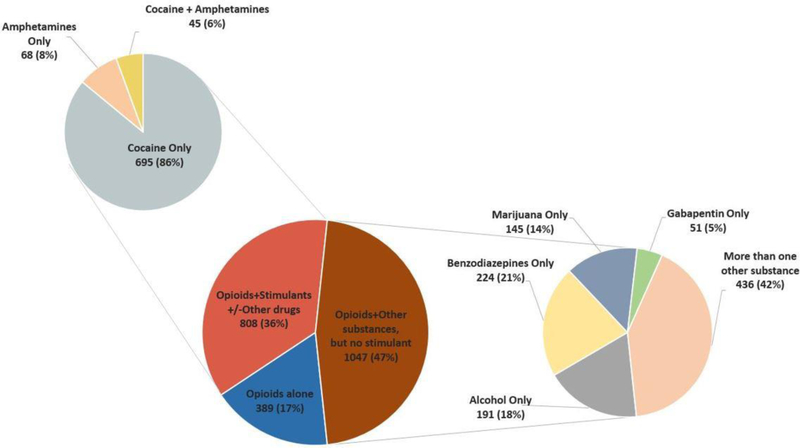
Between 2014 and 2015, there were 2,244 opioid-related overdose deaths in Massachusetts that had accompanying toxicology results. Toxicology reports indicated that 17% had opioids only, 36% had opioids plus stimulants, and 46% had opioids plus another non-stimulant substance. Persons older than 24 years, non-rural residents, those with comorbid mental illness, non-Hispanic black residents, and persons with recent homelessness were more likely than their counterparts to die with opioids and stimulants than opioids alone.
Conclusions:
Polysubstance opioid overdose is increasingly common in the US. Addressing modifiable social determinants of health including barriers to mental health services and homelessness, is important to reduce polysubstance use and overdose deaths.
-
Subjects:
-
Source:Drug Alcohol Depend. 200:59-63
-
Pubmed ID:31100636
-
Pubmed Central ID:PMC6588486
-
Document Type:
-
Funding:T32 DA013911/DA/NIDA NIH HHS/United States ; P30 DA040500/DA/NIDA NIH HHS/United States ; P20 GM125507/GM/NIGMS NIH HHS/United States ; U01 CE002780/CE/NCIPC CDC HHS/United States ; K23 DA042168/DA/NIDA NIH HHS/United States ; R25 DA037190/DA/NIDA NIH HHS/United States ; P30 AI042853/AI/NIAID NIH HHS/United States
-
Volume:200
-
Collection(s):
-
Main Document Checksum:urn:sha256:ed22fc4531ff151b7c45907559b23ec2f323abdd7a5f556a64e791f5a77b09ef
-
Download URL:
-
File Type:
 [PDF
- 196.10 KB
]
[PDF
- 196.10 KB
]


File Language:
English
ON THIS PAGE

CDC STACKS serves as an archival repository of CDC-published products including
scientific findings,
journal articles, guidelines, recommendations, or other public health information authored or
co-authored by CDC or funded partners.
As a repository, CDC STACKS retains documents in their original published format to ensure public access to scientific information.
As a repository, CDC STACKS retains documents in their original published format to ensure public access to scientific information.
You May Also Like
COLLECTION
CDC Public Access