



Neurodevelopmental findings in children 20–30 months of age with postnatal Zika infection at 1–12 months of age, Colombia, September-November 2017
Supporting Files

-
June 02 2020 ; 1-2021
-
Available in CDC Stacks on January 28, 2021, 12:00 AM
File Language:
English
Details
-
Alternative Title:Paediatr Perinat Epidemiol
-
Personal Author:Pacheco, Oscar ; Newton, Suzanne M. ; Daza, Marcela ; Cates, Jordan E. ; Reales, Javier Alberto Madero ; Burkel, Veronica K. ; Mercado, Marcela ; Godfred-Cato, Shana ; Gonzalez, Maritza ; Anderson, Kayla N. ; Woodworth, Kate R. ; Valencia, Diana ; Tong, Van T. ; Gilboa, Suzanne M. ; Osorio, May Bibiana ; Rodríguez, Dora Yurany Sánchez ; Prieto-Alvarado, Franklyn Edwin ; Moore, Cynthia A. ; Honein, Margaret A. ; Ospina Martínez, Martha L.
-
Description:Background:
Zika virus (ZIKV) infection during pregnancy can cause infant brain and eye abnormalities and has been associated with adverse neurodevelopmental outcomes in exposed infants. Evidence is limited on ZIKV’s effects on children infected postnatally within the first year of life.
Objective:
To determine whether any adverse neurodevelopmental outcomes occurred in early childhood for children infected postnatally with ZIKV during infancy, given the neurotoxicity of ZIKV infection and the rapid brain development that occurs in infancy and early childhood.
Methods:
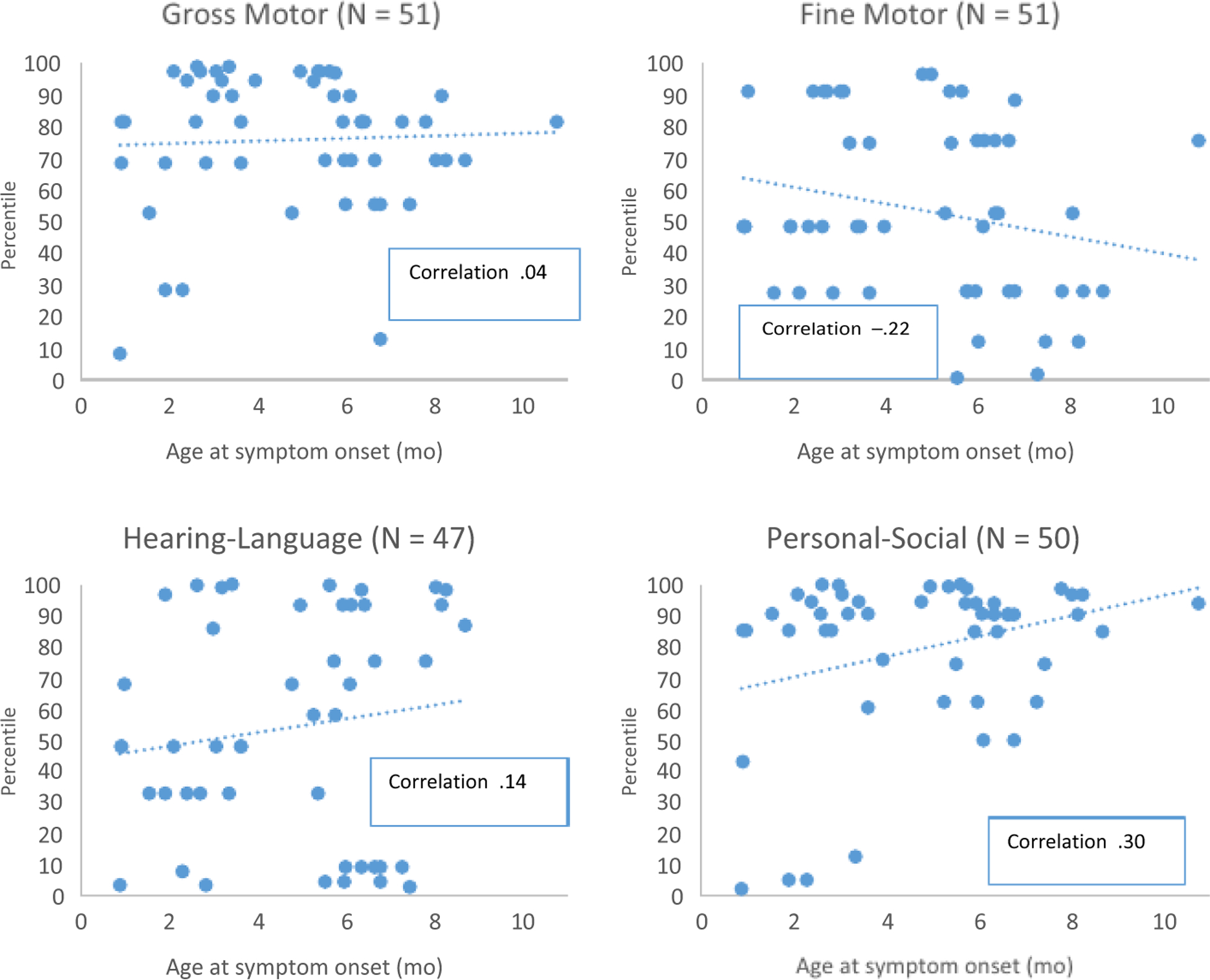
The Colombia Instituto Nacional de Salud (INS) conducted health and developmental screenings between September and November 2017 to evaluate 60 children at ages 20–30 months who had laboratory-confirmed symptomatic postnatal ZIKV infection at ages 1–12 months. We examined the frequency of adverse neurologic, hearing, eye, and developmental outcomes as well as the relationship between age at Zika symptom onset and developmental outcomes.
Results:
Nine of the 60 (15.0%) children had adverse outcomes on the neurologic, hearing, or eye examination. Six of the 47 (12.8%) children without these adverse findings, and who received a valid developmental screening, had an alert score in the hearing-language domain which signals the need for additional developmental evaluation.
Conclusion:
Neurologic, hearing, eye, and developmental findings suggest reassuring results. Since the full spectrum of neurodevelopmental outcomes in children postnatally infected with ZIKV remains unknown, routine paediatric care is advised to monitor the development of these children to ensure early identification of any adverse neurodevelopmental outcomes. -
Subjects:
-
Source:Paediatr Perinat Epidemiol. 35(1):92-97
-
Pubmed ID:32488915
-
Pubmed Central ID:PMC7708429
-
Document Type:
-
Funding:
-
Volume:35
-
Issue:1
-
Download URL:
-
File Type:
 [PDF - 300.97 KB]
 -
Collection(s):
-
Main Document Checksum:urn:sha256:a46055cb4bd627c2a6279d587de86ca2c9832579153f83d44c716bfd36d2f25d
Supporting Files


File Language:
English
 Was this page helpful?
 Found an issue?

CDC STACKS serves as an archival repository of CDC-published products including
scientific findings, journal articles, guidelines, recommendations, or other public health information authored or
co-authored by CDC or funded partners.
As a repository, CDC STACKS retains documents in their original published format to ensure public access to scientific information.
As a repository, CDC STACKS retains documents in their original published format to ensure public access to scientific information.
You May Also Like
COLLECTION
CDC Public Access