


Subgroup variation and neighborhood social gradients– an analysis of hypertension and diabetes among Asian patients (New York City, 2014–2017)
Supporting Files

-
2 2021
-
File Language:
English
Details
-
Alternative Title:J Racial Ethn Health Disparities
-
Personal Author:
-
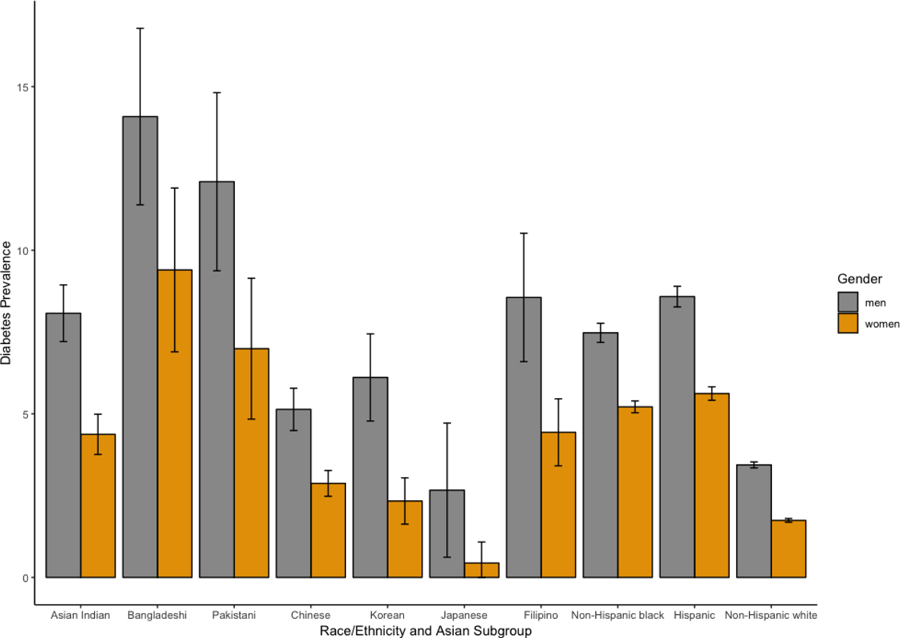
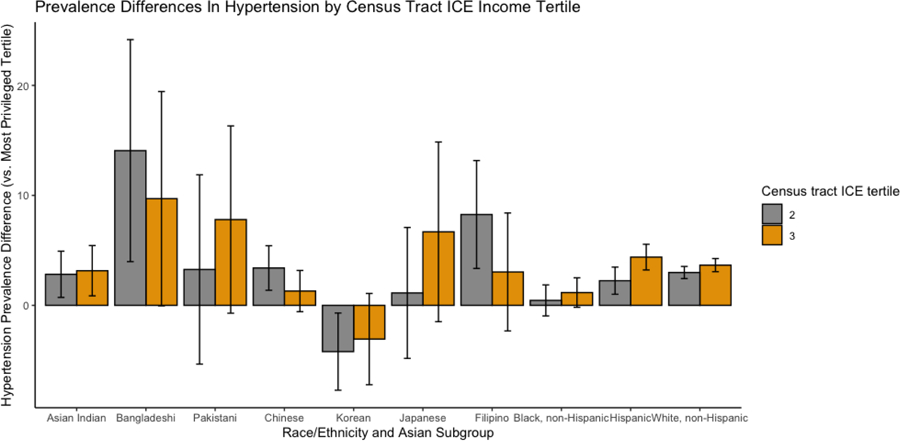
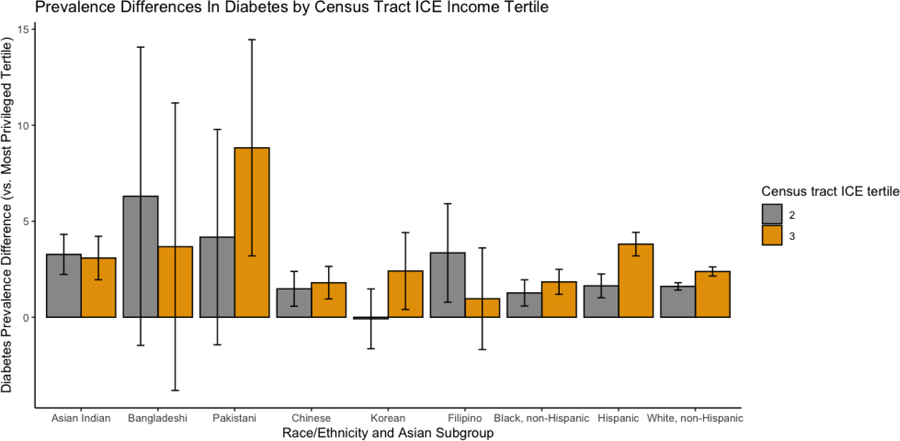
Description:Diabetes and hypertension are socially patterned by individual race/ethnicity and by neighborhood economic context, but distributions among Asian subgroups are undercharacterized. We examined variation in prevalence for both conditions, comparing between US Asian subgroups, including within South Asian nationalities, and comparing within subgroups by neighborhood economic context. We obtained data on a non-probability sample of 633,664 patients ages 18-64 in New York City, NY, USA (2014-2017); 30,138 belonged to one of seven Asian subgroups (Asian Indian, Bangladeshi, Pakistani, Chinese, Korean, Japanese, and Filipino). We used electronic health records to classify disease status. We characterized census tract economic context using the Index of Concentration at the Extremes and estimated prevalence differences using multilevel models. Among Asian men, hypertension prevalence was highest for Filipinos. Among Asian women, hypertension prevalence was highest for Filipinas and Bangladeshis. Diabetes prevalence was highest among Pakistanis and Bangladeshis of both genders, exceeding all other Asian and non-Asian groups. There was consistent evidence of an economic gradient for both conditions, whereby persons residing in the most privileged neighborhood tertile had the lowest disease prevalence. The economic gradient was particularly strong for diabetes among Pakistanis, whose prevalence in the most deprived tertile exceeded that of the most privileged by 9 percentage points (95% CI 3, 14). Only Koreans departed from the trend, experiencing the highest diabetes prevalence in the most privileged tertile. US Asian subgroups largely demonstrate similar neighborhood economic gradients as other groups. Disaggregating Asian subgroups, including within South Asian nationalities, reveals important heterogeneity in prevalence.
-
Subjects:
-
Source:J Racial Ethn Health Disparities. 8(1):256-263
-
Pubmed ID:32488823
-
Pubmed Central ID:PMC7708414
-
Document Type:
-
Funding:U48DP005008/ACL/ACL HHSUnited States/ ; U54MD000538-15/MD/NIMHD NIH HHSUnited States/ ; U48DP005008/CC/CDC HHSUnited States/ ; U54 MD000538/MD/NIMHD NIH HHSUnited States/ ; U48 DP005008/DP/NCCDPHP CDC HHSUnited States/ ; R01 DK110048/DK/NIDDK NIH HHSUnited States/ ; R01DK110048/DK/NIDDK NIH HHSUnited States/
-
Place as Subject:
-
Volume:8
-
Issue:1
-
Collection(s):
-
Main Document Checksum:urn:sha256:fecf51833d22da87d6b1c977eeb71e1fcd003e4d1f1da60a6d2b7401670c380b
-
Download URL:
-
File Type:
 [PDF
- 263.70 KB
]
[PDF
- 263.70 KB
]
Supporting Files


File Language:
English
ON THIS PAGE




CDC STACKS serves as an archival repository of CDC-published products including
scientific findings,
journal articles, guidelines, recommendations, or other public health information authored or
co-authored by CDC or funded partners.
As a repository, CDC STACKS retains documents in their original published format to ensure public access to scientific information.
As a repository, CDC STACKS retains documents in their original published format to ensure public access to scientific information.
You May Also Like
COLLECTION
CDC Public Access