



Association of Primary and Specialty Care Integration on Physician Communication and Cancer Screening in Safety-Net Clinics
Supporting Files
Public Domain

-
October 29 2020
File Language:
English
Details
-
Journal Article:Preventing Chronic Disease (PCD)
-
Personal Author:
-
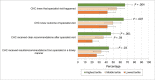
Description:Introduction ; Primary care providers who lack reliable referral relationships with specialists may be less likely than those who do have such relationships to conduct cancer screenings. Community health centers (CHCs), which provide primary care to disadvantaged populations, have historically reported difficulty accessing specialty care for their patients. This study aimed to describe strategies CHCs use to integrate care with specialists and examine whether more strongly integrated CHCs have higher rates of screening for colorectal and cervical cancers and report better communication with specialists. ; Methods ; Using a 2017 survey of CHCs in 12 states and the District of Columbia and administrative data, we estimated the association between a composite measure of CHC/specialist integration and 1) colorectal and cervical cancer screening rates, and 2) 4 measures of CHC/specialist communication using multivariate regression models. ; Results ; Integration strategies commonly reported by CHCs included having specialists deliver care on-site (80%) and establishing referral agreements with specialists (70%). CHCs that were most integrated with specialists had 5.6 and 6.8 percentage-point higher colorectal and cervical cancer screening rates, respectively, than the least integrated CHCs (P < .05). They also had significantly higher rates of knowing that specialist visits happened (67% vs 42%), knowing visit outcomes (65% vs 42%), receiving information after visits (47% vs 21%), and timely receipt of information (44% vs 27%). ; Conclusion ; CHCs use various strategies to integrate primary and specialty care. Efforts to promote CHC/specialist integration may help increase rates of cancer screening.
-
Subjects:
-
Source:Prev Chronic Dis. 2020; 17
-
ISSN:1545-1151
-
Pubmed ID:33119485
-
Pubmed Central ID:PMC7665578
-
Document Type:
-
Volume:17
-
Download URL:
-
File Type:
 [PDF - 507.01 KB]
 -
Collection(s):
-
Main Document Checksum:urn:sha-512:df94d1ddec160fe4af17e725fc70298b52231bd9f51c8e9ec6c04a2b32182dbe477211e44e15f1609488308ebf5cde06aba6244d9e67e3b5a6598401be03a1a4
Supporting Files


File Language:
English
 Was this page helpful?
 Found an issue?


CDC STACKS serves as an archival repository of CDC-published products including
scientific findings, journal articles, guidelines, recommendations, or other public health information authored or
co-authored by CDC or funded partners.
As a repository, CDC STACKS retains documents in their original published format to ensure public access to scientific information.
As a repository, CDC STACKS retains documents in their original published format to ensure public access to scientific information.
You May Also Like
COLLECTION
Preventing Chronic Disease