



Disparities in Documented Diagnoses of Autism Spectrum Disorder Based on Demographic, Individual, and Service Factors
Supporting Files

-
3 2020 ; 3-2020
-
Available in CDC Stacks on September 28, 2020, 12:00 AM
File Language:
English
Details
-
Alternative Title:Autism Res
-
Personal Author:
-
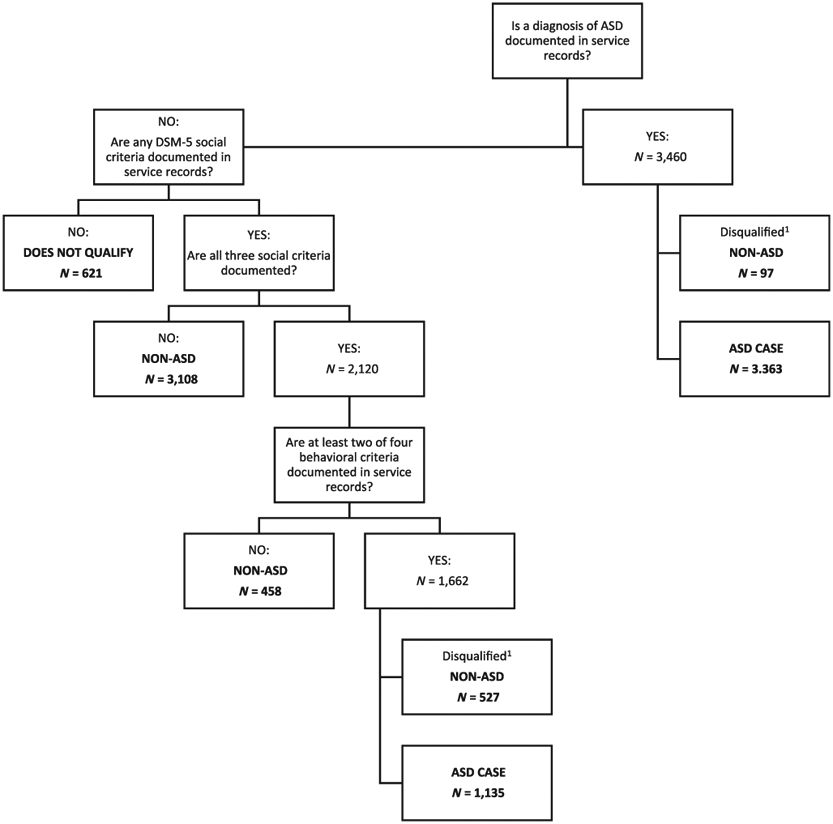
Description:The objectives of our study were to (a) report how many children met an autism spectrum disorder (ASD) surveillance definition but had no clinical diagnosis of ASD in health or education records and (b) evaluate differences in demographic, individual, and service factors between children with and without a documented ASD diagnosis. ASD surveillance was conducted in selected areas of Arizona, Arkansas, Colorado, Georgia, Maryland, Minnesota, Missouri, New Jersey, North Carolina, Tennessee, and Wisconsin. Children were defined as having ASD if sufficient social and behavioral deficits and/or an ASD diagnosis were noted in health and/or education records. Among 4,498 children, 1,135 (25%) had ASD indicators without having an ASD diagnosis. Of those 1,135 children without a documented ASD diagnosis, 628 (55%) were not known to receive ASD services in public school. Factors associated with not having a clinical diagnosis of ASD were non-White race, no intellectual disability, older age at first developmental concern, older age at first developmental evaluation, special education eligibility other than ASD, and need for fewer supports. These results highlight the importance of reducing disparities in the diagnosis of children with ASD characteristics so that appropriate interventions can be promoted across communities. Autism Res 2020, 13: 464-473. © 2019 International Society for AutismResearch,Wiley Periodicals, Inc. LAY SUMMARY: Children who did not have a clinical diagnosis of autism spectrum disorder (ASD) documented in health or education records were more likely to be non-White and have fewer developmental problems than children with a clinical diagnosis of ASD. They were brought to the attention of healthcare providers at older ages and needed fewer supports than children with a clinical diagnosis of ASD. All children with ASD symptoms who meet diagnostic criteria should be given a clinical diagnosis so they can receive treatment specific to their needs.
-
Keywords:
-
Source:Autism Res. 13(3):464-473
-
Pubmed ID:31868321
-
Pubmed Central ID:PMC7521364
-
Document Type:
-
Funding:
-
Volume:13
-
Issue:3
-
Download URL:
-
File Type:
 [PDF - 125.61 KB]
 -
Collection(s):
-
Main Document Checksum:urn:sha256:5c623a4bc7d2c90b6cc4c781a8477abbbff571ce2d7ce6a0673054a2cb9f7d7e
Supporting Files


File Language:
English
 Was this page helpful?
 Found an issue?

CDC STACKS serves as an archival repository of CDC-published products including
scientific findings, journal articles, guidelines, recommendations, or other public health information authored or
co-authored by CDC or funded partners.
As a repository, CDC STACKS retains documents in their original published format to ensure public access to scientific information.
As a repository, CDC STACKS retains documents in their original published format to ensure public access to scientific information.
You May Also Like
COLLECTION
CDC Public Access