



Community testing practices for autism within the autism and developmental disabilities monitoring network
Supporting Files

-
7 2024

File Language:
English
Details
-
Alternative Title:Paediatr Perinat Epidemiol
-
Personal Author:
-
Description:Background:
No data exist at the population level on what tests are used to aid in the diagnosis of autism spectrum disorder in community practice.
Objectives:
To describe autism spectrum disorder testing practices to inform autism spectrum disorder identification efforts.
Methods:
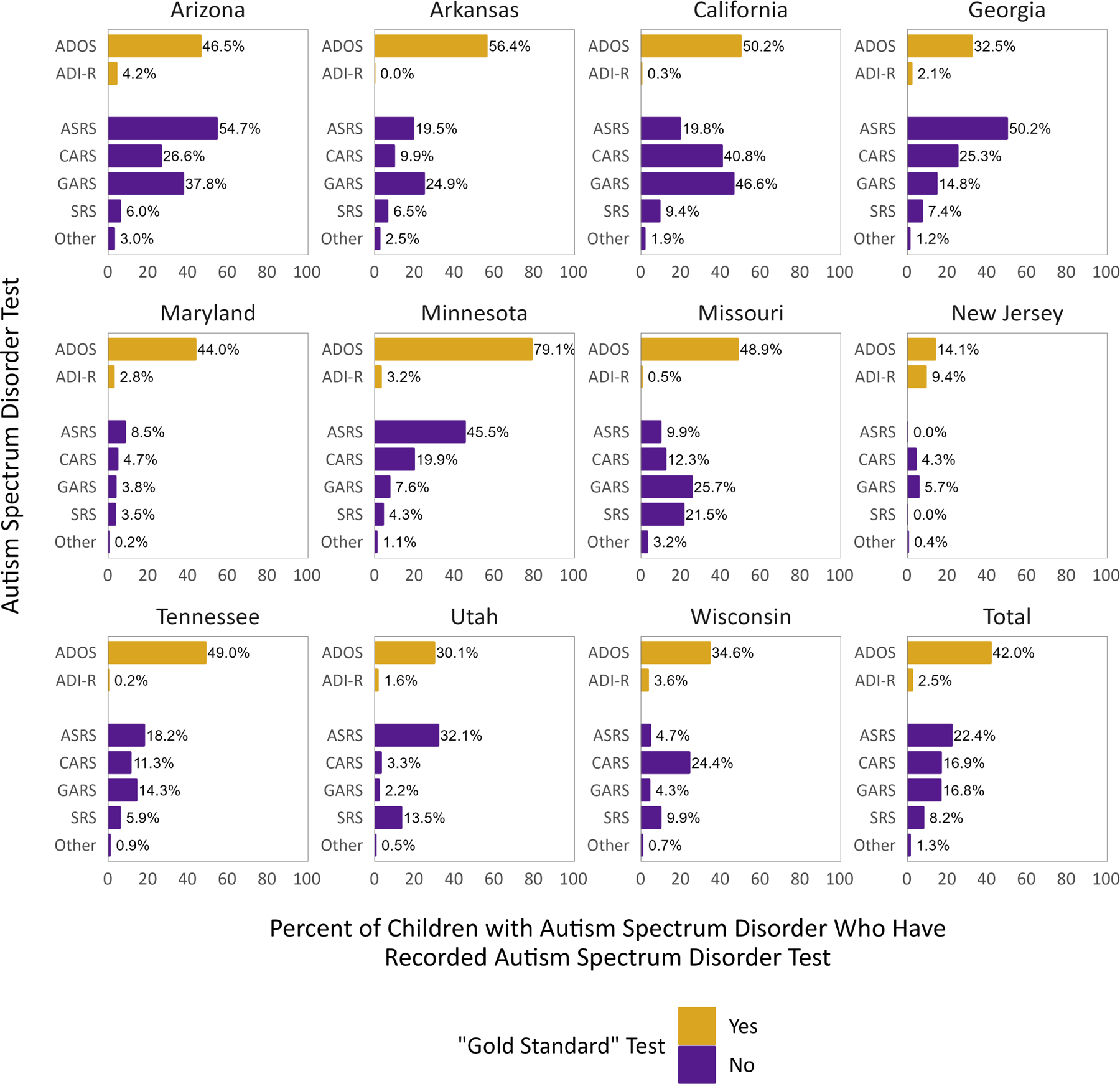
Data are from the Autism and Developmental Disabilities Monitoring Network, a multi-site surveillance system reporting prevalence estimates and characteristics of 8-year-old children with autism spectrum disorder. Percentages of children with autism spectrum disorder who received any autism spectrum disorder test or a ‘gold standard’ test were calculated by site, sex, race, median household income, and intellectual ability status. Risk ratios were calculated to compare group differences.
Results:
Of 5058 8-year-old children with autism spectrum disorder across 11 sites, 3236 (64.0%) had a record of any autism spectrum disorder test and 2136 (42.2%) had a ‘gold standard’ ADOS or ADI-R test. Overall, 115 children (2.3%) had both the ADOS and ADI-R in their records. Differences persisted across race, median household income, and intellectual ability status. Asian/Pacific Islander children had the highest percent receiving any ASD test (71.8%; other groups range: 57.4–66.0%) and White children had the highest percent receiving ‘gold standard’ tests (46.4%; other groups range: 35.6–43.2%). Children in low-income neighbourhoods had a lower percent of any test (62.5%) and ‘gold standard’ tests (39.4%) compared to medium (70.2% and 47.5%, respectively) and high (69.6% and 46.8%, respectively) income neighbourhoods. Children with intellectual disability had a lower percent of any ASD test (81.7%) and ‘gold standard’ tests (52.6%) compared to children without intellectual disability (84.0% and 57.6%, respectively).
Conclusions:
Autism spectrum disorder testing practices vary widely by site and differ by race and presence of co-occurring intellectual disability, suggesting opportunities to standardise and/or improve autism spectrum disorder identification practices.
-
Subjects:
-
Keywords:
-
Source:Paediatr Perinat Epidemiol. 38(5):426-431
-
Pubmed ID:38531639
-
Pubmed Central ID:PMC11262993
-
Document Type:
-
Funding:
-
Volume:38
-
Issue:5
-
Collection(s):
-
Main Document Checksum:urn:sha-512:28bcf4ef477a103b0f268394befa83db8766ac19b969bfcb768d757c5b217104c0a422a4708857c636056b8f7153e5a21c51729e0710f37ed5756da0675c3293
-
Download URL:
-
File Type:
 [PDF
- 418.68 KB
]
[PDF
- 418.68 KB
]


File Language:
English
 Was this page helpful?
 Found an issue?

CDC STACKS serves as an archival repository of CDC-published products including
scientific findings,
journal articles, guidelines, recommendations, or other public health information authored or
co-authored by CDC or funded partners.
As a repository, CDC STACKS retains documents in their original published format to ensure public access to scientific information.
As a repository, CDC STACKS retains documents in their original published format to ensure public access to scientific information.
You May Also Like
COLLECTION
CDC Public Access