



Adjuvant ribavirin and longer direct-acting antiviral treatment duration improve sustained virological response among hepatitis C patients at risk of treatment failure
Supporting Files

-
July 04 2019
-
Available in CDC Stacks on 2020-10-01T00:00:00Z
File Language:
English
Details
-
Journal Article:J Viral Hepat
-
Personal Author:Lu, Mei ; Wu, Kuan-Han ; Li, Jia ; Moorman, Anne C. ; Spradling, Philip R. ; Teshale, Eyasu H. ; Boscarino, Joseph A. ; Daida, Yihe G. ; Schmidt, Mark A. ; Rupp, Loralee B. ; Zhang, Talan ; Trudeau, Sheri ; Gordon, Stuart C.
-
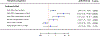
Description:The role of ribavirin (RBV) in the era of direct-acting antivirals (DAA) is not clear, and DAA studies have been largely genotype- and regimen-specific. Using data from the Chronic Hepatitis Cohort Study, we evaluated the role of RBV and increased DAA treatment duration among patients with chronic hepatitis C (HCV) in routine clinical care. We performed multivariable analysis of data from 4133 patients receiving any of the following: sofosbuvir (SOF); daclatasvir + SOF; grazoprevir + elbasvir; paritaprevir/ritonavir + ombitasvir; simeprevir + SOF; and SOF + ledipasvir; SOF + velpatasvir ± voxilaprevir; and glecaprevir + pibrentasvir-all with/ without RBV. Inverse probability treatment weighting was used to adjust for treatment selection bias. Sustained virological response (SVR) was defined by undetectable HCV RNA 12 weeks after end of therapy. The overall SVR rate was 95%. Mean treatment duration was 12 ± 4.5 weeks. The final model included treatment duration and diabetes, as well as the interaction of RBV with previous treatment status (treatment naïve, interferon treatment failure TF or previous DAA TF), cirrhosis status, and HCV genotype (GT). Each one-month increment of treatment duration increased odds of SVR by 99% (aOR = 1.99). Diabetes, previous DAA TF, and decompensated cirrhosis significantly reduced odds of SVR. RBV significantly increased the likelihood of SVR among patients with decompensated cirrhosis (aOR = 5.05), previous DAA treatment failure (aOR = 5.43), and GT3 (aOR = 13.28). Among RBV-free regimens, patients with GT3 were less likely to achieve SVR than those with GT1 or 2 (aOR 0.07). Diabetes, decompensated cirrhosis, and prior DAA TF independently reduced the likelihood of SVR. Longer treatment duration increased likelihood of SVR. Conclusion: RBV increased likelihood of SVR among patients with GT3, previous DAA TF, or decompensated cirrhosis.
-
Subjects:
- Article
- Chronic Hepatitis Cohort Study
- decompensated cirrhosis
- direct-acting antivirals
- ribavirin
- Adolescent
- Adult
- Aged
- Aged, 80 and over
- Antiviral Agents
- Drug Therapy, Combination
- Duration of Therapy
- Female
- Hepacivirus
- Hepatitis C, Chronic
- Humans
- Male
- Middle Aged
- RNA, Viral
- Ribavirin
- Sustained Virologic Response
- Treatment Outcome
- Young Adult
-
Source:J Viral Hepat. 26(10):1210-1217
-
DOI:
-
Pubmed ID:31197910
-
Pubmed Central ID:PMC6764853
-
Document Type:
-
Funding:
-
Genre:
-
Volume:26
-
Issue:10
-
Download URL:
-
File Type:
 [PDF - 480.23 KB]
 -
Collection(s):
-
Main Document Checksum:urn:sha-512:33e383dd660b4d2cd6750e7772aae65d94aa45f3ae2d26c601487583433e44d162aa50497e3056458e1fc9e59cca8653538d5d60b7a855d755819e8839c64415
Supporting Files


File Language:
English
 Was this page helpful?
 Found an issue?



CDC STACKS serves as an archival repository of CDC-published products including
scientific findings, journal articles, guidelines, recommendations, or other public health information authored or
co-authored by CDC or funded partners.
As a repository, CDC STACKS retains documents in their original published format to ensure public access to scientific information.
As a repository, CDC STACKS retains documents in their original published format to ensure public access to scientific information.
You May Also Like
COLLECTION
CDC Public Access