



TRACTION PERFORMANCE ACROSS THE LIFE OF SLIP-RESISTANT FOOTWEAR: PRELIMINARY RESULTS FROM A LONGITUDINAL STUDY
Supporting Files

-
9 2020
-
Available in CDC Stacks on September 01, 2021, 12:00 AM
File Language:
English
Details
-
Journal Article:J Safety Res
-
Personal Author:
-
Description:Introduction
Slips, trips, and falls are a major cause of injury in the workplace. Footwear is an important factor in preventing slips. Furthermore, traction performance (friction and under-shoe fluid drainage) are believed to change throughout the life of footwear. However, a paucity of data is available for how traction performance changes for naturally worn, slip-resistant footwear.
Method
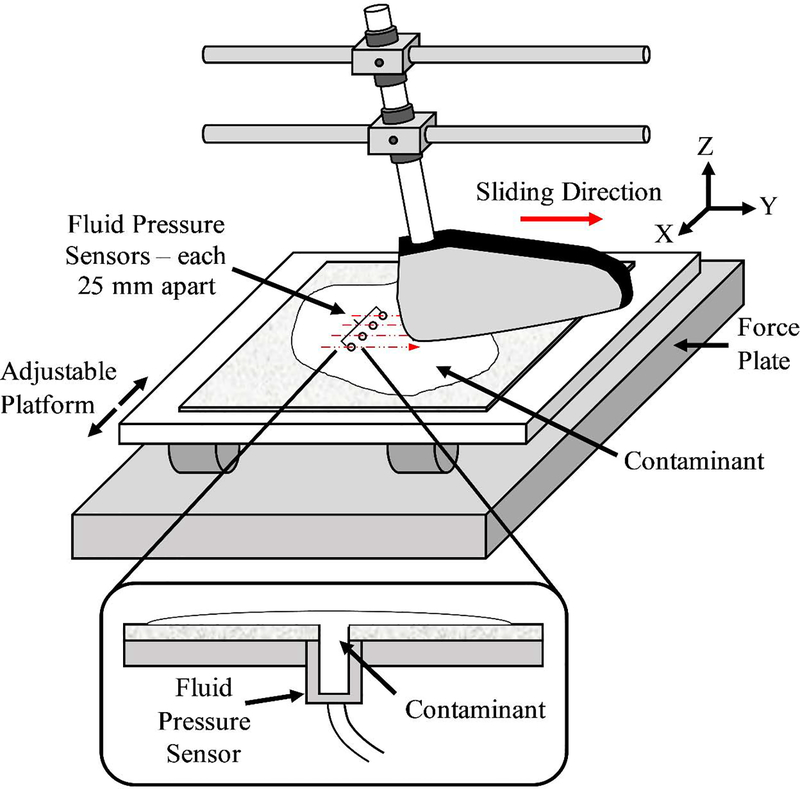
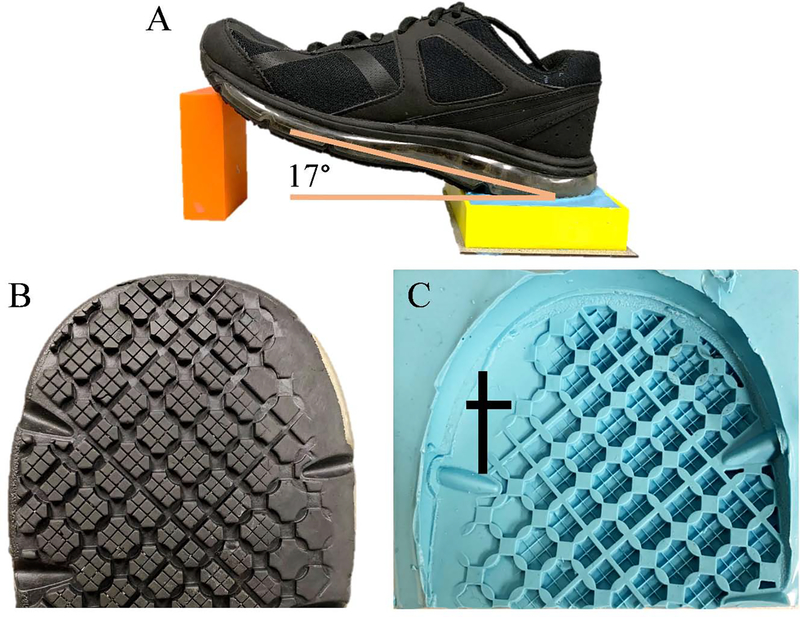
The presented research is a preliminary analysis from an ongoing, larger study. Participants wore slip-resistant footwear while their distance walked was monitored. Friction and under-shoe fluid pressures were measured using a robotic slip tester under a diluted glycerol contaminant condition after each month of wear for the left and right shoes. The size of the worn region was also measured.
Results
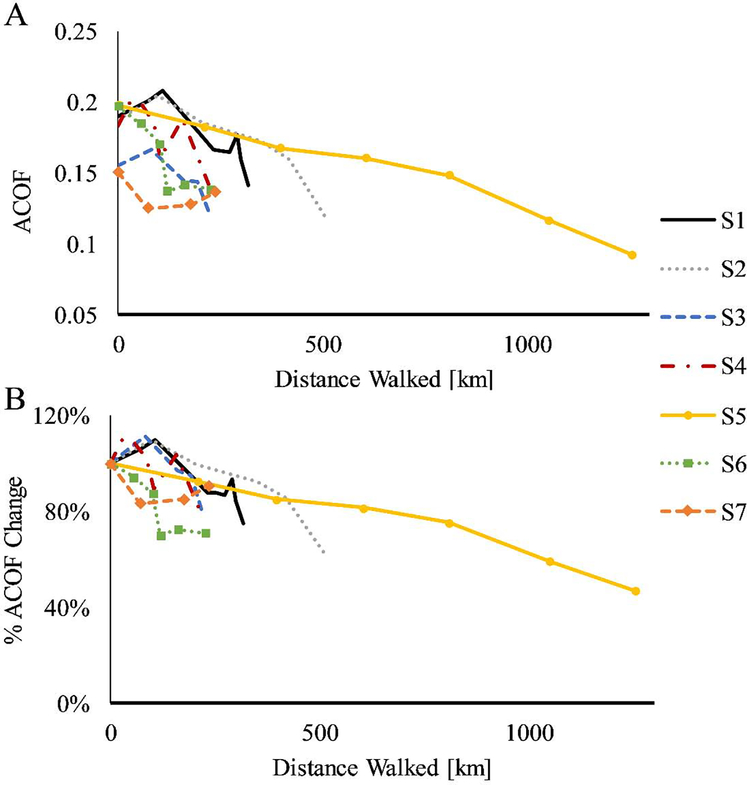
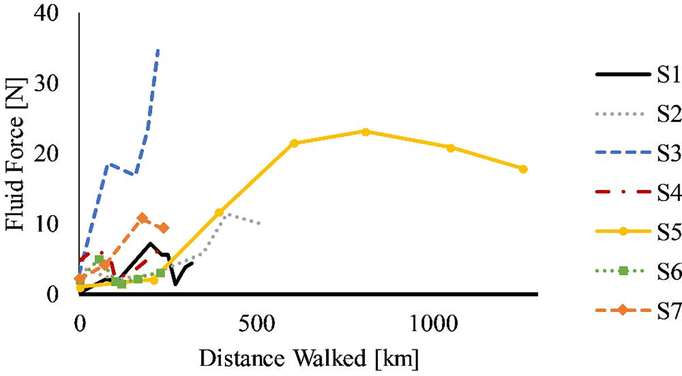
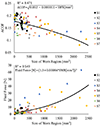
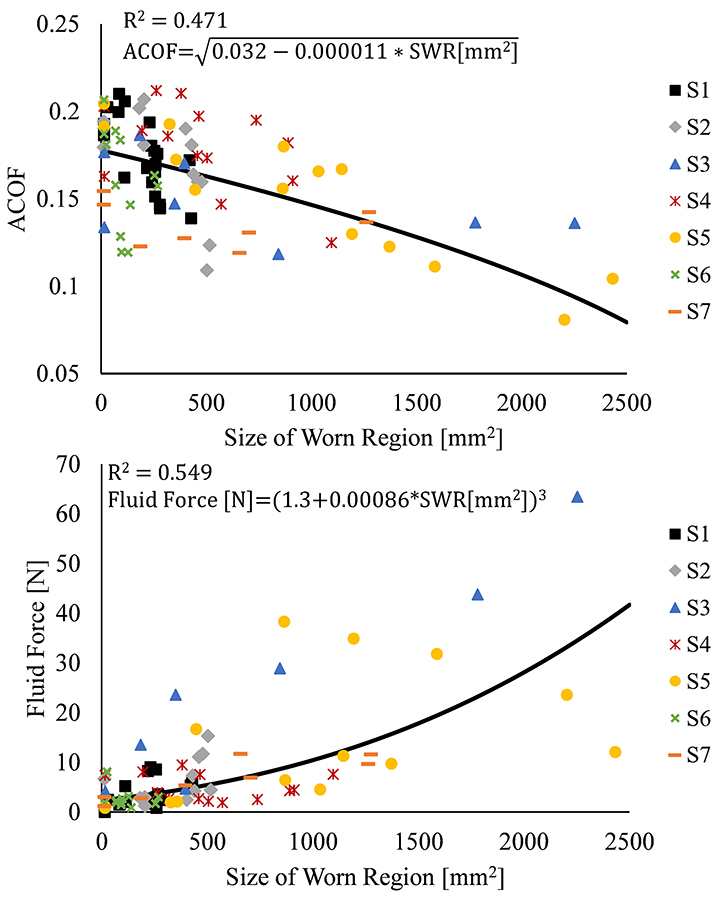
Friction initially increased and then steadily decreased as the distance walked and the size of the worn region increased. Fluid pressures increased as the shoes were worn and were associated with increased walking distance and size of the worn region.
Discussion
Consistent with previous research, increases in the size of the worn region are associated with increased under-shoe fluid pressures and decreased traction. These trends are presumably due to reduced fluid drainage between the shoe-floor interface when the shoe becomes worn.
Conclusions
Traction performance changes with natural wear. The distance walked in the shoe and the size of the worn region may be valuable indicators for assessing loss of traction performance.
Practical Applications
Current shoe replacement recommendations for slip-resistant shoes are based upon age and tread depth. This study suggests that tools measuring the size of the worn region and/or distance traveled in the shoes are appropriate alternatives for tracking traction performance loss due to shoe wear. -
Subjects:
-
Source:J Safety Res. 74:219-225
-
DOI:
-
Pubmed ID:32951786
-
Pubmed Central ID:PMC7506145
-
Document Type:
-
Funding:
-
Genre:
-
Volume:74
-
Download URL:
-
File Type:
 [PDF - 1.57 MB]
 -
Collection(s):
-
Main Document Checksum:urn:sha-512:1f203b3177304dec85786868c5656f6bea97a9777cfc0d2d68d55ba82540ca91b0349dfdfcf5492aab1b0dafcdd4b65d9ca1d4b71082d996273828e0ec5d8495
Supporting Files


File Language:
English
 Was this page helpful?
 Found an issue?




CDC STACKS serves as an archival repository of CDC-published products including
scientific findings, journal articles, guidelines, recommendations, or other public health information authored or
co-authored by CDC or funded partners.
As a repository, CDC STACKS retains documents in their original published format to ensure public access to scientific information.
As a repository, CDC STACKS retains documents in their original published format to ensure public access to scientific information.
You May Also Like
COLLECTION
CDC Public Access