


A protracted cholera outbreak among residents in an urban setting, Nairobi county, Kenya, 2015
Supporting Files
Public Domain

-
June 25 2020
-
File Language:
English
Details
-
Alternative Title:Pan Afr Med J
-
Personal Author:
-
Description:Introduction
in 2015, a cholera outbreak was confirmed in Nairobi county, Kenya, which we investigated to identify risk factors for infection and recommend control measures.
Methods
we analyzed national cholera surveillance data to describe epidemiological patterns and carried out a case-control study to find reasons for the Nairobi county outbreak. Suspected cholera cases were Nairobi residents aged >2 years with acute watery diarrhea (>4 stools/≤12 hours) and illness onset 1-14 May 2015. Confirmed cases had Vibrio cholerae isolated from stool. Case-patients were frequency-matched to persons without diarrhea (1:2 by age group, residence), interviewed using standardized questionaires. Logistic regression identified factors associated with case status. Household water was analyzed for fecal coliforms and Escherichia coli.
Results
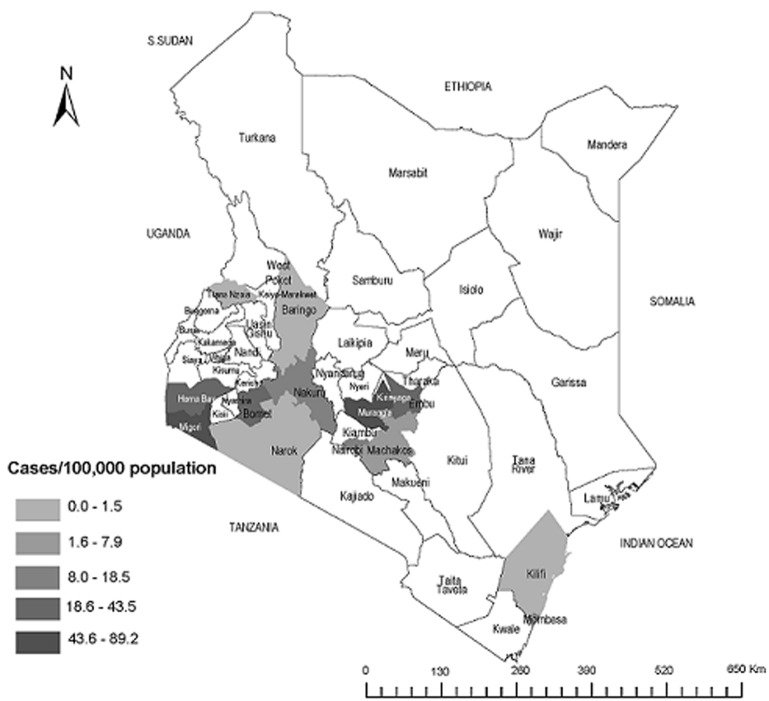
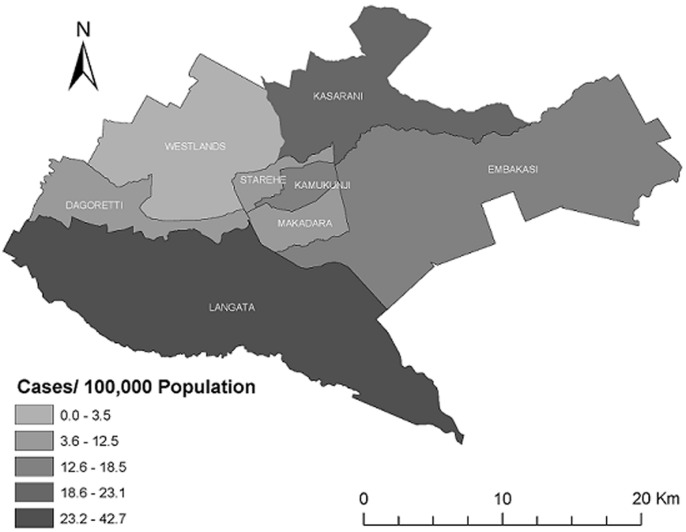
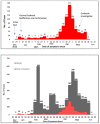
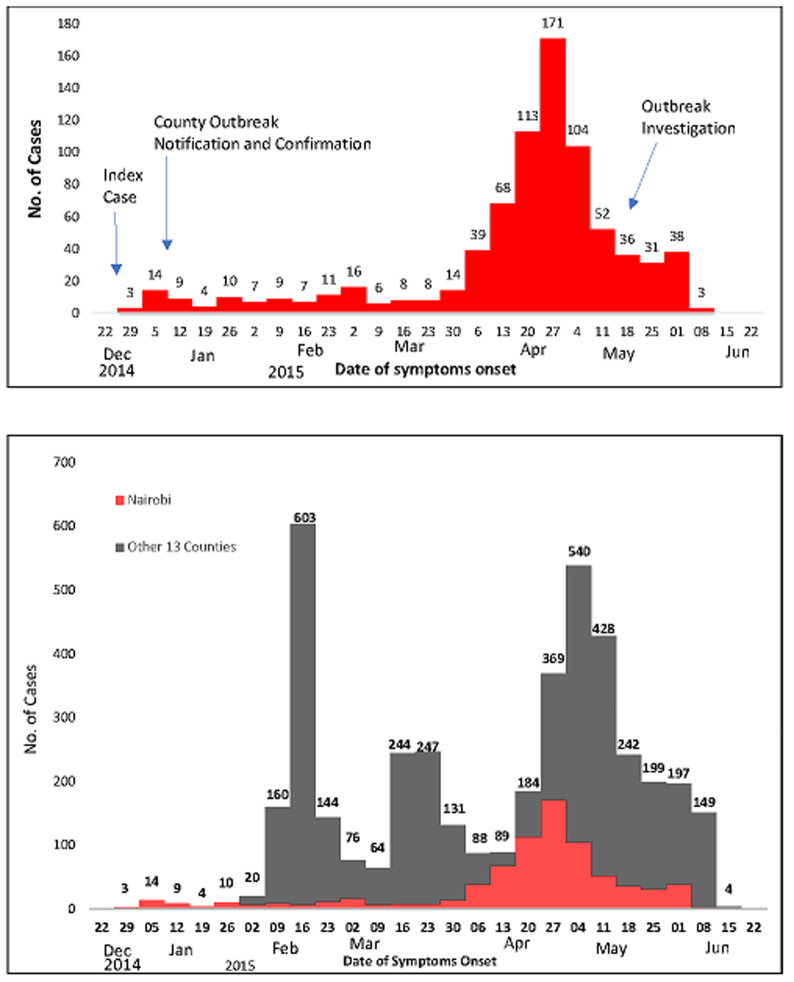
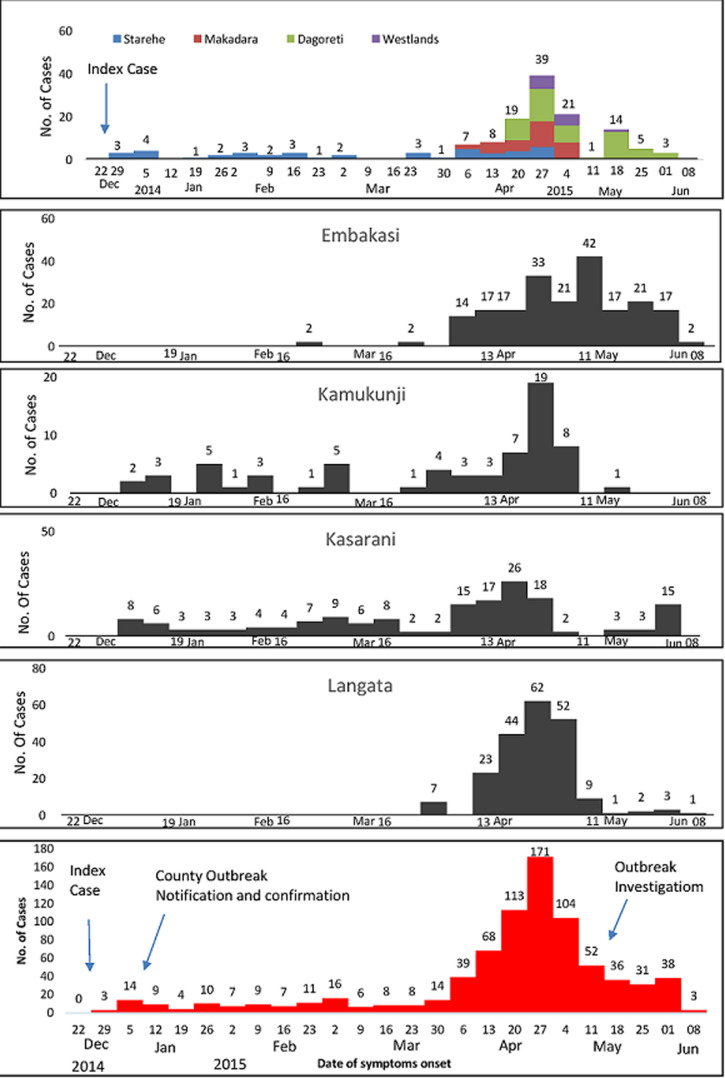
during December 2014-June 2015, 4,218 cholera cases including 282 (6.7%) confirmed cases and 79 deaths (case-fatality rate [CFR] 1.9%) were reported from 14 of 47 Kenyan counties. Nairobi county reported 781 (19.0 %) cases (attack rate, 18/100,000 persons), including 607 (78%) hospitalisations, 20 deaths (CFR 2.6%) and 55 laboratory-confirmed cases (7.0%). Seven (70%) of 10 water samples from communal water points had coliforms; one had Escherichia coli. Factors associated with cholera in Nairobi were drinking untreated water (adjusted odds ratio [aOR] 6.5, 95% confidence interval [CI] 2.3-18.8), lacking health education (aOR 2.4, CI 1.1-7.9) and eating food outside home (aOR 2.4, 95% CI 1.2-5.7).
Conclusion
we recommend safe water, health education, avoiding eating foods prepared outside home and improved sanitation in Nairobi county. Adherence to these practices could have prevented this protacted cholera outbreak.
-
Subjects:
-
Source:Pan Afr Med J. 2020; 36
-
Pubmed ID:32849982
-
Pubmed Central ID:PMC7422748
-
Document Type:
-
Place as Subject:
-
Volume:36
-
Collection(s):
-
Main Document Checksum:urn:sha256:daed09fcfbebee1232079a381f8cdeb526edb5491a54e04e2a23aa6ceb3161df
-
Download URL:
-
File Type:
 [PDF
- 1.08 MB
]
[PDF
- 1.08 MB
]
Supporting Files


File Language:
English
ON THIS PAGE

CDC STACKS serves as an archival repository of CDC-published products including
scientific findings,
journal articles, guidelines, recommendations, or other public health information authored or
co-authored by CDC or funded partners.
As a repository, CDC STACKS retains documents in their original published format to ensure public access to scientific information.
As a repository, CDC STACKS retains documents in their original published format to ensure public access to scientific information.
You May Also Like
COLLECTION
CDC Public Access