



Integrated Cross-Sectional Multiplex Serosurveillance of IgG Antibody Responses to Parasitic Diseases and Vaccines in Coastal Kenya
Supporting Files

-
January 2020
-
File Language:
English
Details
-
Alternative Title:Am J Trop Med Hyg
-
Personal Author:
-
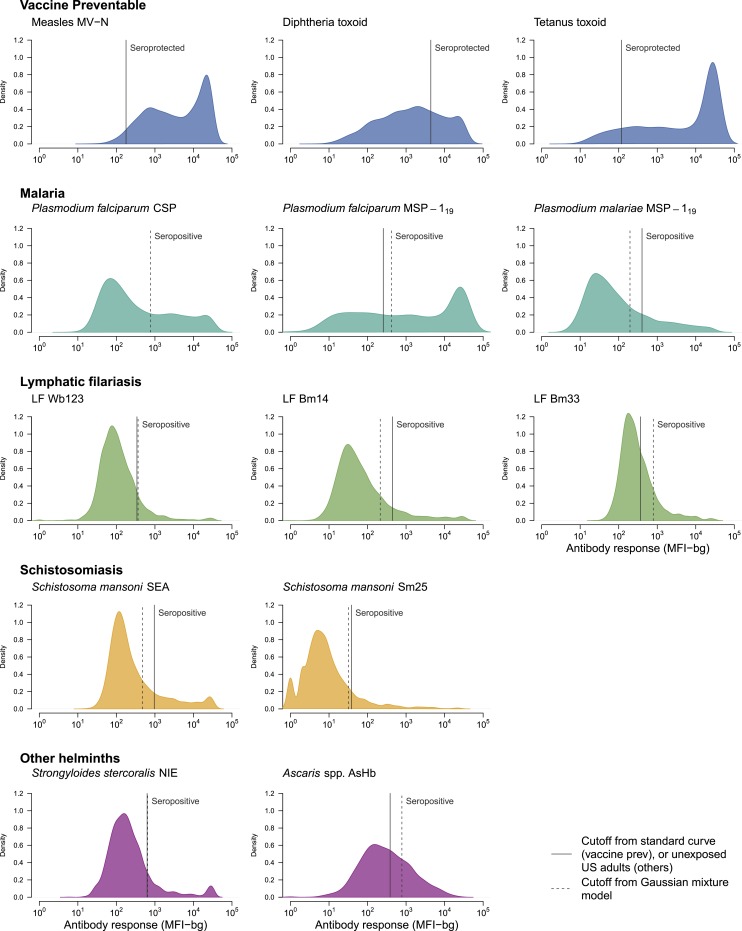
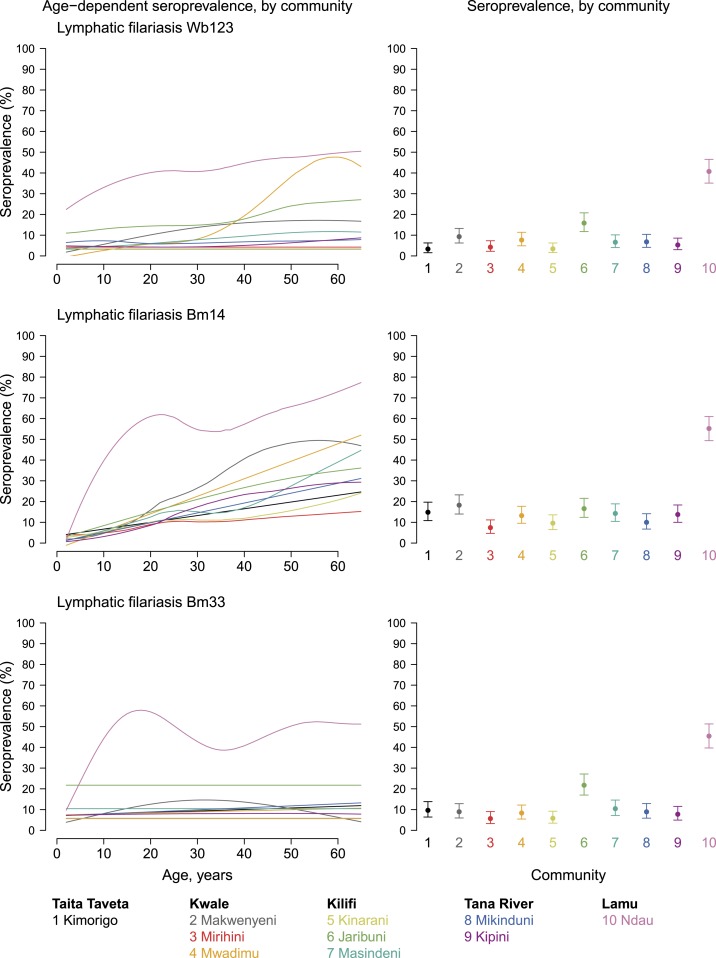
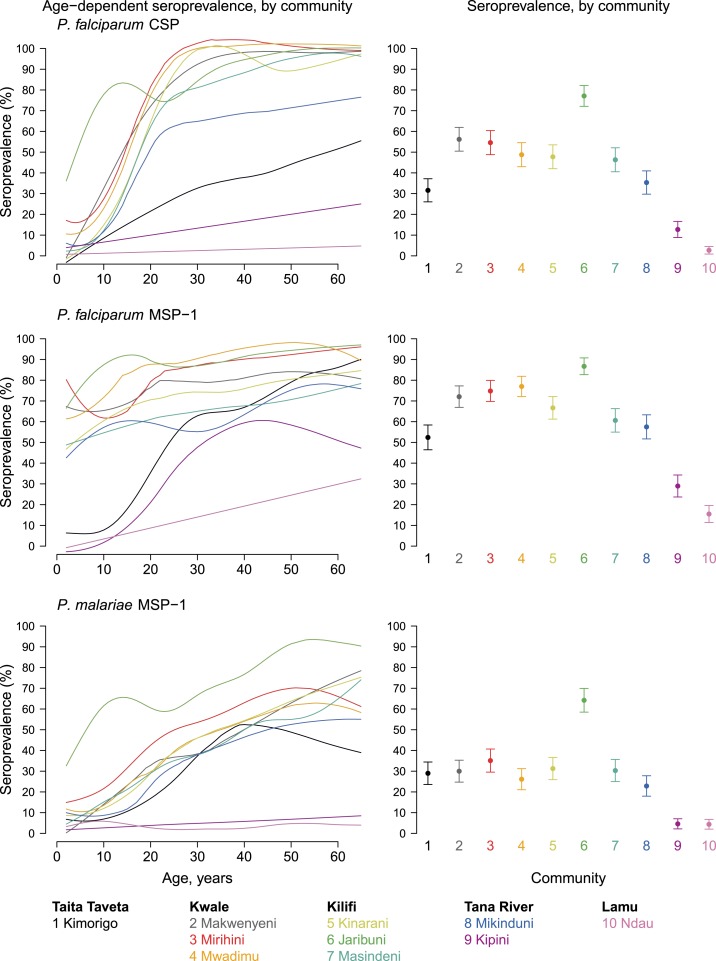
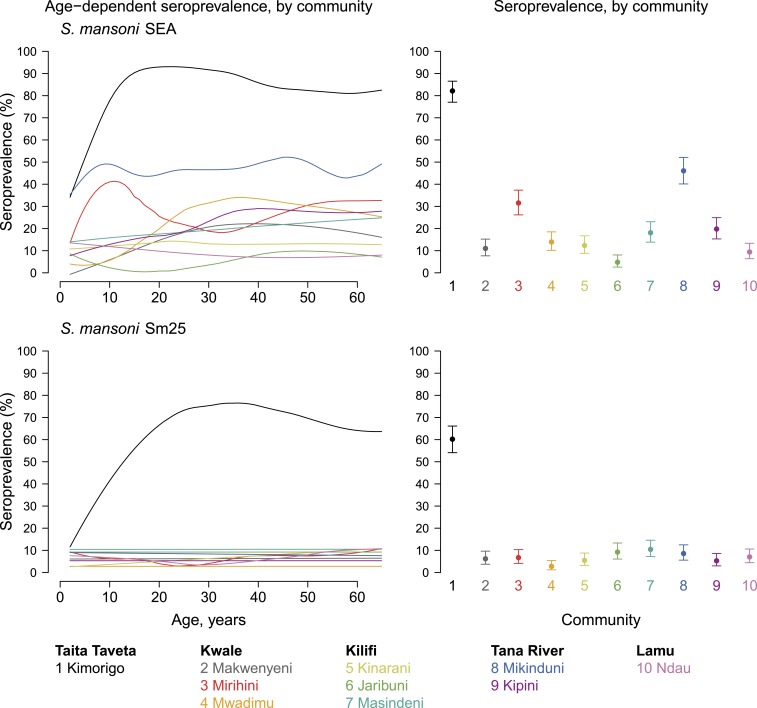
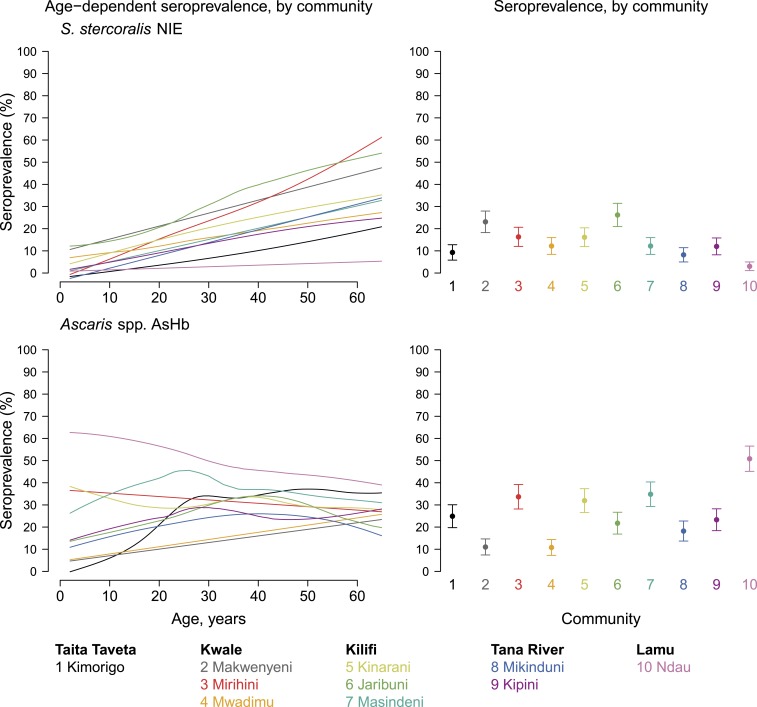
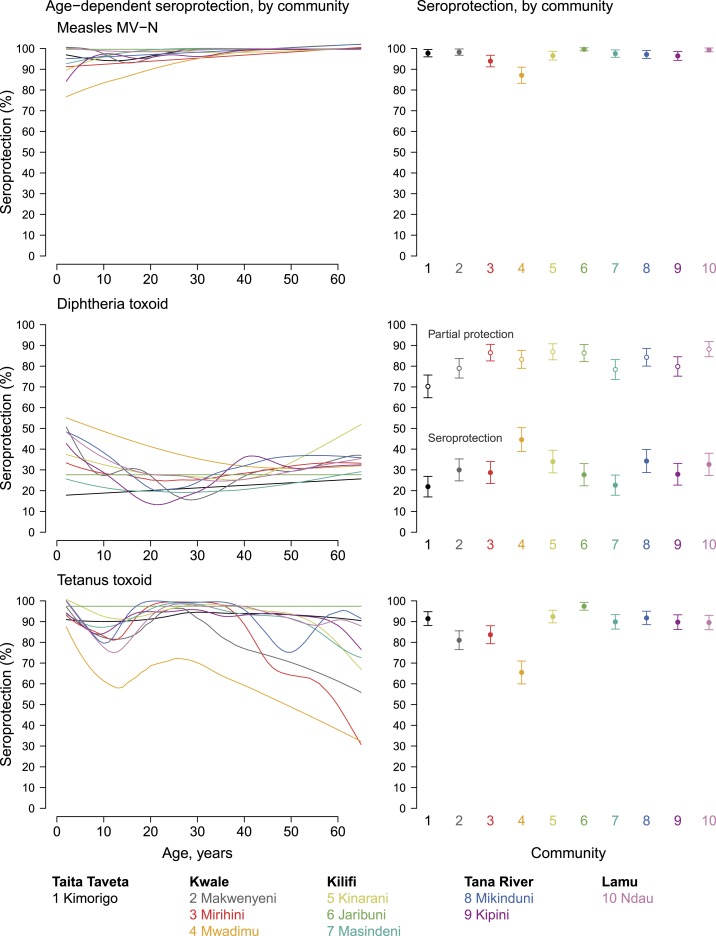
Description:Accurate and cost-effective identification of areas where co-endemic infections occur would enable public health managers to identify opportunities for implementation of integrated control programs. Dried blood spots collected during cross-sectional lymphatic filariasis surveys in coastal Kenya were used for exploratory integrated detection of IgG antibodies against antigens from several parasitic infections (|, |, | spp., |, and |) as well as for detection of responses to immunizing agents used against vaccine-preventable diseases (VPDs) (measles, diphtheria, and tetanus) using a multiplex bead assay (MBA) platform. High heterogeneity was observed in antibody responses by pathogen and antigen across the sentinel sites. Antibody seroprevalence against filarial antigens were generally higher in Ndau Island (| < 0.0001), which also had the highest prevalence of filarial antigenemia compared with other communities. Antibody responses to the | species antigens circumsporozoite protein (CSP) and merozoite surface protein-1 (MSP-1)| were higher in Kilifi and Kwale counties, with Jaribuni community showing higher overall mean seroprevalence (| < 0.0001). Kimorigo community in Taita-Taveta County was the only area where antibody responses against | Sm25 recombinant antigen were detected. Seroprevalence rates to | antigen NIE ranged between 3% and 26%, and there was high heterogeneity in immune responses against an | antigen among the study communities. Differences were observed between communities in terms of seroprevalence to VPDs. Seroprotection to tetanus was generally lower in Kwale County than in other counties. This study has demonstrated that MBA holds promise for rapid integrated monitoring of trends of infections of public health importance in endemic areas.
-
Subjects:
-
Source:Am J Trop Med Hyg. 2020; 102(1):164-176
-
Pubmed ID:31769388
-
Pubmed Central ID:PMC6947807
-
Document Type:
-
Funding:
-
Place as Subject:
-
Volume:102
-
Issue:1
-
Collection(s):
-
Main Document Checksum:urn:sha256:e7c6441c573d04d978576a00467a5aa9fdeabef08f9a4e4e4b95355a77eb7885
-
Download URL:
-
File Type:
 [PDF
- 1.33 MB
]
[PDF
- 1.33 MB
]
Supporting Files


File Language:
English
 Was this page helpful?
 Found an issue?





CDC STACKS serves as an archival repository of CDC-published products including
scientific findings,
journal articles, guidelines, recommendations, or other public health information authored or
co-authored by CDC or funded partners.
As a repository, CDC STACKS retains documents in their original published format to ensure public access to scientific information.
As a repository, CDC STACKS retains documents in their original published format to ensure public access to scientific information.
You May Also Like
COLLECTION
CDC Public Access