



Progress Toward Hepatitis B Control — South-East Asia Region, 2016–2019
Supporting Files
Public Domain

-
July 31 2020
File Language:
English
Details
-
Journal Article:Morbidity and Mortality Weekly Report (MMWR)
-
Personal Author:
-
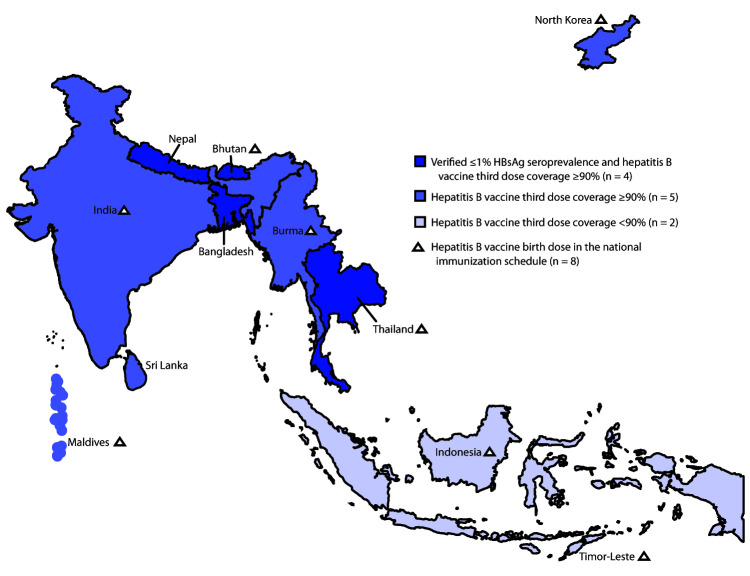
Description:In 2015, the World Health Organization (WHO) South-East Asia Region (SEAR)* reported an estimated 40 million persons living with chronic hepatitis B Virus (HBV) infection and 285,000 deaths from Complications of chronic infection, cirrhosis, and hepatocellular carcinoma (1). Most chronic HBV infections, indicated by the presence of hepatitis B surface antigen (HBsAg) on serologic tTesting, are acquired in infancy through perinatal or early childhood Transmission (2). To prevent perinatal and childhood infections, WHO recommends that all infants receive at least 3 doses of hepatitis B vaccine (HepB), including a timely birth dose (HepB-BD)| (1). In 2016, the SEAR Immunization Technical Advisory Group endorsed a regional hepatitis B control goal with a target of achieving hepatitis B surface antigen (HBsAg) seroprevalence of ≤1% among children aged ≥5 years by 2020, which is in line with the WHO Global Health Sector Strategy on Viral Hepatitis 2016-2021 (2,3). The South-East Asia Regional Vaccine Action Plan 2016-2020 (SEARVAP) (4) identified the acceleration of hepatitis B control as one of the eight regional goals for immunization. The plan outlined four main strategies for achieving hepatitis B control: 1) achieving ≥90% coverage with 3 doses of HepB (HepB3), 2) providing timely vaccination with a HepB birth dose (HepB-BD), 3) providing catch-up vaccination of older children, and 4) vaccinating adult populations at high risk and health care workers (1,4). In 2019, SEAR established a regional expert panel on hepatitis B to assess countries' HBV control status. This report describes the progress made toward hepatitis B control in SEAR during 2016-2019. By 2016, all 11 countries in the region had introduced HepB in their national immunization programs, and eight countries had introduced HepB-BD. During 2016-2019, regional HepB3 coverage increased from 89% to 91%, and HepB-BD coverage increased from 34% to 54%. In 2019, nine countries in the region achieved ≥90% HepB3 coverage, and three of the eight countries that provide HepB-BD achieved ≥90% HepB-BD coverage. By December 2019, four countries had been verified to have achieved the hepatitis B control goal. Countries in the region can make further progress toward hepatitis B control by using proven strategies to improve HepB-BD and HepB3 coverage rates. Conducting nationally representative hepatitis B serosurveys among children will be key to tracking and verifying the regional control targets.
-
Subjects:
-
Source:MMWR Morbidity Mortal Weekly Rep. 69(30):988-992
-
Series:
-
ISSN:0149-2195 (print) ; 1545-861X (digital)
-
Pubmed ID:32730237
-
Pubmed Central ID:PMC7392392
-
Document Type:
-
Place as Subject:
-
Pages in Document:5 pdf pages
-
Volume:69
-
Issue:30
-
Download URL:
-
File Type:
 [PDF - 300.60 KB]
 -
Collection(s):
-
Main Document Checksum:urn:sha-512:d2f19e0694e676cfea8f622b6ced1ffcacb889cc53e76a1b74c908398014cce5adbdd24cf7571ecf210f25c44b0bff67bbdc368584c05296e79fe36c80383881
Supporting Files


File Language:
English
 Was this page helpful?
 Found an issue?


CDC STACKS serves as an archival repository of CDC-published products including
scientific findings, journal articles, guidelines, recommendations, or other public health information authored or
co-authored by CDC or funded partners.
As a repository, CDC STACKS retains documents in their original published format to ensure public access to scientific information.
As a repository, CDC STACKS retains documents in their original published format to ensure public access to scientific information.
You May Also Like
COLLECTION
Morbidity and Mortality Weekly Report (MMWR)