



Estimated County-Level Prevalence of Selected Underlying Medical Conditions Associated with Increased Risk for Severe COVID-19 Illness — United States, 2018
Supporting Files
Public Domain

-
July 24 2020
File Language:
English
Details
-
Journal Article:Morbidity and Mortality Weekly Report (MMWR)
-
Personal Author:
-
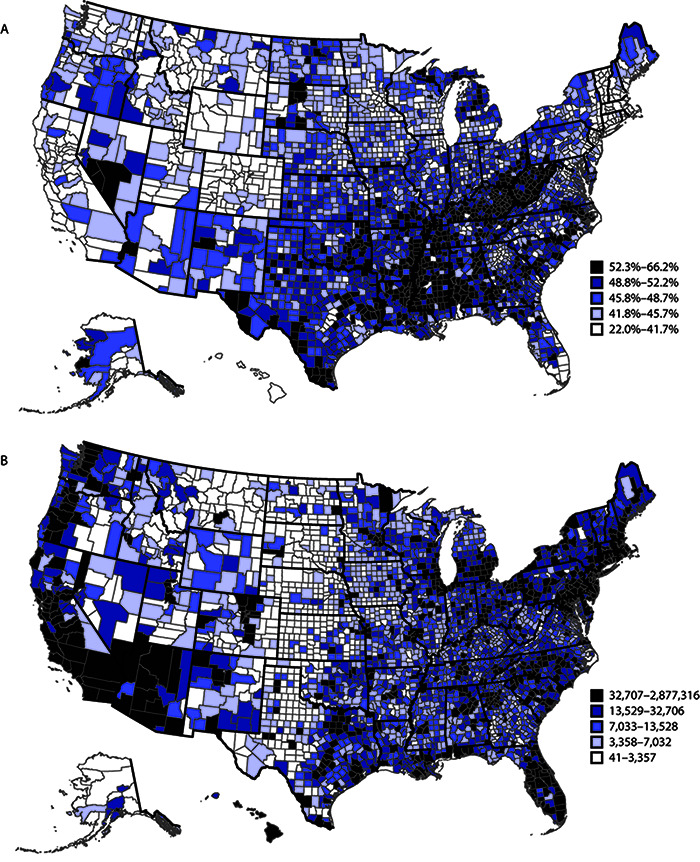
Description:Risk for severe coronaVirus disease 2019 (COVID-19)-associated illness (illness requiring hospitalization, intensive care unit ICU admission, mechanical ventilation, or resulting in death) increases with increasing age as well as presence of underlying medical conditions that have shown strong and consistent evidence, including chronic obstructive pulmonary disease, cardiovascular disease, diabetes, chronic kidney disease, and obesity (1-4). Identifying and describing the prevalence of these conditions at the local level can help guide decision-making and efforts to prevent or control severe COVID-19-associated illness. Below state-level estimates, there is a lack of standardized publicly available data on underlying medical conditions that increase the risk for severe COVID-19-associated illness. A small area estimation approach was used to estimate county-level prevalence of selected conditions associated with severe COVID-19 disease among U.S. adults aged ≥18 years (5,6) using self-reported data from the 2018 Behavioral Risk Factor Surveillance System (BRFSS) and U.S. Census population data. The median prevalence of any underlying medical condition in residents among 3,142 counties in all 50 states and the District of Columbia (DC) was 47.2% (range = 22.0%-66.2%); counties with the highest prevalence were concentrated in the Southeast and Appalachian region. Whereas the estimated number of persons with any underlying medical condition was higher in population-dense metropolitan areas, overall prevalence was higher in rural nonmetropolitan areas. These data can provide important local-level information about the estimated number and proportion of persons with certain underlying medical conditions to help guide decisions regarding additional resource investment, and mitigation and Prevention measures to slow the spread of COVID-19.
-
Subjects:
-
Source:MMWR Morbidity Mortal Weekly Rep. 69(29):945-950
-
Series:
-
ISSN:0149-2195 (print) ; 1545-861X (digital)
-
Pubmed ID:32701937
-
Pubmed Central ID:PMC7377821
-
Document Type:
-
Place as Subject:
-
Pages in Document:6 pdf pages
-
Volume:69
-
Issue:29
-
Download URL:
-
File Type:
 [PDF - 540.72 KB]
 -
Collection(s):
-
Main Document Checksum:urn:sha-512:be406763b92c340f28ec3f72c06cc1fa86584e895348ae946cfe26724b64c46cbcaa82b6ffaa86861441a994f23afcd3ec313e10b1d2098dfc0b8f98302d50be
Supporting Files


File Language:
English
 Was this page helpful?
 Found an issue?

CDC STACKS serves as an archival repository of CDC-published products including
scientific findings, journal articles, guidelines, recommendations, or other public health information authored or
co-authored by CDC or funded partners.
As a repository, CDC STACKS retains documents in their original published format to ensure public access to scientific information.
As a repository, CDC STACKS retains documents in their original published format to ensure public access to scientific information.
You May Also Like
COLLECTION
Morbidity and Mortality Weekly Report (MMWR)