



Prevalence of Selected Chronic Conditions Among Children, Adolescents, and Young Adults in Acute Care Settings in Hawai‘i
Supporting Files

-
July 23 2020
File Language:
English
Details
-
Journal Article:Preventing Chronic Disease (PCD)
-
Personal Author:
-
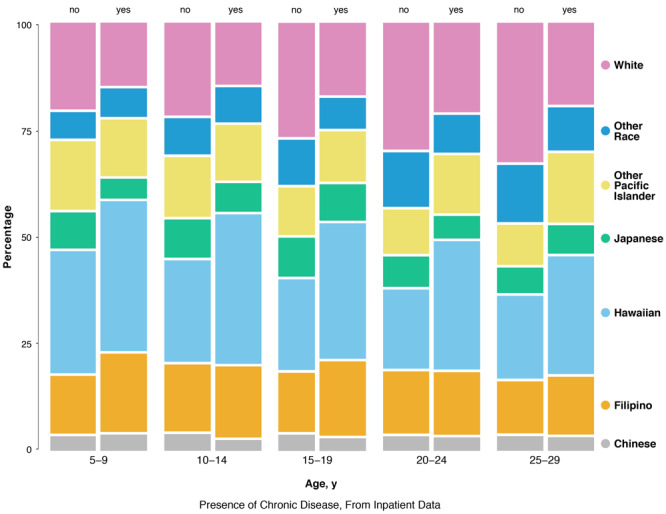
Description:Introduction ; Chronic disease prevalence among young people is understudied generally and specifically for Native Hawaiian, Filipino, and Pacific Islander youth who are at high risk for these conditions. We determined the statewide prevalence of chronic diseases in acute care for those aged 5 to 29 years, including Native Hawaiians, Filipinos, and Pacific Islanders. ; Methods ; We used Hawai‘i statewide inpatient and emergency department (ED) data across all payers from 2015–2016 to determine the presence of at least 1 of 5 chronic conditions (ie, asthma, hypertension, chronic kidney disease, diabetes, stroke) from 13,514 inpatient stays by 9,467 unique individuals and 228,548 ED visits by 127,854 individuals. ; Results ; Twenty-eight percent of youth who were hospitalized and 12% with an ED visit had at least 1 chronic condition. Medicaid covered more than half of these visits. When comparing patients with and without a chronic condition, race/ethnicity, age group, and payer varied significantly in both inpatient and ED settings. Patients with a chronic condition were disproportionately Native Hawaiian, Filipino, and Pacific Islander; 32.3% of those with an inpatient chronic condition and 34.9% of those with an ED chronic condition were Native Hawaiian. Prevalence of chronic conditions among racial/ethnic groups varied significantly by age. ; Conclusion ; Chronic diseases, including those more often seen in adulthood, are prevalent in young people in acute care settings in Hawai‘i, with notable disparities. These findings can help justify, guide, and support programs that are needed to address these changing epidemiological trends, which may be of particular interest for Medicaid.
-
Subjects:
-
Source:Prev Chronic Dis. 2020; 17
-
ISSN:1545-1151
-
Pubmed ID:32701433
-
Pubmed Central ID:PMC7380289
-
Document Type:
-
Funding:
-
Place as Subject:
-
Location:
-
Volume:17
-
Download URL:
-
File Type:
 [PDF - 537.30 KB]
 -
Collection(s):
-
Main Document Checksum:urn:sha-512:6440fba4561cce8d9b68f6bcc9377dba22f76419884291bdf5d6c6e41a28f1d7ba0ad1fdeb9a2420f281bece0fe8034b02cfae4700b3df8446dd4e7bf5a31cd1
Supporting Files


File Language:
English
 Was this page helpful?
 Found an issue?

CDC STACKS serves as an archival repository of CDC-published products including
scientific findings, journal articles, guidelines, recommendations, or other public health information authored or
co-authored by CDC or funded partners.
As a repository, CDC STACKS retains documents in their original published format to ensure public access to scientific information.
As a repository, CDC STACKS retains documents in their original published format to ensure public access to scientific information.
You May Also Like
COLLECTION
Preventing Chronic Disease