


Presence of Segmented Flavivirus Infections in North America
Supporting Files
Public Domain

-
August 2020
-
File Language:
English
Details
-
Alternative Title:Emerg Infect Dis
-
Personal Author:
-
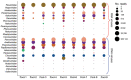
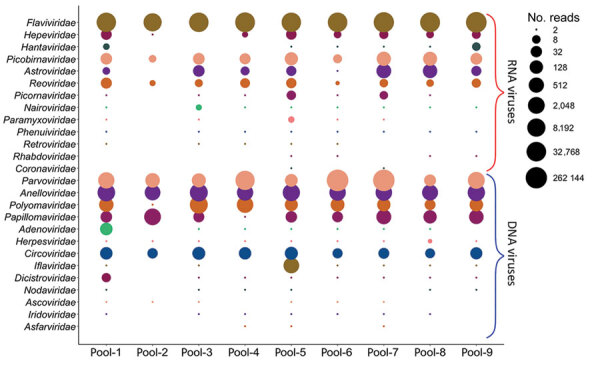
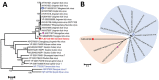
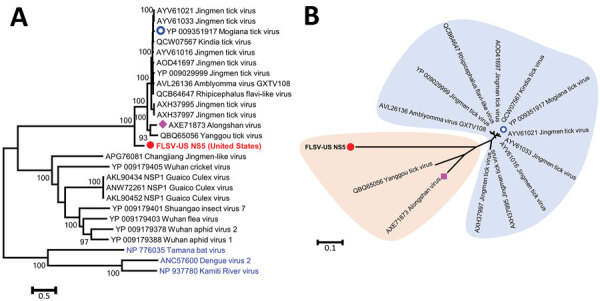
Description:Identifying viruses in synanthropic animals is necessary for understanding the origin of many viruses that can infect humans and developing strategies to prevent new zoonotic infections. The white-footed mouse, Peromyscus leucopus, is one of the most abundant rodent species in the northeastern United States. We characterized the serum virome of 978 free-ranging P. leucopus mice caught in Pennsylvania. We identified many new viruses belonging to 26 different virus families. Among these viruses was a highly divergent segmented flavivirus whose genetic relatives were recently identified in ticks, mosquitoes, and vertebrates, including febrile humans. This novel flavi-like segmented virus was found in rodents and shares ≤70% aa identity with known viruses in the highly conserved region of the viral polymerase. Our data will enable researchers to develop molecular reagents to further characterize this virus and its relatives infecting other hosts and to curtail their spread, if necessary.
-
Subjects:
-
Source:Emerg Infect Dis. 26(8):1810-1817
-
Pubmed ID:32687041
-
Pubmed Central ID:PMC7392405
-
Document Type:
-
Place as Subject:
-
Location:
-
Volume:26
-
Issue:8
-
Collection(s):
-
Main Document Checksum:urn:sha256:c16ef53333dd2a94772414d45632ac3fe47f857a83b3a655a7508647c7a8904e
-
Download URL:
-
File Type:
 [PDF
- 1.51 MB
]
[PDF
- 1.51 MB
]
Supporting Files


File Language:
English
ON THIS PAGE

CDC STACKS serves as an archival repository of CDC-published products including
scientific findings,
journal articles, guidelines, recommendations, or other public health information authored or
co-authored by CDC or funded partners.
As a repository, CDC STACKS retains documents in their original published format to ensure public access to scientific information.
As a repository, CDC STACKS retains documents in their original published format to ensure public access to scientific information.
You May Also Like
COLLECTION
Emerging Infectious Diseases