



Population Genomic Structure and Recent Evolution of Plasmodium knowlesi, Peninsular Malaysia
Supporting Files
Public Domain

-
Aug 2020
File Language:
English
Details
-
Alternative Title:Emerg Infect Dis
-
Personal Author:
-
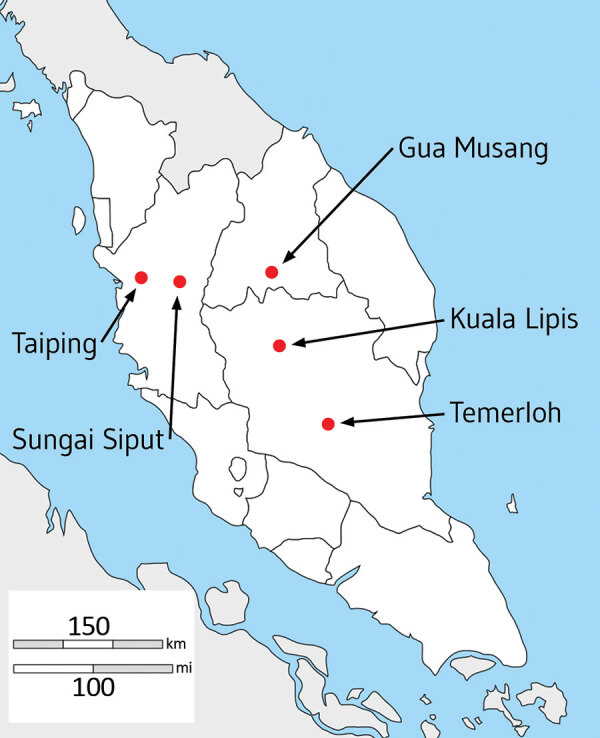
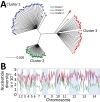
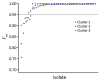
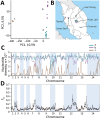
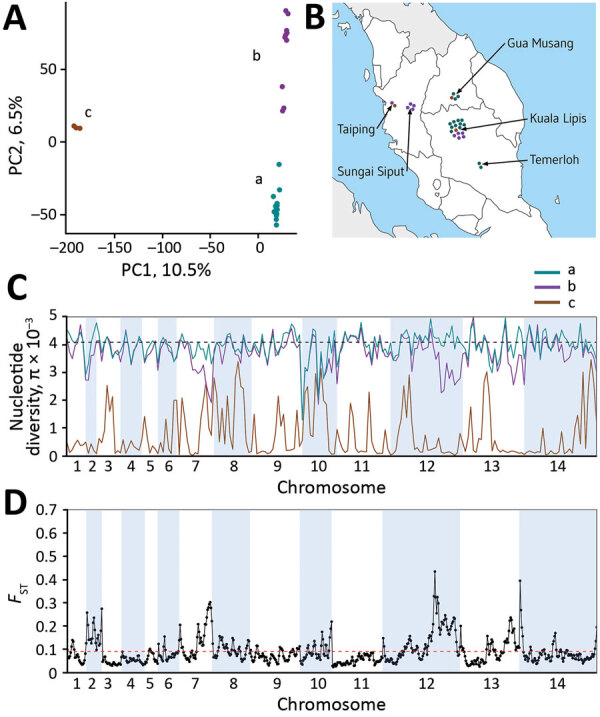
Description:Most malaria in Malaysia is caused by Plasmodium knowlesi parasites through zoonotic infection from macaque reservoir hosts. We obtained genome sequences from 28 clinical infections in Peninsular Malaysia to clarify the emerging parasite population structure and test for evidence of recent adaptation. The parasites all belonged to a major genetic population of P. knowlesi (cluster 3) with high genomewide divergence from populations occurring in Borneo (clusters 1 and 2). We also observed unexpected local genetic subdivision; most parasites belonged to 2 subpopulations sharing a high level of diversity except at particular genomic regions, the largest being a region of chromosome 12, which showed evidence of recent directional selection. Surprisingly, we observed a third subpopulation comprising P. knowlesi infections that were almost identical to each other throughout much of the genome, indicating separately maintained transmission and recent genetic isolation. Each subpopulation could evolve and present a broader health challenge in Asia.
-
Subjects:
- Research
- Population Genomic Structure and Recent Evolution of Plasmodium knowlesi, Peninsular Malaysia
- malaria
- parasites
- parasitic infections
- mosquitoes
- vector-borne diseases
- mosquito-borne diseases
- zoonoses
- genomics
- sequencing
- population genetics
- selection
- epidemiology
- transmission
- Plasmodium knowlesi
- Borneo
- Malaysia
- Peninsular Malaysia
-
Source:Emerg Infect Dis. 26(8):1749-1758
-
Pubmed ID:32687018
-
Pubmed Central ID:PMC7392424
-
Document Type:
-
Volume:26
-
Issue:8
-
Download URL:
-
File Type:
 [PDF - 3.23 MB]
 -
Collection(s):
-
Main Document Checksum:urn:sha256:0cb3aa8bfb50b604047261af05b755d72e694c25d84d1840fe2a361fac3d8c5b
Supporting Files


File Language:
English
 Was this page helpful?
 Found an issue?







CDC STACKS serves as an archival repository of CDC-published products including
scientific findings, journal articles, guidelines, recommendations, or other public health information authored or
co-authored by CDC or funded partners.
As a repository, CDC STACKS retains documents in their original published format to ensure public access to scientific information.
As a repository, CDC STACKS retains documents in their original published format to ensure public access to scientific information.
You May Also Like
COLLECTION
Emerging Infectious Diseases