


Streptococcus infantis, Streptococcus mitis, and Streptococcus oralis Strains With Highly Similar cps5 Loci and Antigenic Relatedness to Serotype 5 Pneumococci
Supporting Files

-
January 08 2019
-
File Language:
English
Details
-
Alternative Title:Front Microbiol
-
Personal Author:Pimenta, Fabiana ; Gertz, Robert E. ; Park, So Hee ; Kim, Ellie ; Moura, Iaci ; Milucky, Jennifer ; Rouphael, Nadine ; Farley, Monica M. ; Harrison, Lee H. ; Bennett, Nancy M. ; Bigogo, Godfrey ; Feikin, Daniel R. ; Breiman, Robert ; Lessa, Fernanda C. ; Whitney, Cynthia G. ; Rajam, Gowrisankar ; Schiffer, Jarad ; da Gloria Carvalho, Maria ; Beall, Bernard
-
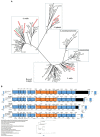
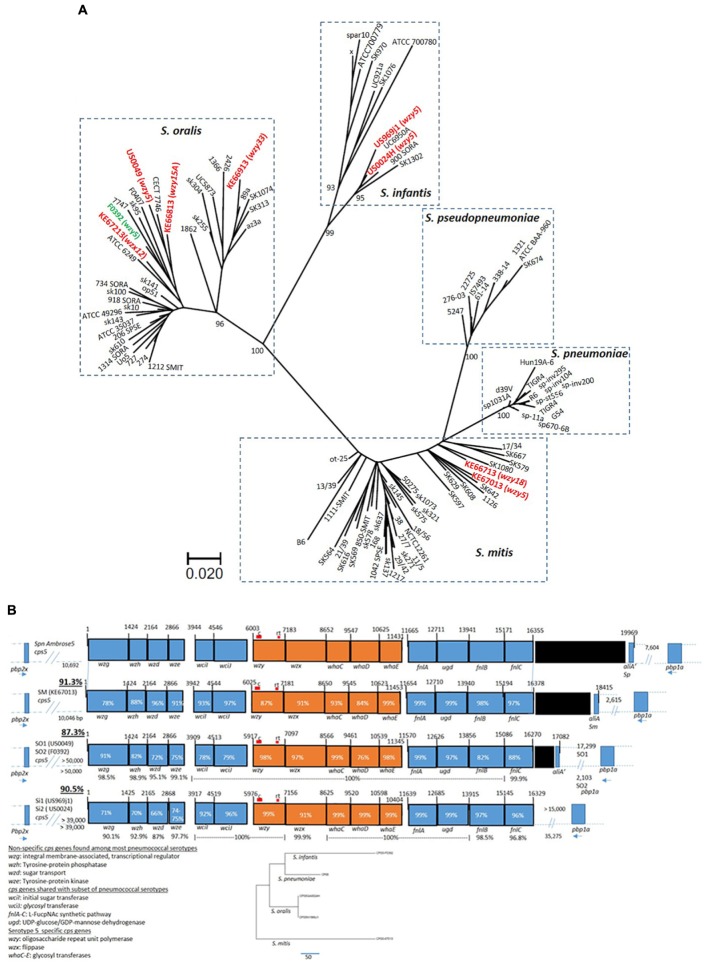
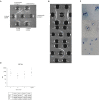
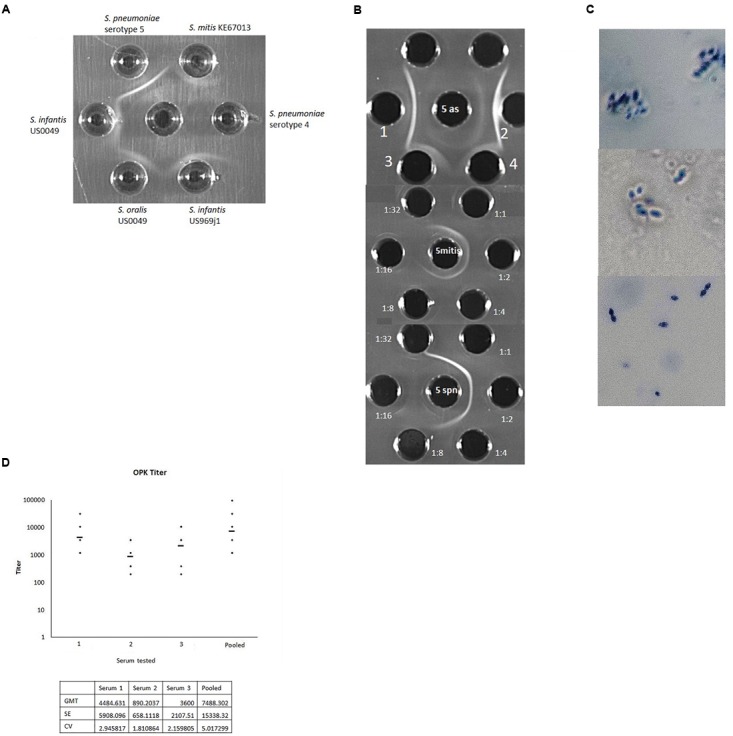
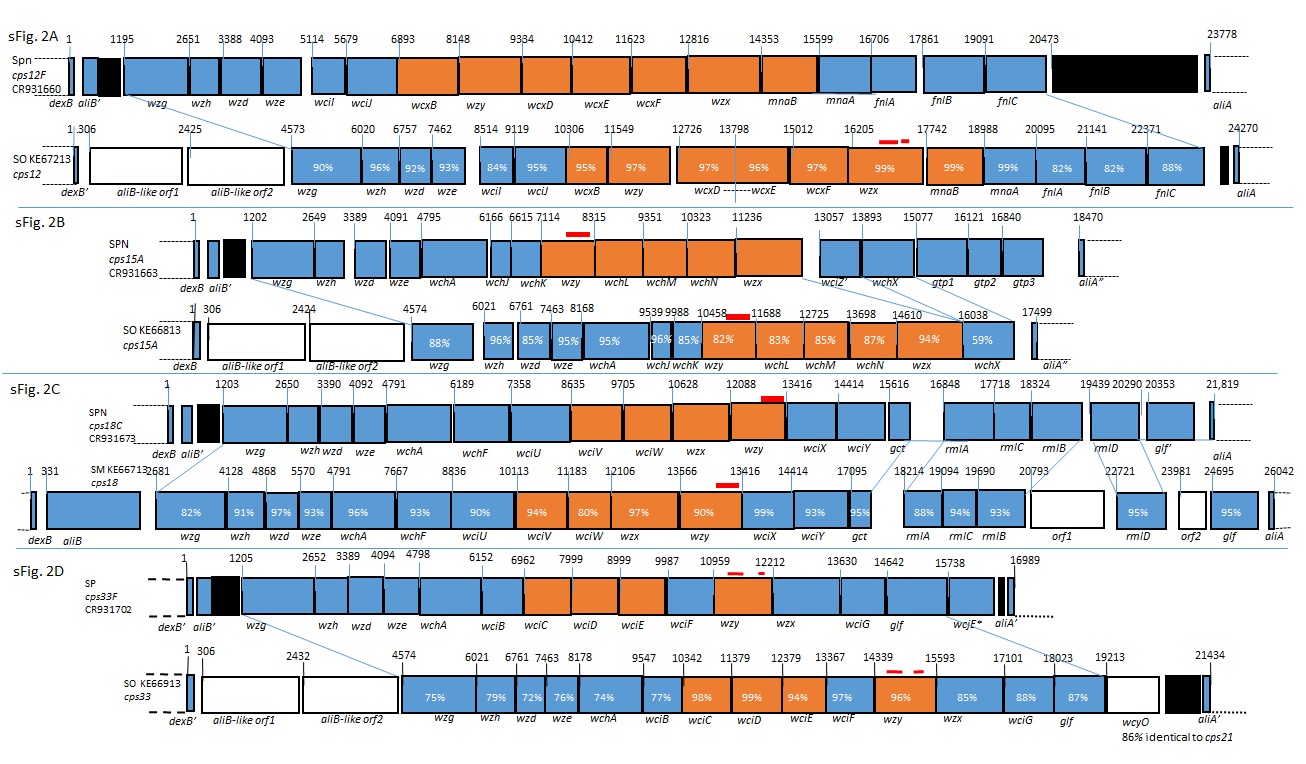
Description:is a highly impactful bacterial pathogen on a global scale. The principal pneumococcal virulence factor and target of effective vaccines is its polysaccharide capsule, of which there are many structurally distinct forms. Here, we describe four distinct strains of three Mitis group commensal species (|, |, and |) recovered from upper respiratory tract specimens from adults in Kenya and the United States that were PCR-positive for the pneumococcal serotype 5 specific gene, |. For each of the four strains, the 15 genes comprising the capsular polysaccharide biosynthetic gene cluster (|) shared the same order found in serotype 5 pneumococci, and each of the serotype 5-specific genes from the serotype 5 pneumococcal reference strain shared 76-99% sequence identity with the non-pneumococcal counterparts. Double-diffusion experiments demonstrated specific reactivity of the non-pneumococcal strains with pneumococcal serotype 5 typing sera. Antiserum raised against | strain KE67013 specifically reacted with serotype 5 pneumococci for a positive Quellung reaction and stimulated serotype 5 specific opsonophagocytic killing of pneumococci. Four additional commensal strains, identified using PCR serotyping assays on pharyngeal specimens, revealed loci highly homologous to those of pneumococci of serotypes 12F, 15A, 18C, and 33F. These data, in particular the species and strain diversity shown for serotype 5, highlight the existence of a broad non-pneumococcal species reservoir in the upper respiratory tract for the expression of capsular polysaccharides that are structurally related or identical to those corresponding to epidemiologically significant serotypes. Very little is known about the genetic and antigenic capsular diversity among the vast array of commensal streptococcal strains that represent multiple diverse species. The discovery of serotype 5 strains within three different commensal species suggests that extensive capsular serologic overlap exists between pneumococci and other members of the diverse Mitis group. These findings may have implications for our current understanding of naturally acquired immunity to | and pneumococcal serotype distributions in different global regions. Further characterization of commensal strains carrying homologs of serotype-specific genes previously thought to be specific for pneumococci of known serotypes may shed light on the evolution of these important loci.
-
Subjects:
-
Source:Front Microbiol. 2019; 9
-
Pubmed ID:30671034
-
Pubmed Central ID:PMC6332807
-
Document Type:
-
Funding:
-
Volume:9
-
Collection(s):
-
Main Document Checksum:urn:sha256:5d884459f3035b52ee485b8fa3fb607491f24d0d068fd72df3cdd803f5558fa0
-
Download URL:
-
File Type:
 [PDF
- 1.42 MB
]
[PDF
- 1.42 MB
]
Supporting Files


File Language:
English
ON THIS PAGE

CDC STACKS serves as an archival repository of CDC-published products including
scientific findings,
journal articles, guidelines, recommendations, or other public health information authored or
co-authored by CDC or funded partners.
As a repository, CDC STACKS retains documents in their original published format to ensure public access to scientific information.
As a repository, CDC STACKS retains documents in their original published format to ensure public access to scientific information.
You May Also Like
COLLECTION
CDC Public Access