



Repeated vaccination against matched H3N2 influenza virus gives less protection than single vaccination in ferrets
Supporting Files
Public Domain

-
July 09 2019
-
Available in CDC Stacks on July 09, 2019, 12:00 AM
File Language:
English
Details
-
Alternative Title:NPJ Vaccines
-
Personal Author:
-
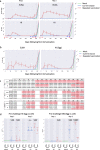
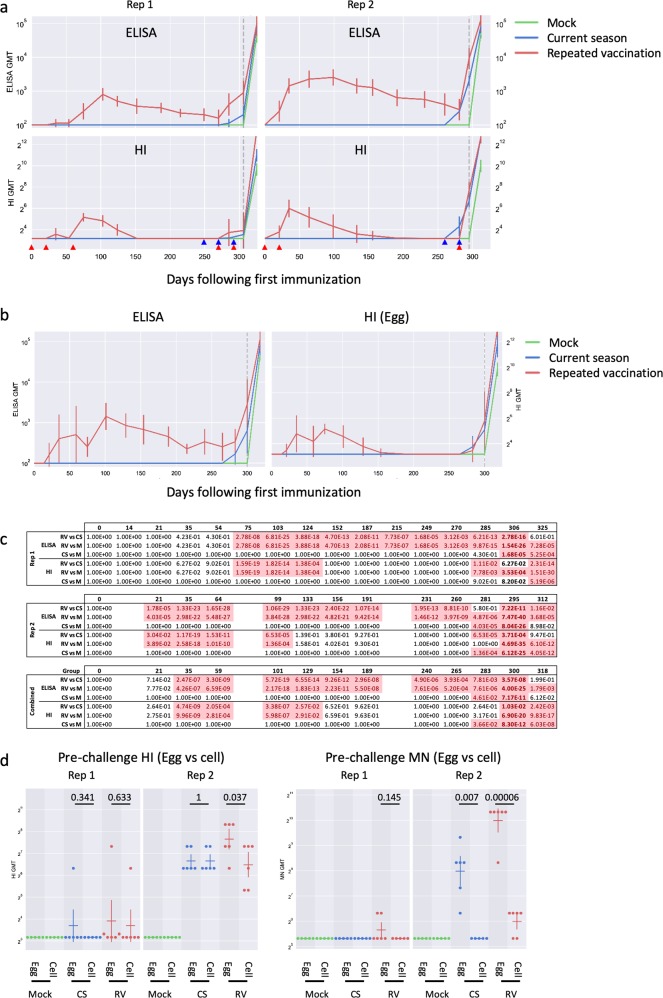
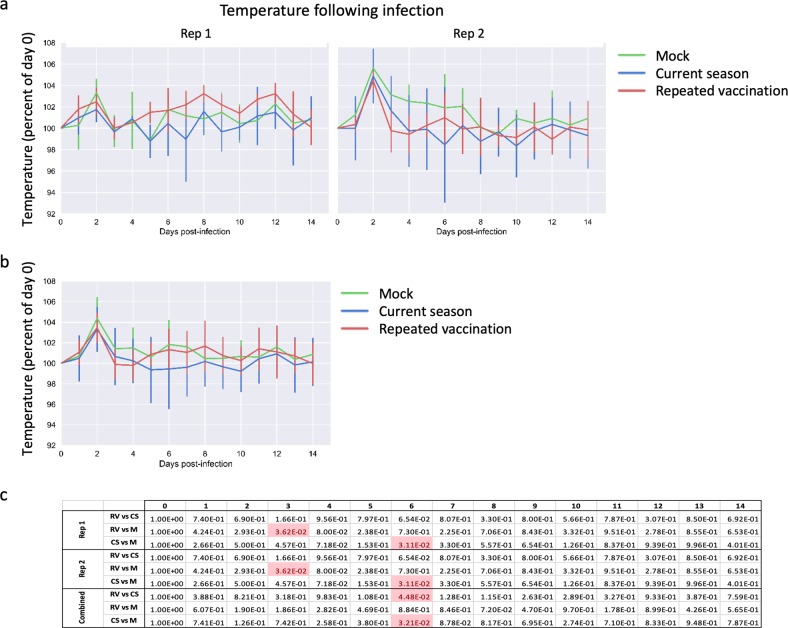
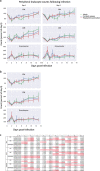
Description:Epidemiological studies suggest that humans who receive repeated annual immunization with influenza vaccine are less well protected against influenza than those who receive vaccine in the current season only. To better understand potential mechanisms underlying these observations, we vaccinated influenza-naive ferrets either twice, 10 months apart (repeated vaccination group; RV), or once (current season only group; CS), using a prime-boost regimen, and then challenged the ferrets with A/Hong Kong/4801/2014(H3N2). Ferrets that received either vaccine regimen were protected against influenza disease and infection relative to naive unvaccinated ferrets, but the RV group shed more virus, especially at the peak of virus shedding 2 days post infection (| < 0.001) and regained weight more slowly (| < 0.05) than those in the CS group. Qualitative, rather than quantitative, differences in the antibody response may affect protection after repeated influenza vaccination.
-
Subjects:
-
Source:NPJ Vaccines. 4
-
Pubmed ID:31312528
-
Pubmed Central ID:PMC6616337
-
Document Type:
-
Volume:4
-
Download URL:
-
File Type:
 [PDF - 2.54 MB]
 -
Collection(s):
-
Main Document Checksum:urn:sha256:e10f5f0d536b21bf11274607e448bb0b1158409a140165eb6e4b1b33d43d3401
Supporting Files


File Language:
English
 Was this page helpful?
 Found an issue?






CDC STACKS serves as an archival repository of CDC-published products including
scientific findings, journal articles, guidelines, recommendations, or other public health information authored or
co-authored by CDC or funded partners.
As a repository, CDC STACKS retains documents in their original published format to ensure public access to scientific information.
As a repository, CDC STACKS retains documents in their original published format to ensure public access to scientific information.
You May Also Like
COLLECTION
CDC Public Access