



Global knowledge gaps in acute febrile illness etiologic investigations: A scoping review
Supporting Files
Public Domain

-
2019/11/15
File Language:
English
Details
-
Alternative Title:PLoS Negl Trop Dis
-
Personal Author:
-
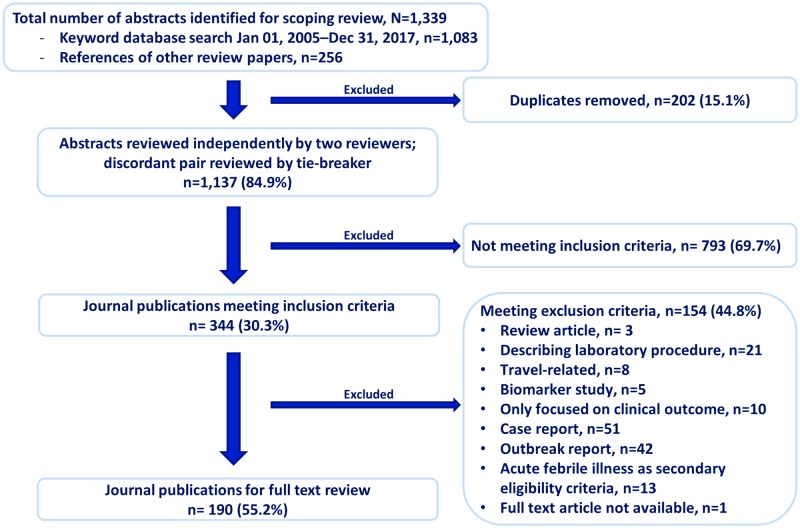
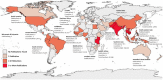
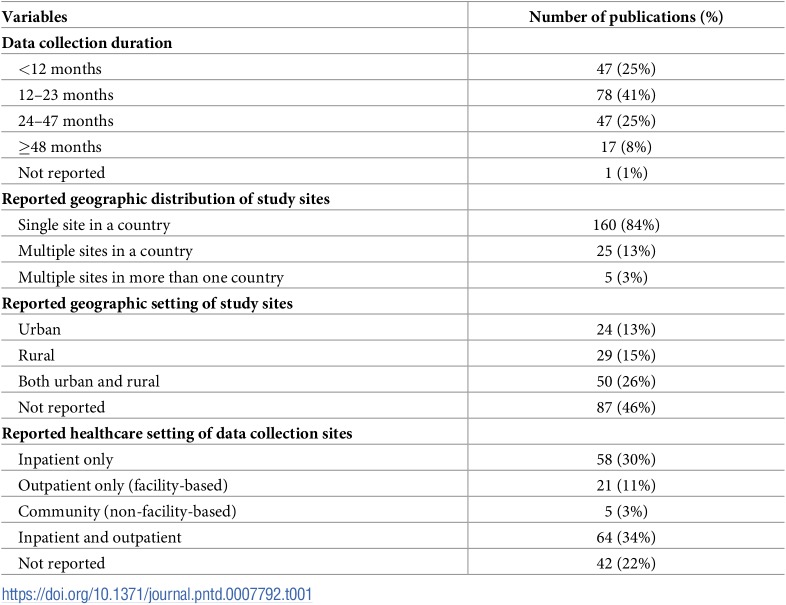
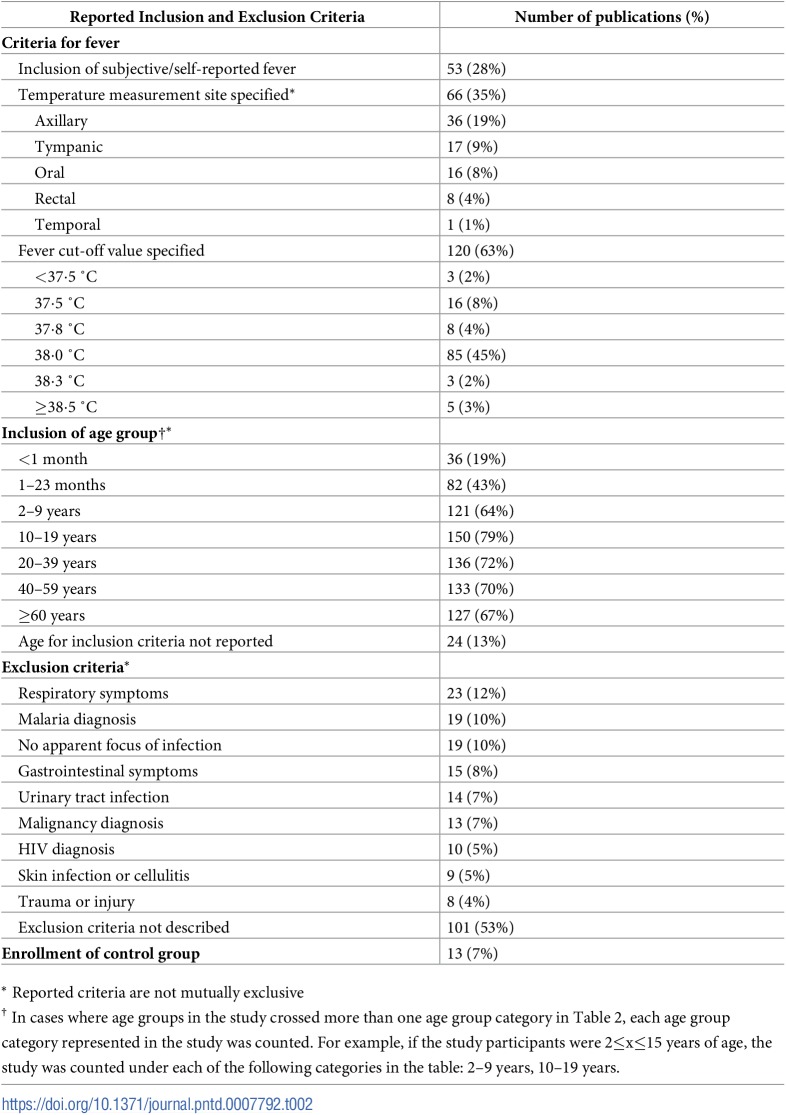
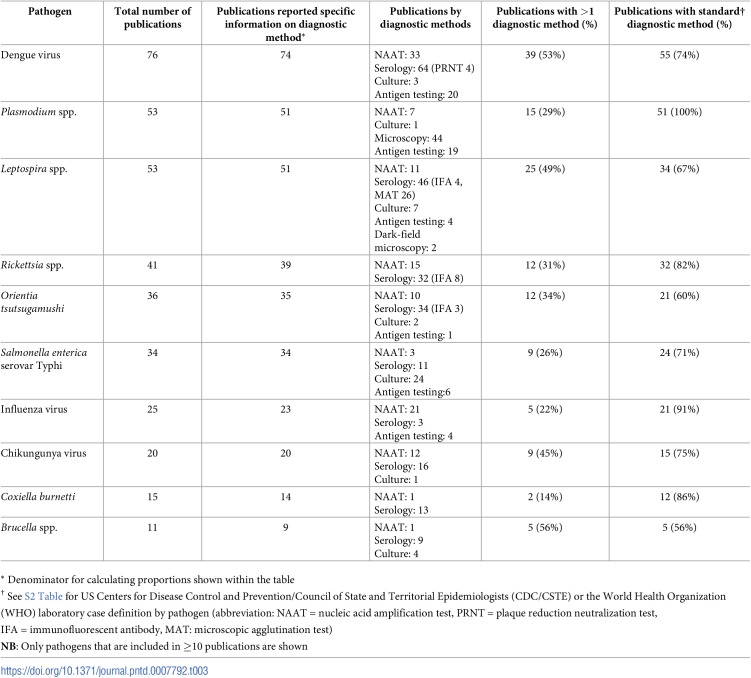
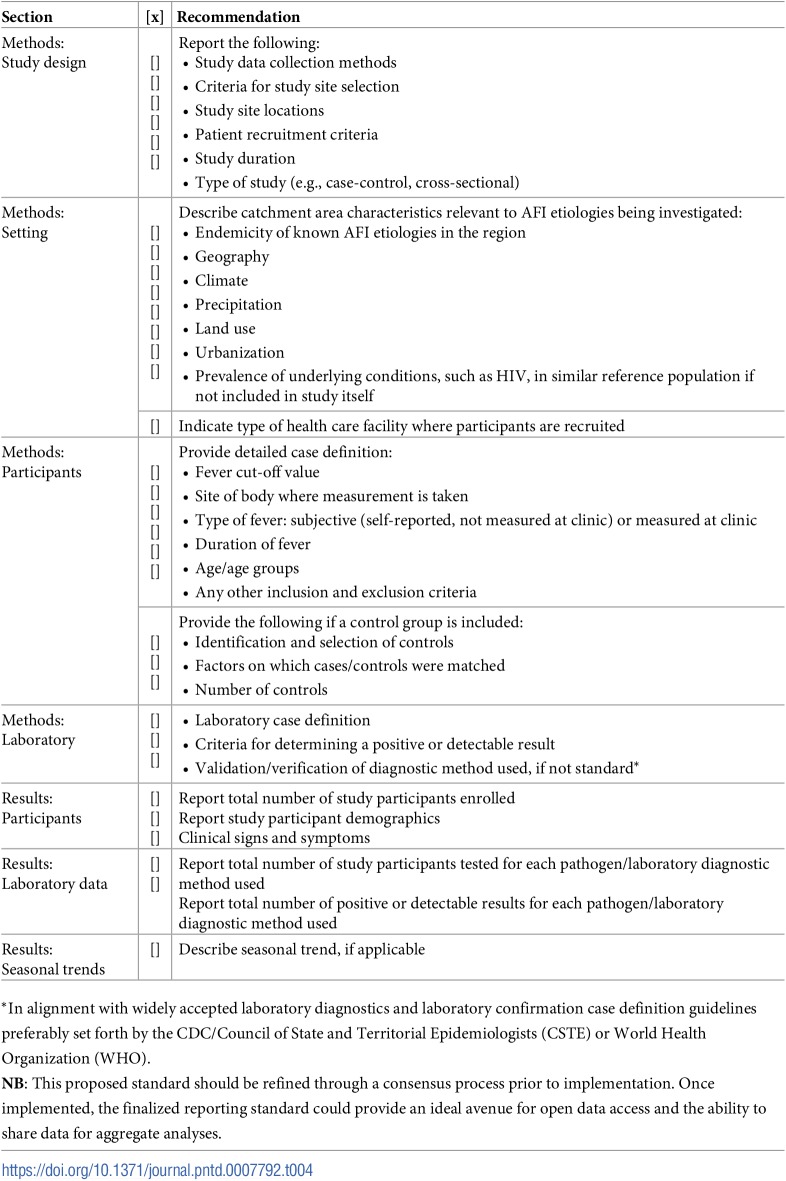
Description:Background ; Acute febrile illness (AFI), a common reason for people seeking medical care globally, represents a spectrum of infectious disease etiologies with important variations geographically and by population. There is no standardized approach to conducting AFI etiologic investigations, limiting interpretation of data in a global context. We conducted a scoping review to characterize current AFI research methodologies, identify global research gaps, and provide methodological research standardization recommendations. ; Methodology/Findings ; Using pre-defined terms, we searched Medline, Embase, and Global Health, for publications from January 1, 2005-December 31, 2017. Publications cited in previously published systematic reviews and an online study repository of non-malarial febrile illness etiologies were also included. We screened abstracts for publications reporting on human infectious disease, aimed at determining AFI etiology using laboratory diagnostics. One-hundred ninety publications underwent full-text review, using a standardized tool to collect data on study characteristics, methodology, and laboratory diagnostics. AFI case definitions between publications varied: use of self-reported fever as part of case definitions (28%, 53/190), fever cut-off value (38·0°C most commonly used: 45%, 85/190), and fever measurement site (axillary most commonly used: 19%, 36/190). Eighty-nine publications (47%) did not include exclusion criteria, and inclusion criteria in 13% (24/190) of publications did not include age group. No publications included study settings in Southern Africa, Micronesia & Polynesia, or Central Asia. We summarized standardized reporting practices, specific to AFI etiologic investigations that would increase inter-study comparability. ; Conclusions ; Wider implementation of standardized AFI reporting methods, with multi-pathogen disease detection, could improve comparability of study findings, knowledge of the range of AFI etiologies, and their contributions to the global AFI burden. These steps can guide resource allocation, strengthen outbreak detection and response, target prevention efforts, and improve clinical care, especially in resource-limited settings where disease control often relies on empiric treatment. PROSPERO: CRD42016035666.
-
Subjects:
-
Source:PLoS Negl Trop Dis. 13(11)
-
Pubmed ID:31730635
-
Pubmed Central ID:PMC6881070
-
Document Type:
-
Genre:
-
Place as Subject:
-
Volume:13
-
Issue:11
-
Download URL:
-
File Type:
 [PDF - 1.28 MB]
 -
Collection(s):
-
Main Document Checksum:urn:sha-512:392dbb7c8fdf7fe81e57d747d31da94f8033d723f8e352a5124ad5fd60eea16076bc96a7665ba7236e17bd13821a74f2929470ba39bda24ca774627b99a5bae9
Supporting Files


File Language:
English
 Was this page helpful?
 Found an issue?




CDC STACKS serves as an archival repository of CDC-published products including
scientific findings, journal articles, guidelines, recommendations, or other public health information authored or
co-authored by CDC or funded partners.
As a repository, CDC STACKS retains documents in their original published format to ensure public access to scientific information.
As a repository, CDC STACKS retains documents in their original published format to ensure public access to scientific information.
You May Also Like
COLLECTION
CDC Public Access