


Diagnosis and Molecular Analysis on Imported Plasmodium ovale curtisi and P. ovale wallikeri Malaria Cases from West and South Africa during 2013–2016
Supporting Files

-
February 29 2020
-
File Language:
English
Details
-
Alternative Title:Korean J Parasitol
-
Personal Author:
-
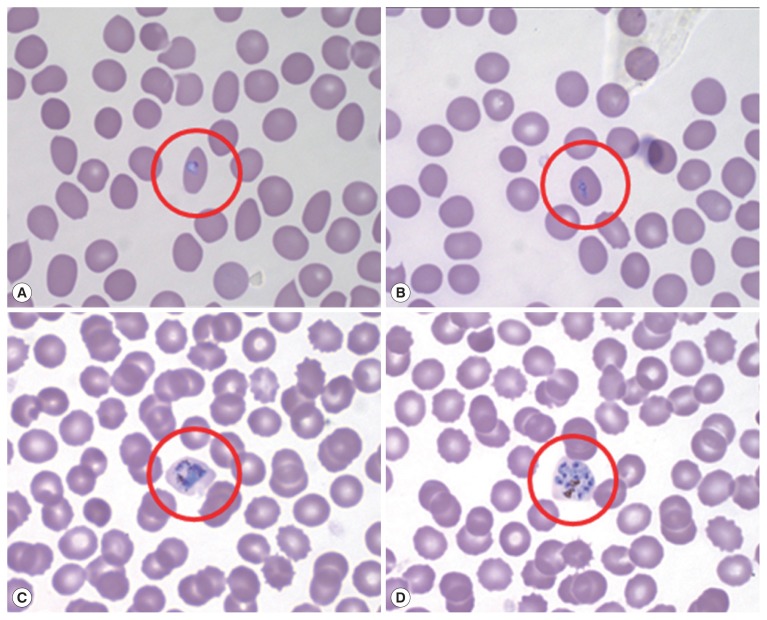
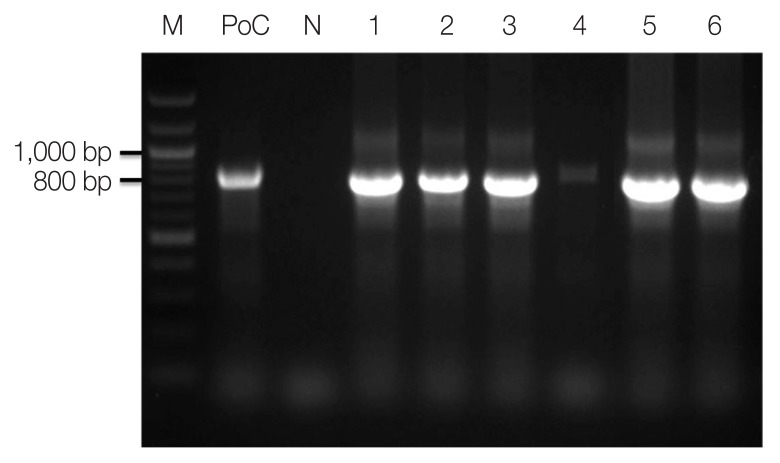
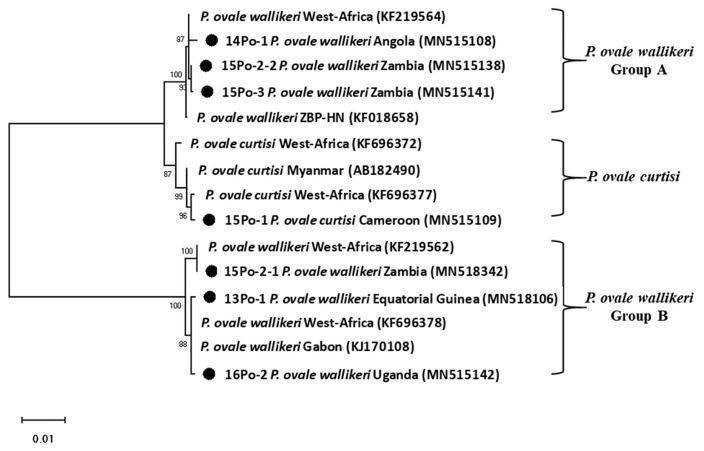
Description:Majority of the imported malaria cases in Korea is attributed to Plasmodium falciparum and P. vivax infections, whereas P. malariae and P. ovale infections are very rare. Falciparum and ovale malaria are mostly imported from Africa, while most of the vivax malaria cases are imported from Southeast Asia. Here, we report 6 Korean imported ovale malaria cases (4 males and 2 females) who had visited in Africa during 2013-2016. These subjects were diagnosed with P. ovale based on microscopic findings, Plasmodium species-specific nested-PCR, and phylogenetic clade using 18S rRNA gene sequences. We identified 2 P. ovale subtypes, 1 P. ovale curtisi (classic type) and 5 P. ovale wallikeri (variant type). All patients were treated with chloroquine and primaquine, and no relapse or recrudescence was reported for 1 year after treatment. With increase of travelers to the countries where existing Plasmodium species, the risk of Plasmodium infection is also increasing. Molecular monitoring for imported malaria parasites should be rigorously and continuously performed to enable diagnosis and certification of Plasmodium spp.
-
Subjects:
-
Source:Korean J Parasitol. 2020; 58(1):61-65
-
Pubmed ID:32145729
-
Pubmed Central ID:PMC7066446
-
Document Type:
-
Funding:
-
Volume:58
-
Issue:1
-
Collection(s):
-
Main Document Checksum:urn:sha256:cd6efcd6d4e94f2344f28e819acf64c3b414ce807560b5ff8b746435ebbea977
-
Download URL:
-
File Type:
 [PDF
- 769.17 KB
]
[PDF
- 769.17 KB
]
Supporting Files


File Language:
English
ON THIS PAGE

CDC STACKS serves as an archival repository of CDC-published products including
scientific findings,
journal articles, guidelines, recommendations, or other public health information authored or
co-authored by CDC or funded partners.
As a repository, CDC STACKS retains documents in their original published format to ensure public access to scientific information.
As a repository, CDC STACKS retains documents in their original published format to ensure public access to scientific information.
You May Also Like
COLLECTION
CDC Public Access