



Rare mutations in Pfmdr1 gene of Plasmodium falciparum detected in clinical isolates from patients treated with anti-malarial drug in Nigeria
Supporting Files

-
September 18 2019
-
Available in CDC Stacks on 2019-09-18T00:00:00Z
File Language:
English
Details
-
Alternative Title:Malar J
-
Personal Author:
-
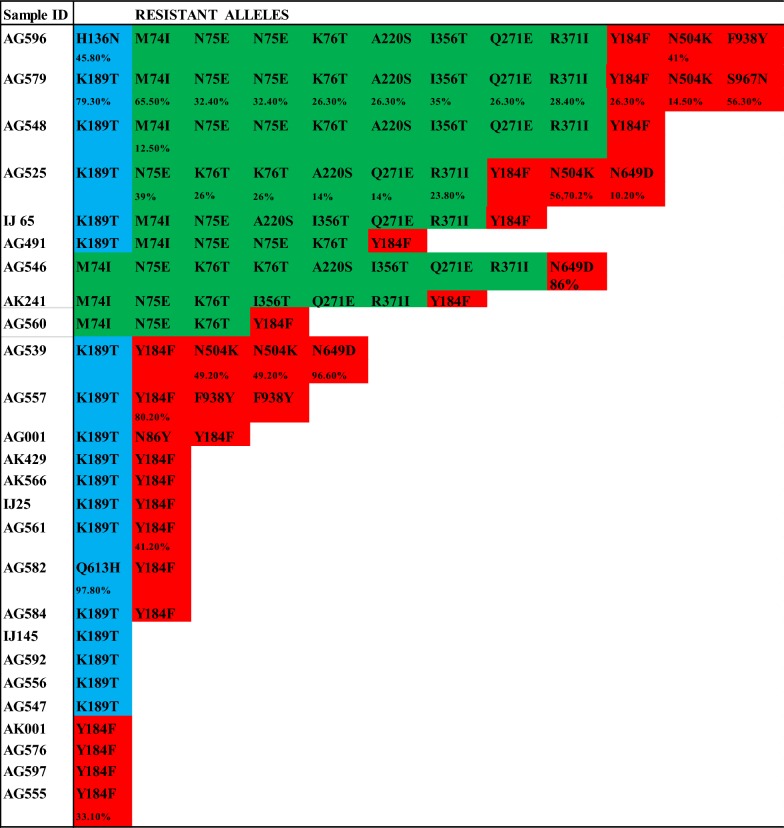
Description:Background ; Plasmodium falciparum, the deadliest causative agent of malaria, has high prevalence in Nigeria. Drug resistance causing failure of previously effective drugs has compromised anti-malarial treatment. On this basis, there is need for a proactive surveillance for resistance markers to the currently recommended artemisinin-based combination therapy (ACT), for early detection of resistance before it become widespread. ; Methods ; This study assessed anti-malarial resistance genes polymorphism in patients with uncomplicated P. falciparum malaria in Lagos, Nigeria. Sanger and Next Generation Sequencing (NGS) methods were used to screen for mutations in thirty-seven malaria positive blood samples targeting the P. falciparum chloroquine-resistance transporter (Pfcrt), P. falciparum multidrug-resistance 1 (Pfmdr1), and P. falciparum kelch 13 (Pfk13) genes, which have been previously associated with anti-malarial resistance. ; Results ; Expectedly, the NGS method was more proficient, detecting six Pfmdr1, seven Pfcrt and three Pfk13 mutations in the studied clinical isolates from Nigeria, a malaria endemic area. These mutations included rare Pfmdr1 mutations, N504K, N649D, F938Y and S967N, which were previously unreported. In addition, there was moderate prevalence of the K76T mutation (34.6%) associated with chloroquine and amodiaquine resistance, and high prevalence of the N86 wild type allele (92.3%) associated with lumefantrine resistance. ; Conclusion ; Widespread circulation of mutations associated with resistance to current anti-malarial drugs could potentially limit effective malaria therapy in endemic populations.
-
Subjects:
-
Source:Malar J. 18
-
Pubmed ID:31533729
-
Pubmed Central ID:PMC6751857
-
Document Type:
-
Funding:
-
Place as Subject:
-
Volume:18
-
Download URL:
-
File Type:
 [PDF - 888.15 KB]
 -
Collection(s):
-
Main Document Checksum:urn:sha256:d0bb5d4d448f5ea08e8a6a75e901b2707cc6fbde7b6a42d3ca31b3edd8809107
Supporting Files


File Language:
English
 Was this page helpful?
 Found an issue?

CDC STACKS serves as an archival repository of CDC-published products including
scientific findings, journal articles, guidelines, recommendations, or other public health information authored or
co-authored by CDC or funded partners.
As a repository, CDC STACKS retains documents in their original published format to ensure public access to scientific information.
As a repository, CDC STACKS retains documents in their original published format to ensure public access to scientific information.
You May Also Like
COLLECTION
CDC Public Access