


Trends over Time and Jurisdiction Variability in Supplemental Security Income and State Supplementary Payment Programs for Children with Disabilities
Supporting Files

-
2020
-
File Language:
English
Details
-
Journal Article:J Public Health Manag Pract
-
Personal Author:
-
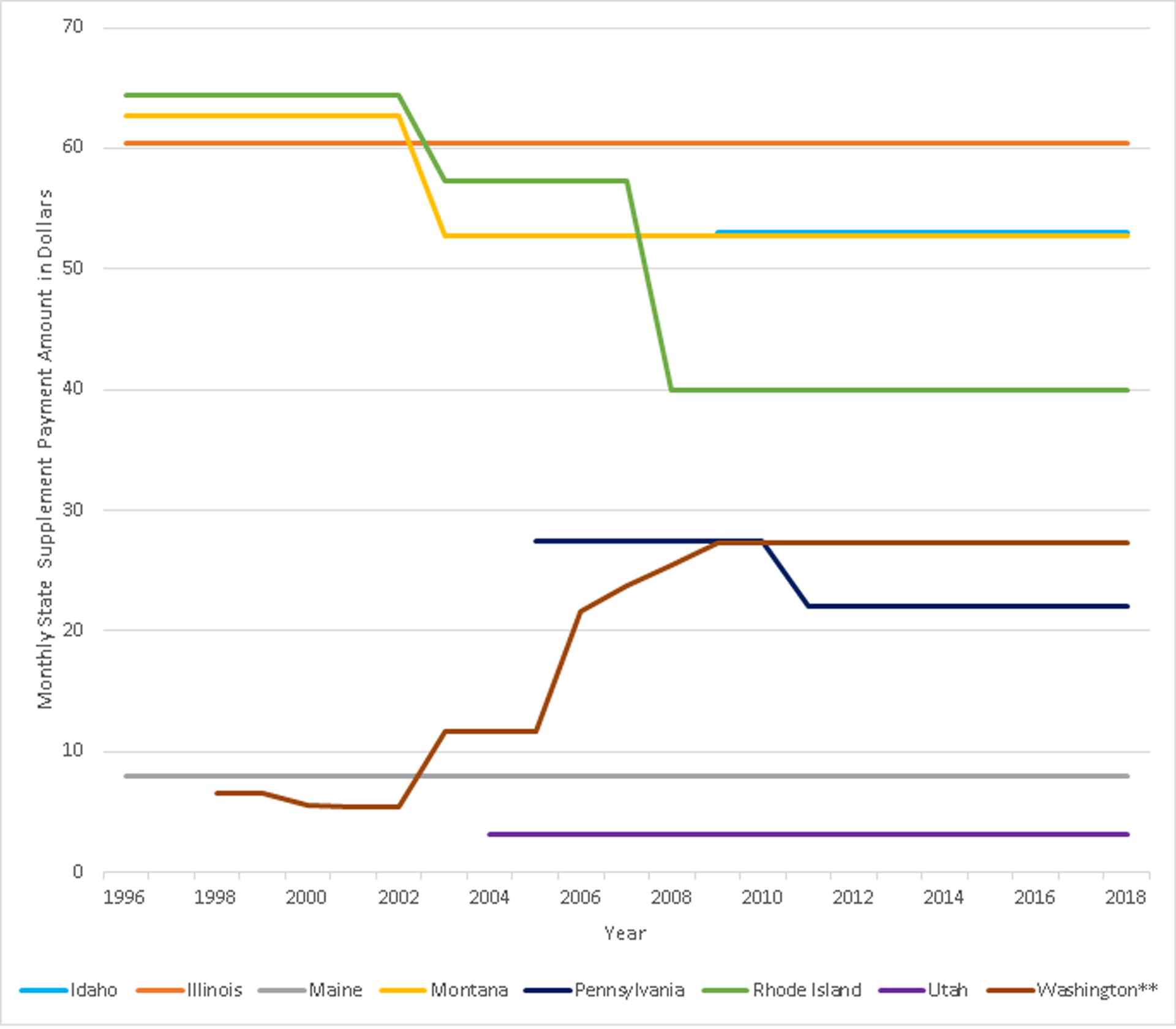
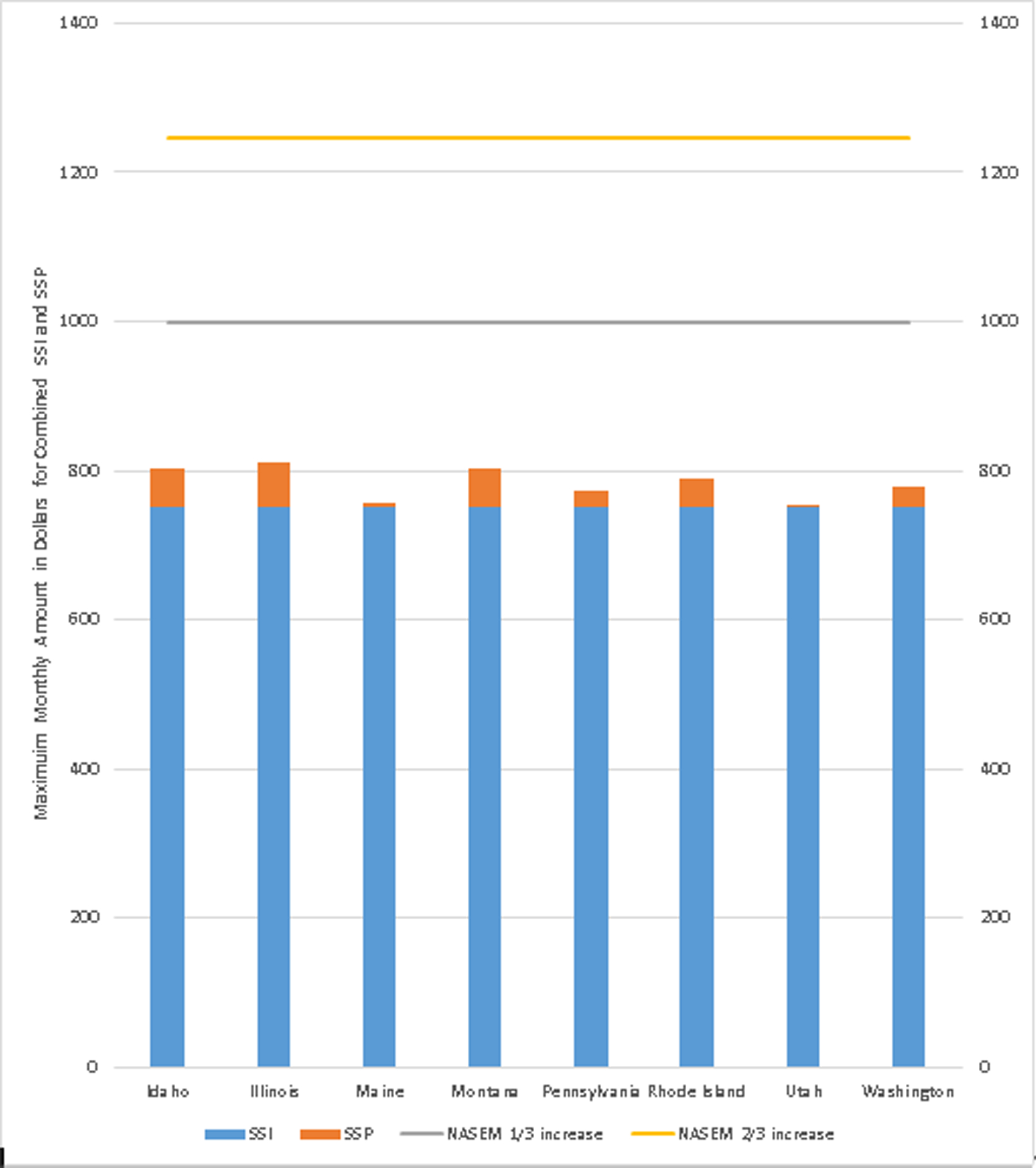
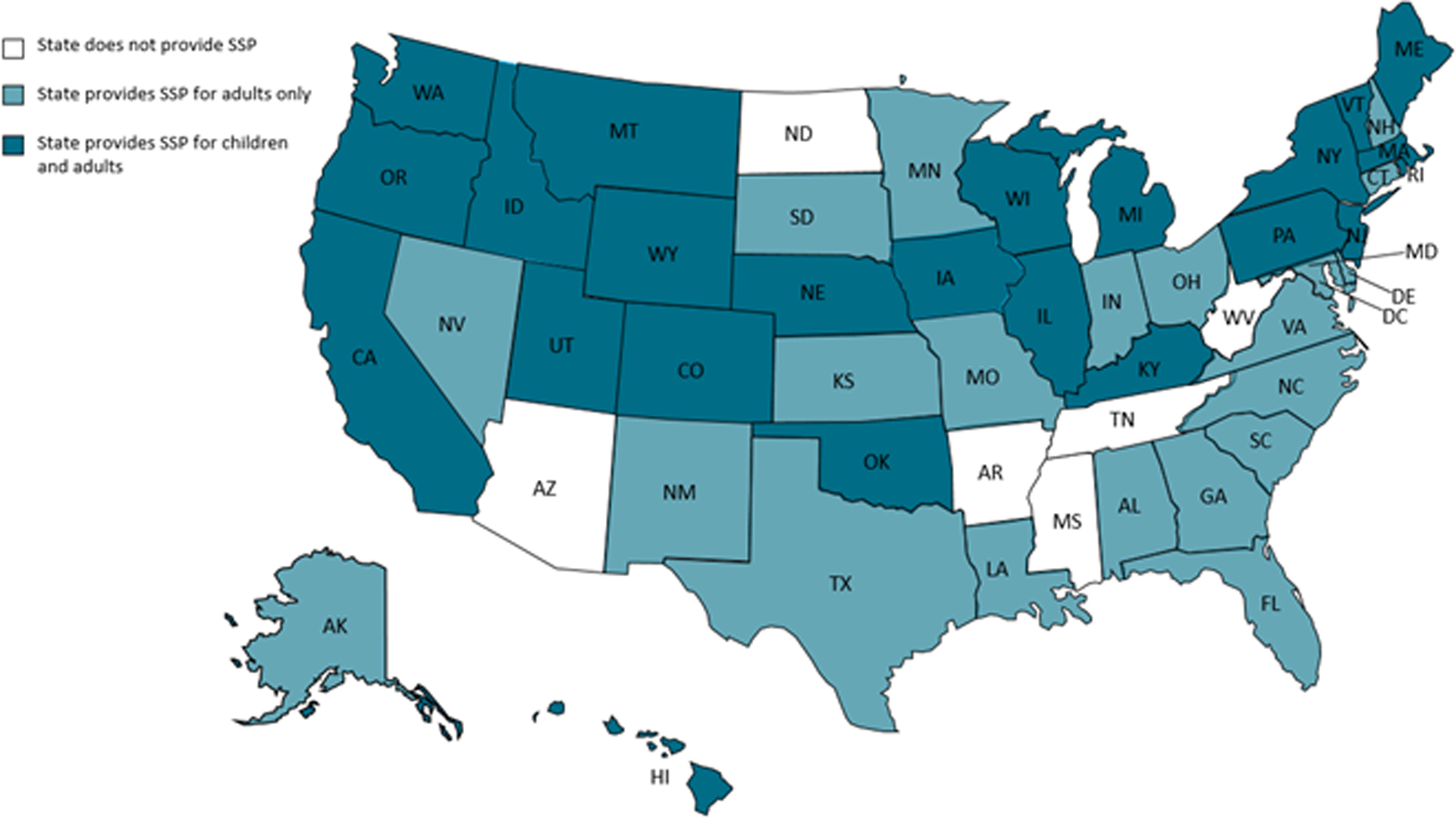
Description:Nearly 1.2 million children with disabilities received federally administered Supplemental Security Income (SSI) payments in 2017. Based on a robust review of research and evaluation evidence and microsimulations, The National Academies of Sciences, Engineering, and Medicine committee identified modifications to SSI (ie, increasing the federal SSI benefit maximum by one-third or two-thirds) as 1 of 10 strategies that could reduce the US child poverty rate, improving child health and well-being on a population level.|Describing the availability and amount of SSI and State Supplementary Payment (SSP) program benefits to support families of children with disabilities may be a first step toward evaluating The National Academies of Sciences, Engineering, and Medicine-proposed modification to SSI as a potential poverty alleviation and health improvement tool for children with disabilities and their families.|We used public health law research methods to characterize the laws (statutes and state agency regulations) governing the federal SSI program and SSP programs in the 50 states and District of Columbia from January 1, 1996, through November 1, 2018.|The number of jurisdictions offering supplementary payments (SSP) was relatively stable between 1996 and 2018. In 2018, 23 US jurisdictions legally mandated that SSP programs were available for children. Among the states with SSP payment amounts in their codified laws, SSP monthly benefit amounts ranged from $8 to $64.35 in 1996 and $3.13 to $60.43 in 2018.|Our initial exploration of SSI-related policies as a tool for improving the economic stability of children with disabilities and their families suggests that current SSPs, in combination with SSI, would not rise to the level of SSI increases proposed by The National Academies of Sciences, Engineering, and Medicine. Understanding more about how SSI and SSP reach children and work in combination with other federal and state income security programs may help identify policies and strategies that better support children with disabilities in low-income households.
-
Subjects:
-
Keywords:
-
Source:J Public Health Manag Pract. 26(Suppl 2 ADVANCING LEGAL EPIDEMIOLOGY):S45-S53
-
DOI:
-
Pubmed ID:32004222
-
Pubmed Central ID:PMC7268284
-
Document Type:
-
Funding:
-
Genre:
-
Volume:26
-
Collection(s):
-
Main Document Checksum:urn:sha-512:778ab83068752a6ec5ba1e343702eb92111801543121ef92908dd8151b581c84b6d092da35ac872b29eaf3ccf2430123ea4ee473402598b106084a854b5bf592
-
Download URL:
-
File Type:
 [PDF
- 678.50 KB
]
[PDF
- 678.50 KB
]
Supporting Files


File Language:
English
ON THIS PAGE





CDC STACKS serves as an archival repository of CDC-published products including
scientific findings,
journal articles, guidelines, recommendations, or other public health information authored or
co-authored by CDC or funded partners.
As a repository, CDC STACKS retains documents in their original published format to ensure public access to scientific information.
As a repository, CDC STACKS retains documents in their original published format to ensure public access to scientific information.
You May Also Like
COLLECTION
CDC Public Access