


Direct Sequencing of SARS-Coronavirus S and N Genes from Clinical Specimens Shows Limited Variation
Supporting Files
Public Domain

-
August 17 2004
-
File Language:
English
Details
-
Alternative Title:J Infect Dis
-
Personal Author:Tong, Suxiang ; Lingappa, Jairam R. ; Chen, Qi ; Shu, Bo ; LaMonte, Ashley C. ; Cook, Byron T. ; Birge, Charryse ; Wang Chern, Shur-wern ; Liu, Xin ; Galloway, Renee ; Le Quynh, Mai ; Wai, Fu Ng ; Yang, Jyh-Yuan ; Butany, Jagdish ; Comer, James A. ; Monroe, Stephan S. ; Beard, Suzanne R. ; Ksiazek, Thomas G. ; Erdman, Dean ; Rota, Paul A. ; Pallansch, Mark A. ; Anderson, Larry J.
-
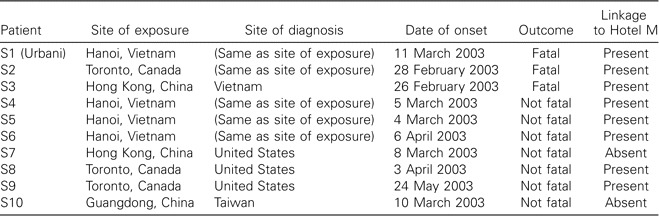
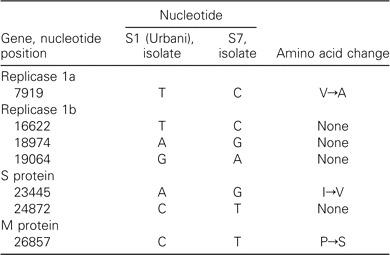
Description:Severe acute respiratory syndrome-associated coronavirus (SARS-CoV) emerged, in November 2002, as a novel agent causing severe respiratory illness. To study sequence variation in the SARS-CoV genome, we determined the nucleic acid sequence of the S and N genes directly from clinical specimens from 10 patients--1 specimen with no matched SARS-CoV isolate, from 2 patients; multiple specimens from 3 patients; and matched clinical-specimen/cell-culture-isolate pairs from 6 patients. We identified 3 nucleotide substitutions that were most likely due to natural variation and 2 substitutions that arose after cell-culture passage of the virus. These data demonstrate the overall stability of the S and N genes of SARS-CoV over 3 months during which a minimum of 4 generations for transmission events occurred. These findings are a part of the expanding investigation of the evolution of how this virus adapts to a new host.
-
Subjects:
-
Source:J Infect Dis. 2004; 190(6):1127-1131
-
Pubmed ID:15319863
-
Pubmed Central ID:PMC7199896
-
Document Type:
-
Volume:190
-
Issue:6
-
Collection(s):
-
Main Document Checksum:urn:sha256:834f3d4b18304972edc0a0bf556f9f71abb825dc697f26bdc81c20ebb4da4cf9
-
Download URL:
-
File Type:
 [PDF
- 83.50 KB
]
[PDF
- 83.50 KB
]
Supporting Files


File Language:
English
ON THIS PAGE



CDC STACKS serves as an archival repository of CDC-published products including
scientific findings,
journal articles, guidelines, recommendations, or other public health information authored or
co-authored by CDC or funded partners.
As a repository, CDC STACKS retains documents in their original published format to ensure public access to scientific information.
As a repository, CDC STACKS retains documents in their original published format to ensure public access to scientific information.
You May Also Like
COLLECTION
CDC Public Access