


Systematic Review and Meta-Analysis of Sex Differences in Social Contact Patterns and Implications for Tuberculosis Transmission and Control
Supporting Files
Public Domain

-
May 2020
-
File Language:
English
Details
-
Alternative Title:Emerg Infect Dis
-
Personal Author:
-
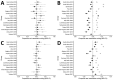
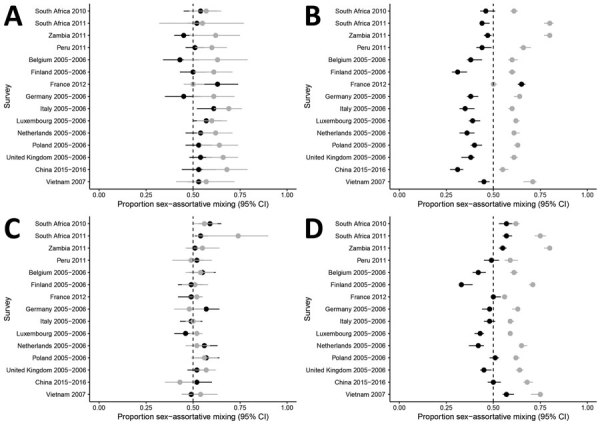
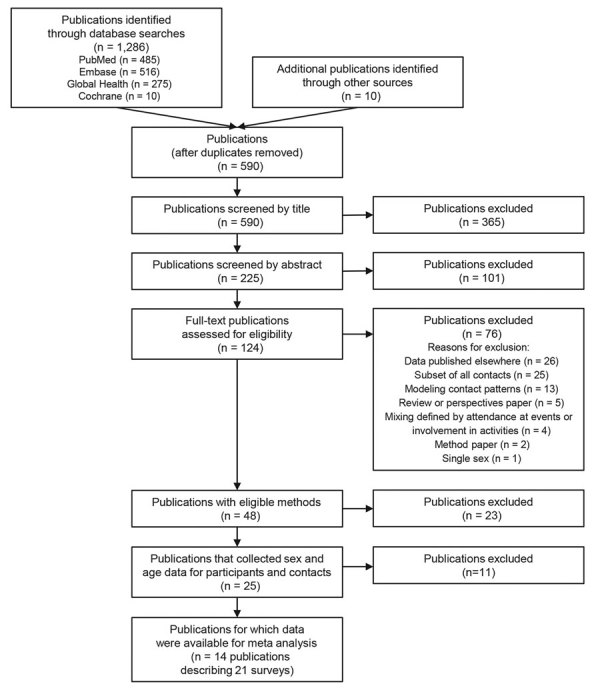
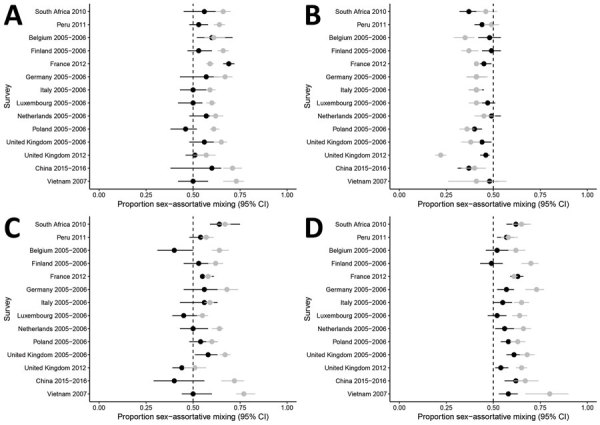
Description:Social contact patterns might contribute to excess burden of tuberculosis in men. We conducted a study of social contact surveys to evaluate contact patterns relevant to tuberculosis transmission. Available data describe 21 surveys in 17 countries and show profound differences in sex-based and age-based patterns of contact. Adults reported more adult contacts than children. Children preferentially mixed with women in all surveys (median sex assortativity 58%, interquartile range [IQR] 57%-59% for boys, 61% [IQR 60%-63%] for girls). Men and women reported sex-assortative mixing in 80% and 95% of surveys (median sex assortativity 56% [IQR 54%-58%] for men, 59% [IQR 57%-63%] for women). Sex-specific patterns of contact with adults were similar at home and outside the home for children; adults reported greater sex assortativity outside the home in most surveys. Sex assortativity in adult contacts likely contributes to sex disparities in adult tuberculosis burden by amplifying incidence among men.
-
Subjects:
-
Source:Emerg Infect Dis. 26(5):910-919
-
Pubmed ID:32310063
-
Pubmed Central ID:PMC7181919
-
Document Type:
-
Volume:26
-
Issue:5
-
Collection(s):
-
Main Document Checksum:urn:sha256:28790dc17fc78ed416e60ee2ea5a361454585a1731b832840380c838ba3e5915
-
Download URL:
-
File Type:
 [PDF
- 1.69 MB
]
[PDF
- 1.69 MB
]
Supporting Files


File Language:
English
ON THIS PAGE



CDC STACKS serves as an archival repository of CDC-published products including
scientific findings,
journal articles, guidelines, recommendations, or other public health information authored or
co-authored by CDC or funded partners.
As a repository, CDC STACKS retains documents in their original published format to ensure public access to scientific information.
As a repository, CDC STACKS retains documents in their original published format to ensure public access to scientific information.
You May Also Like
COLLECTION
Emerging Infectious Diseases