


Multiplex serology demonstrate cumulative prevalence and spatial distribution of malaria in Ethiopia
Supporting Files
Public Domain

-
July 22 2019
-
File Language:
English
Details
-
Alternative Title:Malar J
-
Personal Author:Assefa, Ashenafi ; Ali Ahmed, Ahmed ; Deressa, Wakgari ; Sime, Heven ; Mohammed, Hussein ; Kebede, Amha ; Solomon, Hiwot ; Teka, Hiwot ; Gurrala, Kevin ; Matei, Brian ; Wakeman, Brian ; Wilson, G. Glenn ; Sinha, Ipsita ; Maude, Richard J. ; Ashton, Ruth ; Cook, Jackie ; Shi, Ya Ping ; Drakeley, Chris ; von Seidlein, Lorenz ; Rogier, Eric ; Hwang, Jimee
-
Description:Background
Measures of malaria burden using microscopy and rapid diagnostic tests (RDTs) in cross-sectional household surveys may incompletely describe the burden of malaria in low-transmission settings. This study describes the pattern of malaria transmission in Ethiopia using serological antibody estimates derived from a nationwide household survey completed in 2015.
Methods
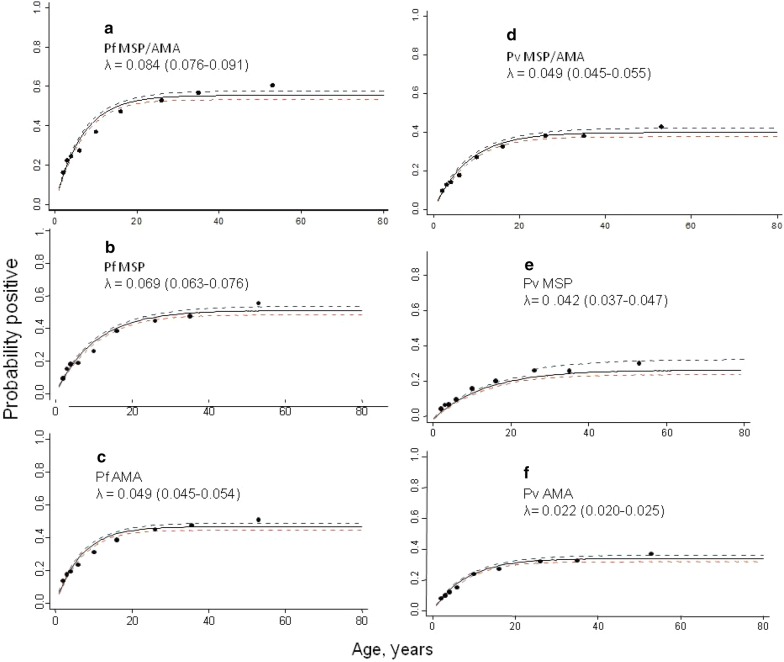
Dried blood spot (DBS) samples were collected during the Ethiopian Malaria Indicator Survey in 2015 from malarious areas across Ethiopia. Samples were analysed using bead-based multiplex assays for IgG antibodies for six Plasmodium antigens: four human malaria species-specific merozoite surface protein-1 19kD antigens (MSP-1) and Apical Membrane Antigen-1 (AMA-1) for Plasmodium falciparum and Plasmodium vivax. Seroprevalence was estimated by age, elevation and region. The seroconversion rate was estimated using a reversible catalytic model fitted with maximum likelihood methods.
Results
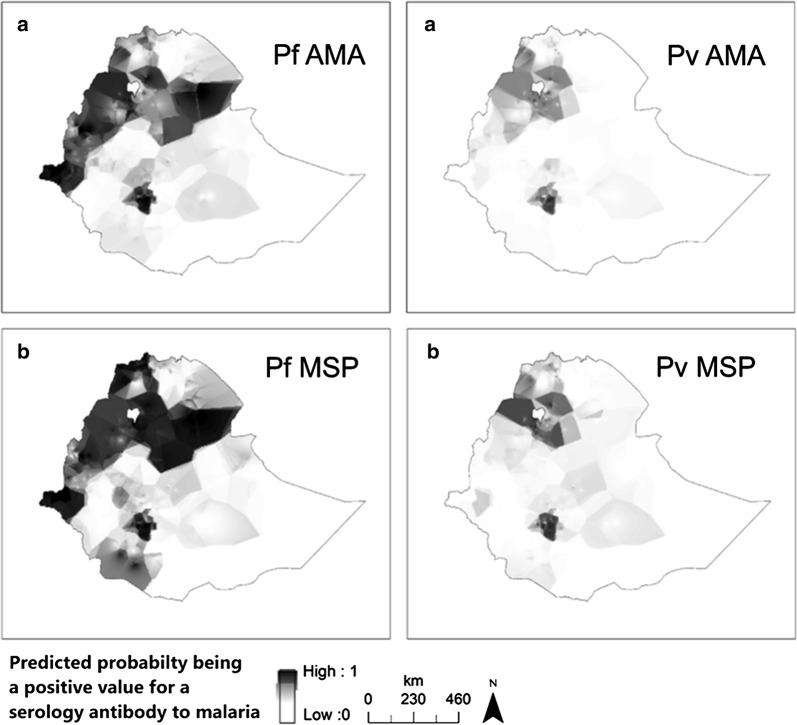
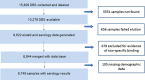
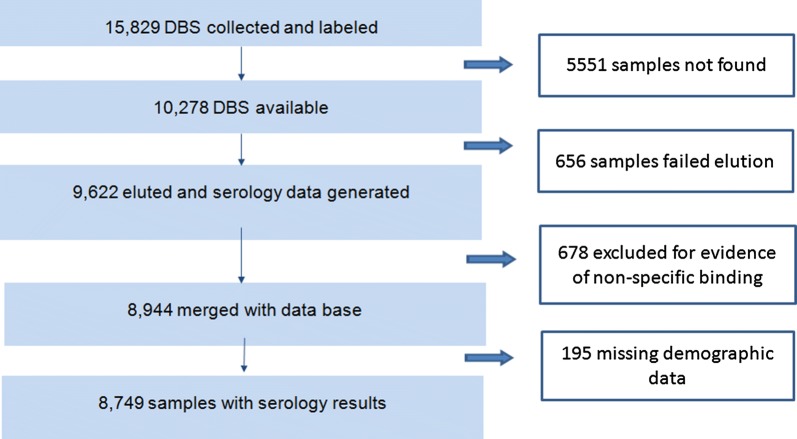
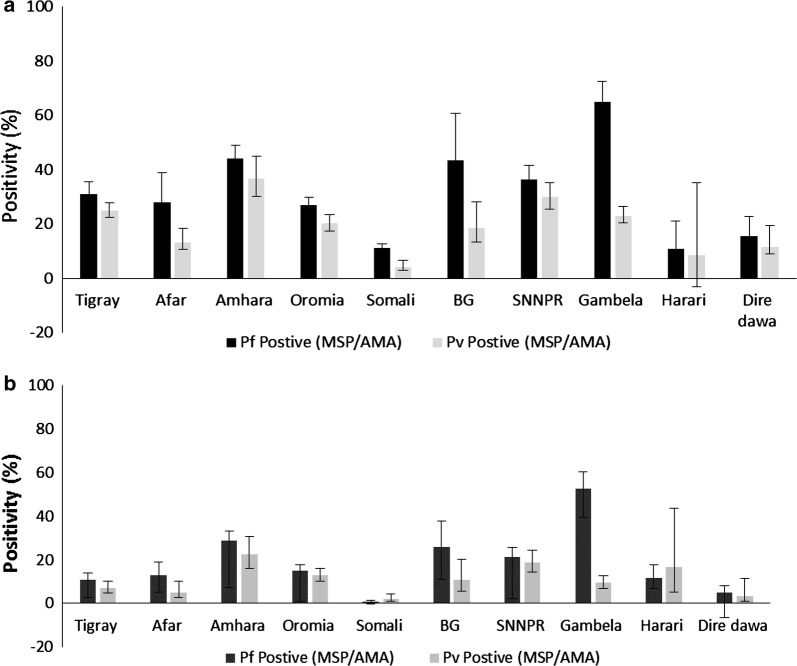
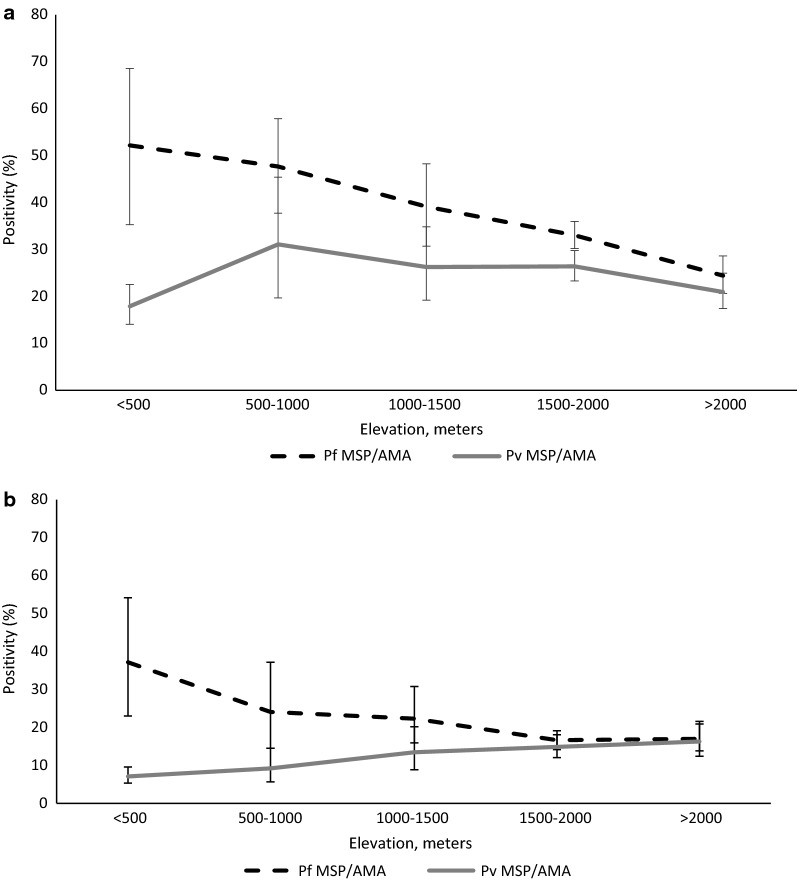
Of the 10,278 DBS samples available, 93.6% (9622/10,278) had valid serological results. The mean age of participants was 15.8 years and 53.3% were female. National seroprevalence for antibodies to P. falciparum was 32.1% (95% confidence interval (CI) 29.8–34.4) and 25.0% (95% CI 22.7–27.3) to P. vivax. Estimated seroprevalences for Plasmodium malariae and Plasmodium ovale were 8.6% (95% CI 7.6–9.7) and 3.1% (95% CI 2.5–3.8), respectively. For P. falciparum seroprevalence estimates were significantly higher at lower elevations (< 2000 m) compared to higher (2000–2500 m) (aOR 4.4; p < 0.01). Among regions, P. falciparum seroprevalence ranged from 11.0% (95% CI 8.8–13.7) in Somali to 65.0% (95% CI 58.0–71.4) in Gambela Region and for P. vivax from 4.0% (95% CI 2.6–6.2) in Somali to 36.7% (95% CI 30.0–44.1) in Amhara Region. Models fitted to measure seroconversion rates showed variation nationally and by elevation, region, antigen type, and within species.
Conclusion
Using multiplex serology assays, this study explored the cumulative malaria burden and regional dynamics of the four human malarias in Ethiopia. High malaria burden was observed in the northwest compared to the east. High transmission in the Gambela and Benishangul-Gumuz Regions and the neglected presence of P. malariae and P. ovale may require programmatic attention. The use of a multiplex assay for antibody detection in low transmission settings has the potential to act as a more sensitive biomarker.
Electronic supplementary material
The online version of this article (10.1186/s12936-019-2874-z) contains supplementary material, which is available to authorized users.
-
Subjects:
-
Source:Malar J. 18
-
Pubmed ID:31331340
-
Pubmed Central ID:PMC6647069
-
Document Type:
-
Place as Subject:
-
Volume:18
-
Collection(s):
-
Main Document Checksum:urn:sha256:33183754e5b42cd3efec8fa53744e6670b2c79c9e1dbde74649804c1f9f1abf0
-
Download URL:
-
File Type:
 [PDF
- 1.84 MB
]
[PDF
- 1.84 MB
]
Supporting Files


File Language:
English
ON THIS PAGE





CDC STACKS serves as an archival repository of CDC-published products including
scientific findings,
journal articles, guidelines, recommendations, or other public health information authored or
co-authored by CDC or funded partners.
As a repository, CDC STACKS retains documents in their original published format to ensure public access to scientific information.
As a repository, CDC STACKS retains documents in their original published format to ensure public access to scientific information.
You May Also Like
COLLECTION
CDC Public Access