



Predictors Of Improvement In Physical Function In Older Adults In An Evidence-Based Physical Activity Program (Enhancefitness)
Supporting Files

-
2019/10/01
-
Available in CDC Stacks on October 01, 2020, 12:00 AM
File Language:
English
Details
-
Journal Article:J Geriatr Phys Ther
-
Personal Author:
-
Description:Background and Purpose
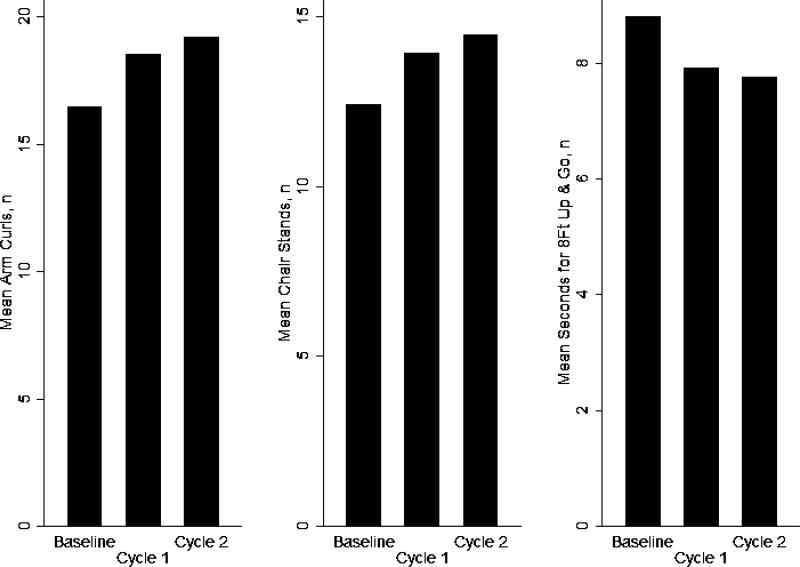
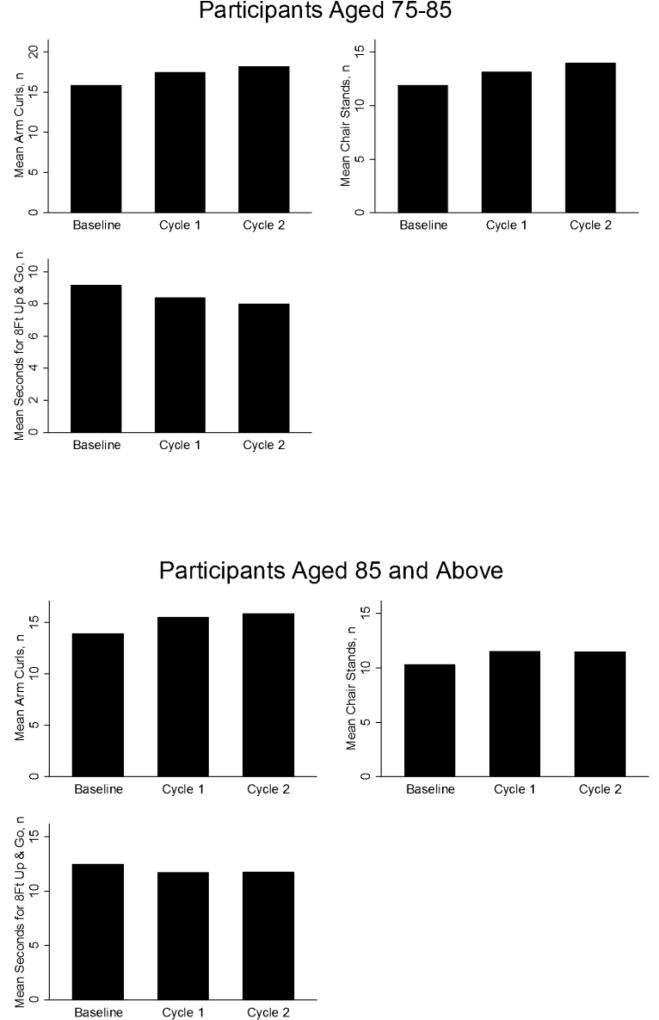
Declines in strength, flexibility and balance in older adults can lead to injuries and loss of independence, and are particularly common in those of greater age and in worse health. Enhance®Fitness (EF) is a nationally disseminated, evidence-based group exercise program for older adults that has been shown to improve function through cardiovascular, strength, flexibility and balance exercises. This paper examines changes in, and predictors of, participant physical function from baseline through 2 program cycles of EF as measured by 3 physical function tests: arm curls, chair stands, and eight-foot up-and-go.
Methods
We analyzed data on participants that attended at least 2 consecutive 16-week program cycles between January 2005 and June 2016. We ran 3 random effects linear regression models, 1 for each physical function test, and accounted for missing data and clustering by class site. Independent variables included attendance, demographics, and health status.
Results and Discussion
A total of 7,483 participants completed baseline and 2 sets of follow-up physical function tests. For all 3 physical function tests, participants showed some degree of improved physical function at each follow-up, and greater program attendance predicted clinically significant improvements. Some participants had less improvement: females, those less active at baseline, above age 75, not married or partnered, or in fair or poor health, those that had experienced at least 1 fall, and those with a disability.
Conclusion
EF program providers may need to implement additional measures to support the participants that could benefit most from EF, such as targeting messaging, coordinating with referring providers to emphasize attendance and general activity in specific participants, and offering additional support to groups that show less improvement during classes. The evidence presented here may inform clinical decision-making for older adult patients, and increase healthcare provider confidence in EF and similar exercise programs, thereby providing a mechanism to maintain and continue functional gains made in clinical or rehabilitation settings. -
Subjects:
-
Source:J Geriatr Phys Ther. 42(4):230-242
-
DOI:
-
Pubmed ID:29979352
-
Pubmed Central ID:PMC6318072
-
Document Type:
-
Funding:
-
Genre:
-
Volume:42
-
Issue:4
-
Download URL:
-
File Type:
 [PDF - 843.23 KB]
 -
Collection(s):
-
Main Document Checksum:urn:sha-512:ab9b450e9b2e2c92fa6e6e04f202683093554d9797fa3677ed4b7d6b3d0c1404f6b526541d2ea31939c109bae8c45348f5a678d26d0fa1b3fa18d07869543645
Supporting Files


File Language:
English
 Was this page helpful?
 Found an issue?



CDC STACKS serves as an archival repository of CDC-published products including
scientific findings, journal articles, guidelines, recommendations, or other public health information authored or
co-authored by CDC or funded partners.
As a repository, CDC STACKS retains documents in their original published format to ensure public access to scientific information.
As a repository, CDC STACKS retains documents in their original published format to ensure public access to scientific information.
You May Also Like
COLLECTION
CDC Public Access