



Abaloparatide at the same dose has the same effects on bone as PTH (1-34) in mice
Supporting Files

-
December 27 2019 ; 4-2020
-
Available in CDC Stacks on 2021-04-01T00:00:00Z
File Language:
English
Details
-
Alternative Title:J Bone Miner Res
-
Personal Author:
-
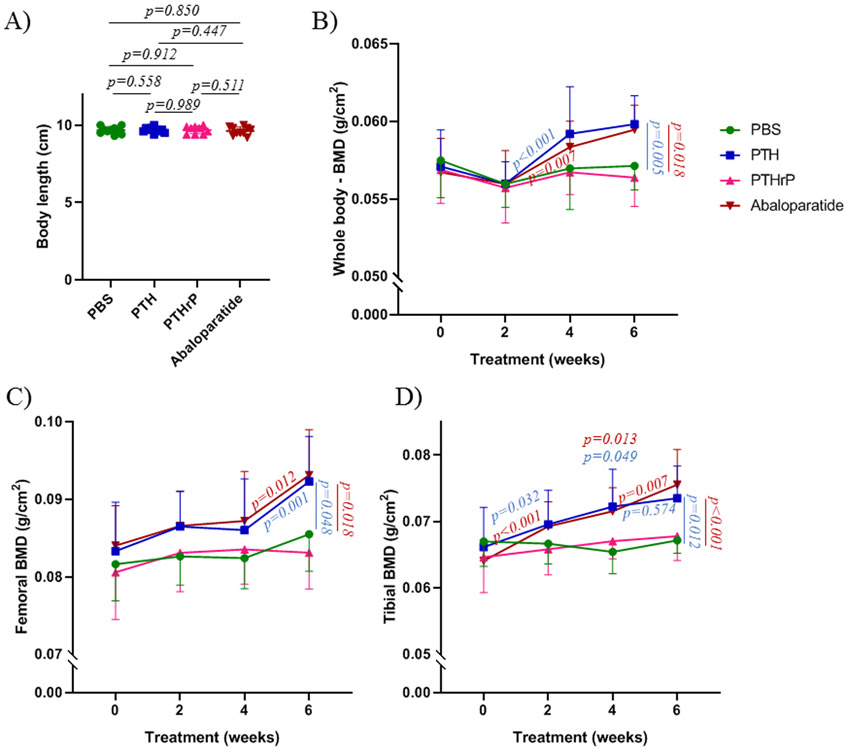
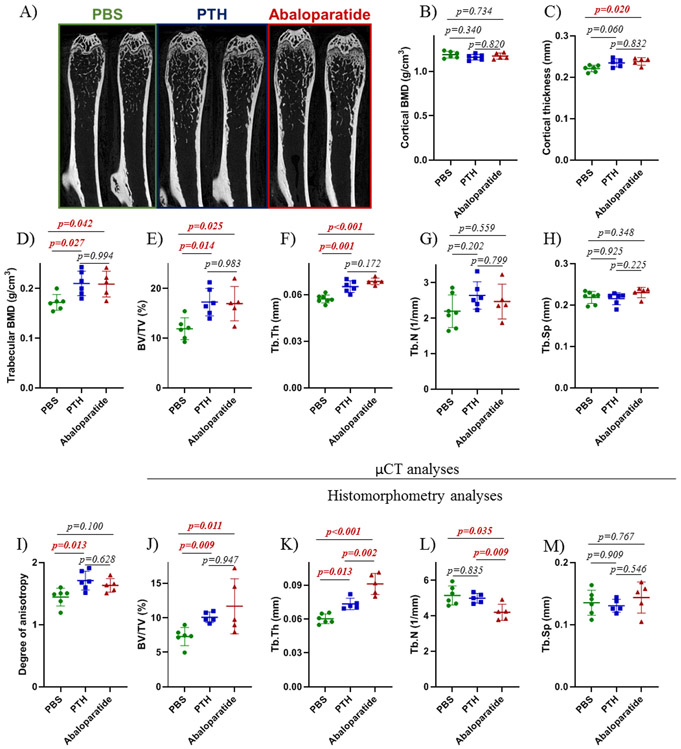
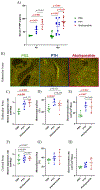
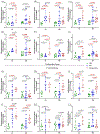
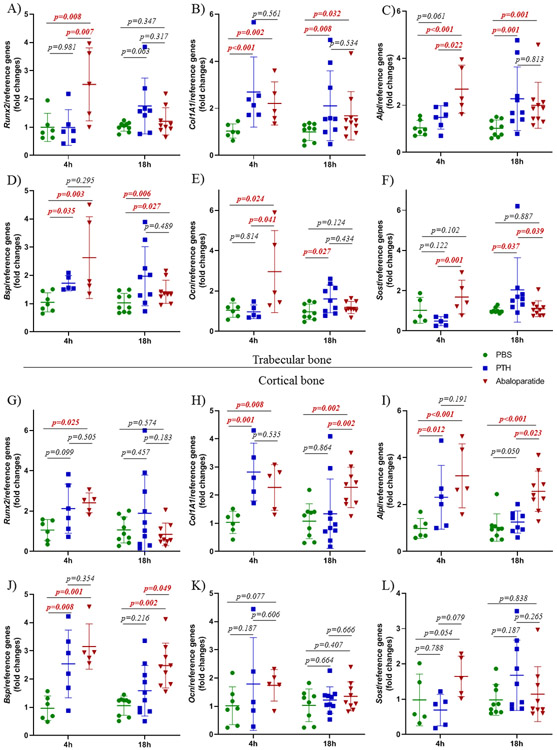
Description:Abaloparatide, a novel analog of parathyroid hormone-related protein (PTHrP 1-34), became in 2017 the second osteoanabolic therapy for the treatment of osteoporosis. This study aims to compare the effects of PTH (1-34), PTHrP (1-36), and abaloparatide on bone remodeling in male mice. Intermittent daily subcutaneous injections of 80 μg/kg/d were administered to 4-month-old C57Bl/6J male mice for 6 weeks. During treatment, mice were followed by DXA-Piximus to assess changes in bone mineral density (BMD) in the whole body, femur, and tibia. At either 4 or 18 hours after the final injection, femurs were harvested for μCT analyses and histomorphometry, sera were assayed for bone turnover marker levels, and tibias were separated into cortical, trabecular, and bone marrow fractions for gene expression analyses. Our results showed that, compared with PTH (1-34), abaloparatide resulted in a similar increase in BMD at all sites, whereas no changes were found with PTHrP (1-36). With both PTH (1-34) and abaloparatide, μCT and histomorphometry analyses revealed similar increases in bone volume associated with an increased trabecular thickness, in bone formation rate as shown by P1NP serum level and in vivo double labeling, and in bone resorption as shown by CTX levels and osteoclast number. Gene expression analyses of trabecular and cortical bone showed that PTH (1-34) and abaloparatide led to different actions in osteoblast differentiation and activity, with increased Runx2, Col1A1, Alpl, Bsp, Ocn, Sost, Rankl/Opg, and c-fos at different time points. Abaloparatide seems to generate a faster response on osteoblastic gene expression than PTH (1-34). Taken together, abaloparatide at the same dose is as effective as PTH (1-34) as an osteoanabolic, with an increase in bone formation but also an increase in bone resorption in male mice. © 2019 American Society for Bone and Mineral Research.
-
Subjects:
-
Source:J Bone Miner Res. 35(4):714-724
-
Pubmed ID:31793033
-
Pubmed Central ID:PMC7145759
-
Document Type:
-
Funding:R01 DK047420/DK/NIDDK NIH HHS/United States ; S10 OD010751/CD/ODCDC CDC HHS/United States ; 5R01 DK47420-25A1/DK/NIDDK NIH HHS/United States ; AR063128-05A1/AR/NIAMS NIH HHS/United States ; DK47420-24A1S1/DK/NIDDK NIH HHS/United States ; S10 OD010751/OD/NIH HHS/United States ; R01 DK048109/DK/NIDDK NIH HHS/United States
-
Volume:35
-
Issue:4
-
Download URL:
-
File Type:
 [PDF - 1.46 MB]
 -
Collection(s):
-
Main Document Checksum:urn:sha256:4b8fd114076dcae9f8e34a00d1ccc2487c6c0fd9edc78d7572d66ef9e075d757
Supporting Files


File Language:
English
 Was this page helpful?
 Found an issue?





CDC STACKS serves as an archival repository of CDC-published products including
scientific findings, journal articles, guidelines, recommendations, or other public health information authored or
co-authored by CDC or funded partners.
As a repository, CDC STACKS retains documents in their original published format to ensure public access to scientific information.
As a repository, CDC STACKS retains documents in their original published format to ensure public access to scientific information.
You May Also Like
COLLECTION
CDC Public Access