



A dosimetry study of portable x-ray fluorescence in vivo metal measurements
Supporting Files

-
5 2019
-
Available in CDC Stacks on May 01, 2020, 12:00 AM
File Language:
English
Details
-
Journal Article:Health Phys
-
Personal Author:
-
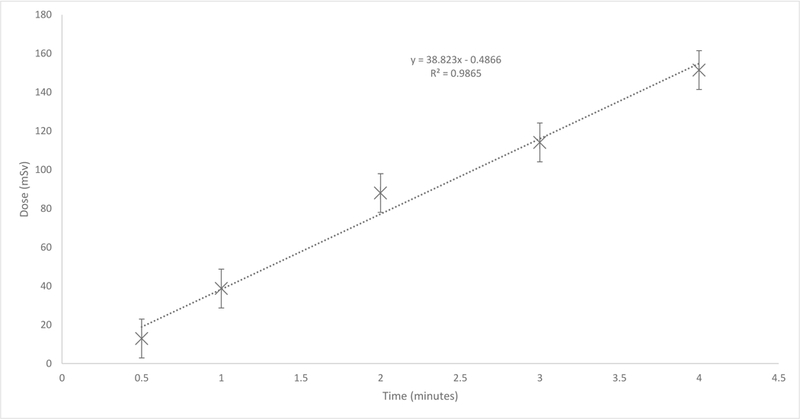
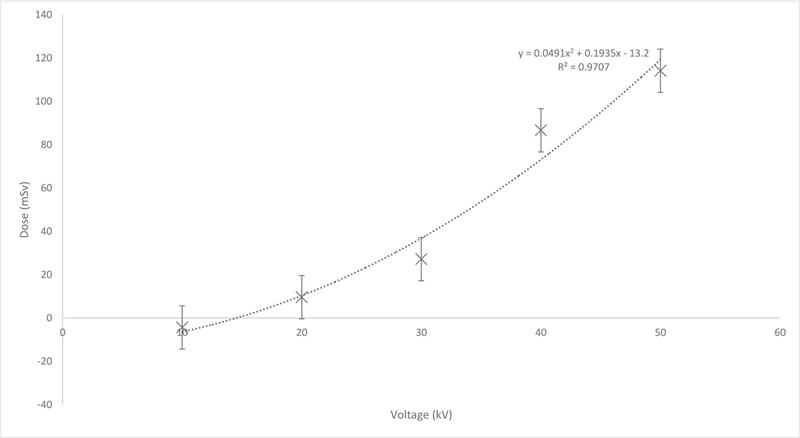
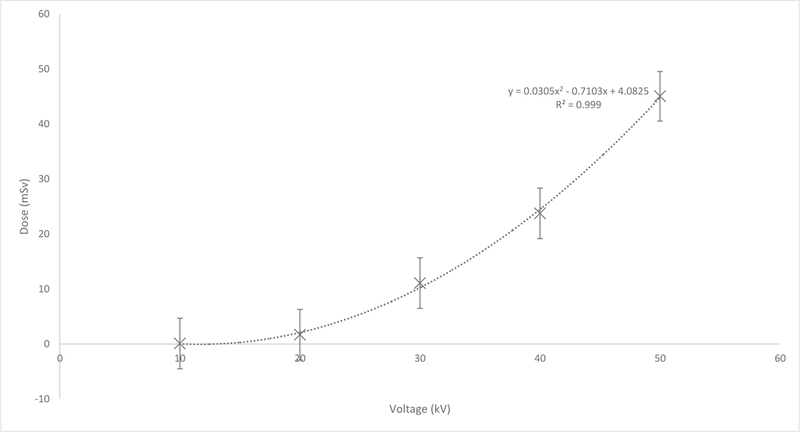
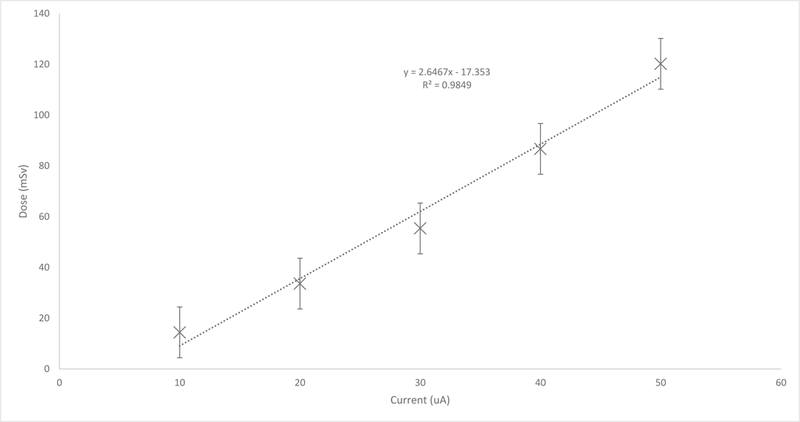
Description:Portable x-ray fluorescence devices have grown in popularity for possible metal exposure assessment using in vivo measurements of bone and toenail. These measurements are accompanied by a small radiation dose, which is typically assessed by radiation safety committees to be minimal. However, an understanding of precise dose under different instrument conditions is still needed. This study set out to do a thorough investigation of the exact dose measurements using optically stimulated dosimeters, thermoluminescent dosimeters, and simulation with a Monte Carlo N-Particle transport code to assess the skin and total-body effective dose typical of portable x-ray fluorescence devices. We showed normal linear relationships between measurement time, x-ray tube current, and radiation dose with the device, and we showed a second order polynomial relationship with increasing voltage and radiation dose. Dose was quantified using thermoluminescent dosimeters, optically stimulated dosimeters, and simulations, which gave similar dose estimations. Skin dose for a standard 50-kV, 40-μA measurement for bone and toenail in vivo was 48.5 and 28.7 mSv, respectively, according to simulation results. Total-body effective dose was shown as 3.4 and 2.0 μSv for in vivo bone and toenail measurements, respectively, for adults using the portable x-ray fluorescence device.
-
Keywords:
-
Source:Health Phys. 116(5):590-598
-
DOI:
-
Pubmed ID:30624351
-
Pubmed Central ID:PMC6433501
-
Document Type:
-
Funding:
-
Genre:
-
Volume:116
-
Issue:5
-
Download URL:
-
File Type:
 [PDF - 150.18 KB]
 -
Collection(s):
-
Main Document Checksum:urn:sha-512:64750e834b8831393b9abf40b90e82c1b7a8b0f92535ec897574d70858db5d9e6cdd1b8d62149560d5b47a1b8d2efc60ce41f1190f1ab35663a4c4a386684f09
Supporting Files


File Language:
English
 Was this page helpful?
 Found an issue?








CDC STACKS serves as an archival repository of CDC-published products including
scientific findings, journal articles, guidelines, recommendations, or other public health information authored or
co-authored by CDC or funded partners.
As a repository, CDC STACKS retains documents in their original published format to ensure public access to scientific information.
As a repository, CDC STACKS retains documents in their original published format to ensure public access to scientific information.
You May Also Like
COLLECTION
CDC Public Access