



Expanding Tools for Investigating Neighborhood Indicators of Drug Use and Violence: Validation of the NIfETy for Virtual Street Observation
Supporting Files

-
February 2020 ; 2-2020
-
Available in CDC Stacks on 2021-02-01T00:00:00Z
File Language:
English
Details
-
Alternative Title:Prev Sci
-
Personal Author:
-
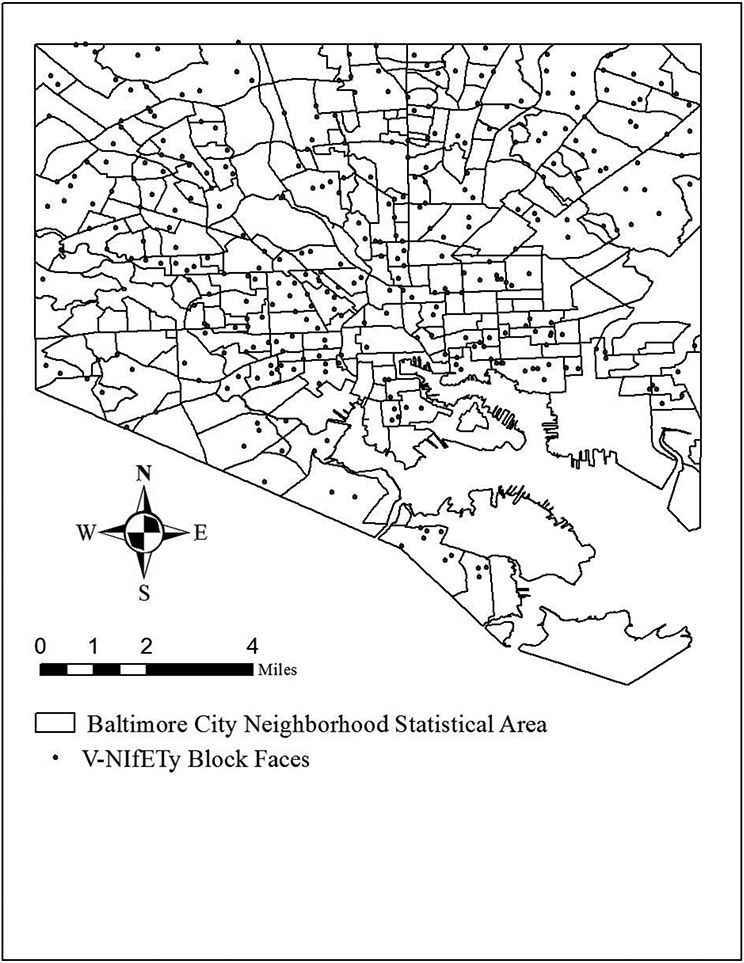
Description:A growing body of evidence suggests that characteristics of the neighborhood environment in urban areas significantly impact risk for drug use behavior and exposure to violent crime. Identifying areas of community need, prioritizing planning projects, and developing strategies for community improvement require inexpensive, easy to use, evidence-based tools to assess neighborhood disorder that can be used for a variety of research, urban planning, and community needs with an environmental justice frame. This study describes validation of the Neighborhood Inventory for Environmental Typology (NIfETy), a neighborhood environmental observational assessment tool designed to assess characteristics of the neighborhood environment related to violence, alcohol, and other drugs, for use with Google Street View (GSV). GSV data collection took place on a random sample of 350 blocks located throughout Baltimore City, Maryland, which had previously been assessed through in-person data collection. Inter-rater reliability metrics were strong for the majority of items (ICC ≥ 0.7), and items were highly correlated with in-person observations (r ≥ 0.6). Exploratory factor analysis and constrained factor analysis resulted in one, 14-item disorder scale with high internal consistency (alpha = 0.825) and acceptable fit indices (CFI = 0.982; RMSEA = 0.051). We further validated this disorder scale against locations of violent crimes, and we found that disorder score was significantly and positively associated with neighborhood crime (IRR = 1.221, 95% CI = (1.157, 1.288), p < 0.001). The NIfETy provides a valid, economical, and efficient tool for assessing modifiable neighborhood risk factors for drug use and violence prevention that can be employed for a variety of research, urban planning, and community needs.
-
Subjects:
-
Source:Prev Sci. 21(2):203-210
-
Pubmed ID:31637579
-
Pubmed Central ID:PMC6992509
-
Document Type:
-
Funding:R01CE002682/ACL/ACL HHS/United States ; R01 CE002682/CE/NCIPC CDC HHS/United States ; T32DA031099/DA/NIDA NIH HHS/United States ; R01 AA015196/AA/NIAAA NIH HHS/United States ; T32 DA031099/DA/NIDA NIH HHS/United States ; 1R01AA015196/AA/NIAAA NIH HHS/United States ; 1R01CE002682/CC/CDC HHS/United States
-
Volume:21
-
Issue:2
-
Download URL:
-
File Type:
 [PDF - 699.55 KB]
 -
Collection(s):
-
Main Document Checksum:urn:sha256:6e6edd9d0219d2a016c0b50c5c88b2939536ad841a517ec072deabdec27500c5
Supporting Files


File Language:
English
 Was this page helpful?
 Found an issue?

CDC STACKS serves as an archival repository of CDC-published products including
scientific findings, journal articles, guidelines, recommendations, or other public health information authored or
co-authored by CDC or funded partners.
As a repository, CDC STACKS retains documents in their original published format to ensure public access to scientific information.
As a repository, CDC STACKS retains documents in their original published format to ensure public access to scientific information.
You May Also Like
COLLECTION
CDC Public Access