


Proposed BoNT/A and /B Peptide Substrates Cannot Detect Multiple Subtypes in the Endopep-MS Assay
Supporting Files

-
03/07/2020
-
File Language:
English
Details
-
Alternative Title:J Anal Toxicol
-
Personal Author:
-
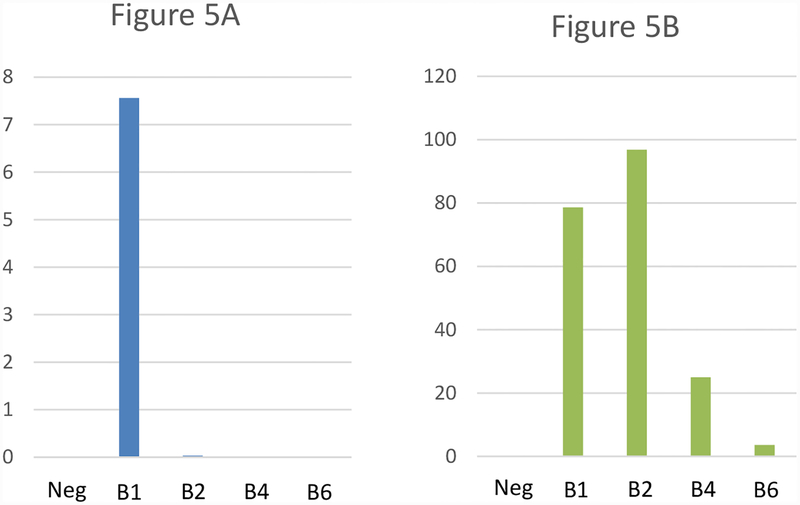
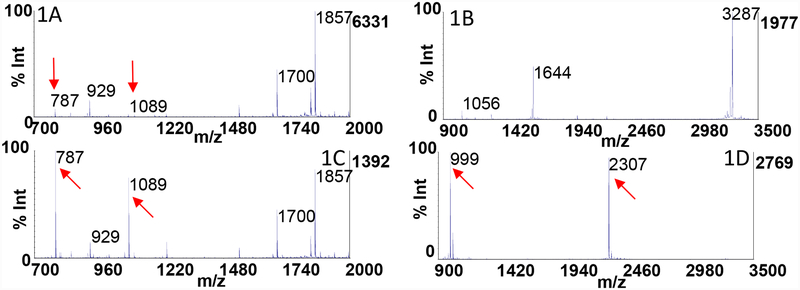
Description:Botulinum neurotoxins (BoNTs) are a family of protein toxins consisting of seven known serotypes (BoNT/A-BoNT/G) and multiple subtypes within the serotypes, and all of which cause the disease botulism-a disease of great public health concern. Accurate detection of BoNTs in human clinical samples is therefore an important public health goal. To achieve this goal, our laboratory developed a mass spectrometry-based assay detecting the presence of BoNT via its enzymatic activity on a peptide substrate. Recently, publications reported the use of new peptide substrates to detect BoNT/A and /B with improved results over other peptide substrates. However, the authors did not provide results of their peptide substrate on multiple subtypes of BoNT. In this work, we describe the results of testing the new substrates with multiple BoNT/A and /B subtypes and find that the substrates cannot detect many subtypes of BoNT/A and /B.
-
Subjects:
-
Source:J Anal Toxicol. 44(2):173-179
-
Pubmed ID:31287544
-
Pubmed Central ID:PMC6949424
-
Document Type:
-
Funding:
-
Volume:44
-
Issue:2
-
Collection(s):
-
Main Document Checksum:urn:sha256:a64730b7965a20a8d9e3cdf3403b1ac17597ccf79fa6e0d55cbb1cf0e56cc2c8
-
Download URL:
-
File Type:
 [PDF
- 952.39 KB
]
[PDF
- 952.39 KB
]
Supporting Files


File Language:
English
ON THIS PAGE



CDC STACKS serves as an archival repository of CDC-published products including
scientific findings,
journal articles, guidelines, recommendations, or other public health information authored or
co-authored by CDC or funded partners.
As a repository, CDC STACKS retains documents in their original published format to ensure public access to scientific information.
As a repository, CDC STACKS retains documents in their original published format to ensure public access to scientific information.
You May Also Like
COLLECTION
CDC Public Access