



Fertility-related experiences after breast cancer diagnosis in the Sister and Two Sister Studies
Supporting Files

-
April 23 2019
-
File Language:
English
Details
-
Alternative Title:Cancer
-
Personal Author:
-
Description:Background:
Commonly-used chemotherapies can be toxic to the ovaries. Most studies evaluating receipt of fertility counseling for women in their reproductive years were performed in specific settings, limiting generalizability.
Methods:
A nationwide sample of US women diagnosed with breast cancer before age 45 completed a survey assessing the prevalence of fertility counseling. Age-adjusted log-binomial regression was used to estimate prevalence ratios (PRs) and 95% confidence intervals (CIs) for fertility counseling.
Results:
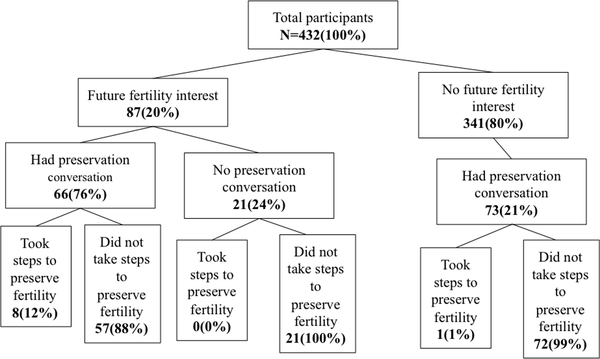
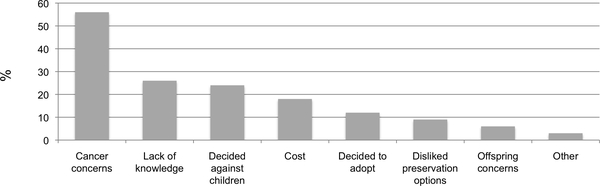
Among 432 survivors diagnosed during 2004–2011, 288 (67%) had not discussed the effects of treatment on fertility with a healthcare provider before or during treatment. Fertility discussion was associated with younger age (for <35 vs 40+ years, PR: 3.49, CI: 2.66–4.58) and lower parity (for parity 1 vs. 2, PR: 1.81, CI: 1.29, 2.53). Twenty percent of respondents reported that they were interested in future fertility (87/432) at the time of their diagnosis, but not all (66/87) received counseling on the impact of treatment on their fertility, and few (8/87) utilized fertility preservation strategies. Among women with a fertility interest who provided reasons for not taking steps to preserve fertility (N=68), reasons cited included concern for adverse impact on cancer treatment (56%), lack of knowledge (26%), decision to not have a child (24%), and cost (18%).
Conclusions:
Across multiple treatment settings, most reproductive-age women diagnosed with breast cancer did not discuss fertility with a healthcare provider or use fertility preservation strategies. Discussing the potential impact of cancer treatment on future fertility is an important aspect of patient education.
-
Subjects:
-
Source:Cancer. 125(15):2675-2683
-
Pubmed ID:31012960
-
Pubmed Central ID:PMC6935370
-
Document Type:
-
Funding:
-
Volume:125
-
Issue:15
-
Collection(s):
-
Main Document Checksum:urn:sha256:8523df121ced08bbb2da6675b60e5fc91cad38ca48a93b3be9bfae3ba3aba6cf
-
Download URL:
-
File Type:
 [PDF
- 358.53 KB
]
[PDF
- 358.53 KB
]
Supporting Files


File Language:
English
 Was this page helpful?
 Found an issue?
CDC STACKS serves as an archival repository of CDC-published products including
scientific findings,
journal articles, guidelines, recommendations, or other public health information authored or
co-authored by CDC or funded partners.
As a repository, CDC STACKS retains documents in their original published format to ensure public access to scientific information.
As a repository, CDC STACKS retains documents in their original published format to ensure public access to scientific information.
You May Also Like
COLLECTION
CDC Public Access