


High Prevalence of Macrolide-Resistant Bordetella pertussis and ptxP1 Genotype, Mainland China, 2014–2016
Supporting Files
Public Domain

-
December 2019
-
File Language:
English
Details
-
Alternative Title:Emerg Infect Dis
-
Personal Author:Li, Lijun ; Deng, Jikui ; Ma, Xiang ; Zhou, Kai ; Meng, Qinghong ; Yuan, Lin ; Shi, Wei ; Wang, Qing ; Li, Yue ; Yao, Kaihu
-
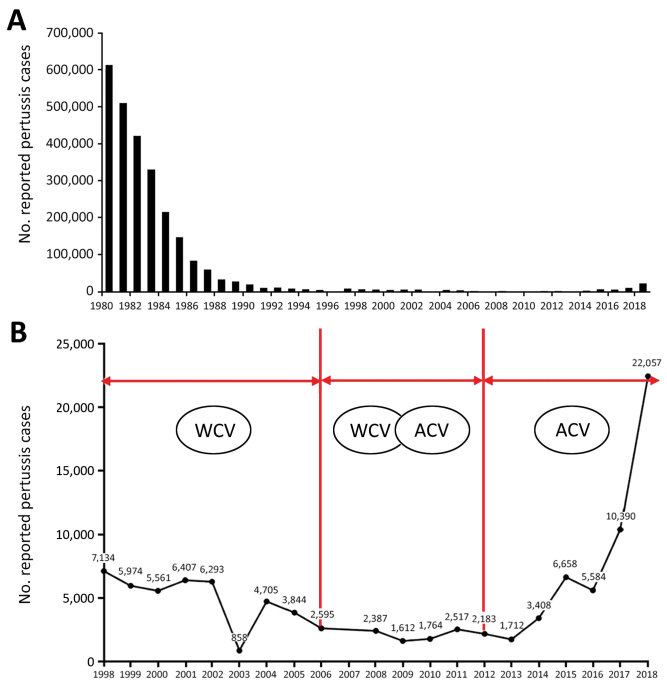
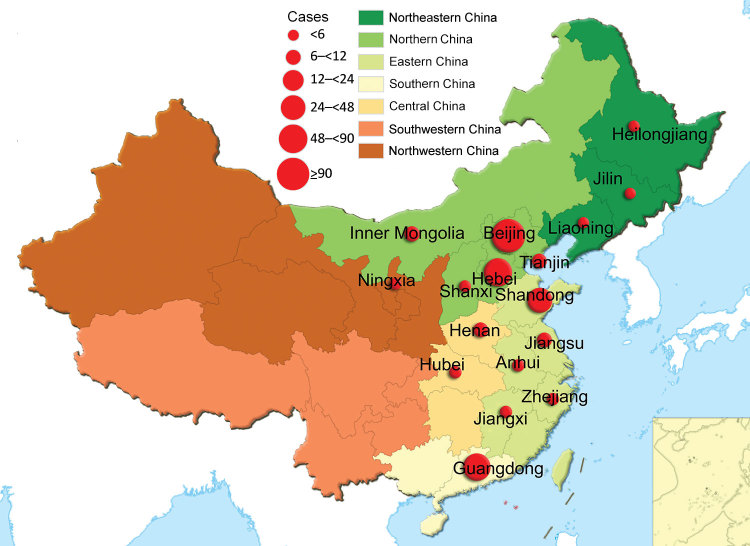
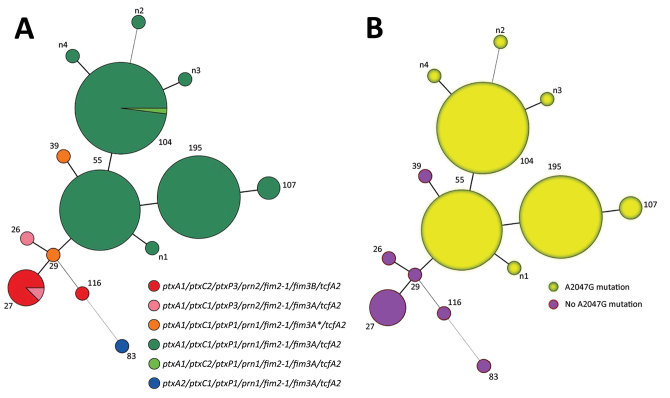
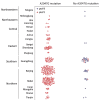
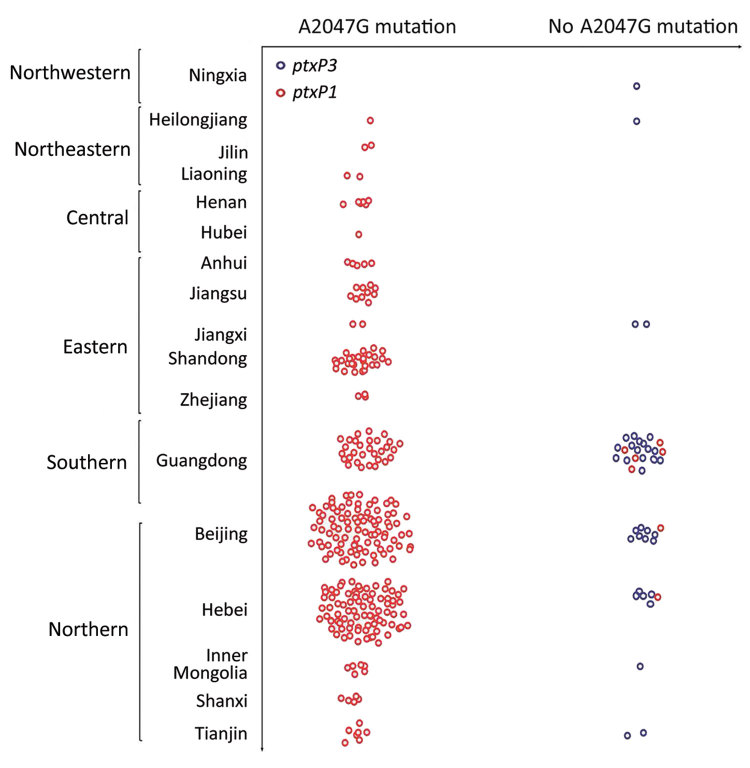
Description:According to the government of China, reported cases of pertussis have increased remarkably and are still increasing. To determine the genetic relatedness of Bordetella pertussis strains, we compared multilocus variable-number tandem-repeat analysis (MLVA) results for isolates from China with those from Western countries. Among 335 isolates from China, the most common virulence-associated genotype was ptxA1/ptxC1/ptxP1/prn1/fim2-1/fim3A/tcfA2, which was more frequent among isolates from northern than southern China. Isolates of this genotype were highly resistant to erythromycin. We identified 36 ptxP3 strains mainly harboring ptxA1 and prn2 (35/36); ptxP3 strains were sensitive to erythromycin and were less frequently from northern China. For all isolates, the sulfamethoxazole/trimethoprim MIC was low, indicating that this drug should be recommended for patients infected with erythromycin-resistant B. pertussis. MLVA of 150 clinical isolates identified 13 MLVA types, including 3 predominant types. Our results show that isolates circulating in China differ from those in Western countries.
-
Subjects:
-
Source:Emerg Infect Dis. 25(12):2205-2214
-
Pubmed ID:31742507
-
Pubmed Central ID:PMC6874251
-
Document Type:
-
Place as Subject:
-
Location:
-
Volume:25
-
Issue:12
-
Collection(s):
-
Main Document Checksum:urn:sha256:b72a979a591a36f005390b462acbd16e1b4f9c21749e6177fd237f20f611c2fb
-
Download URL:
-
File Type:
 [PDF
- 2.91 MB
]
[PDF
- 2.91 MB
]
Supporting Files


File Language:
English
ON THIS PAGE



CDC STACKS serves as an archival repository of CDC-published products including
scientific findings,
journal articles, guidelines, recommendations, or other public health information authored or
co-authored by CDC or funded partners.
As a repository, CDC STACKS retains documents in their original published format to ensure public access to scientific information.
As a repository, CDC STACKS retains documents in their original published format to ensure public access to scientific information.
You May Also Like
COLLECTION
Emerging Infectious Diseases