



Impact of US Public Health Service increased risk deceased donor designation on organ utilization
Supporting Files

-
-
By Show All

-
Available in CDC Stacks on
File Language:
English
Details
-
Alternative Title:Am J Transplant
-
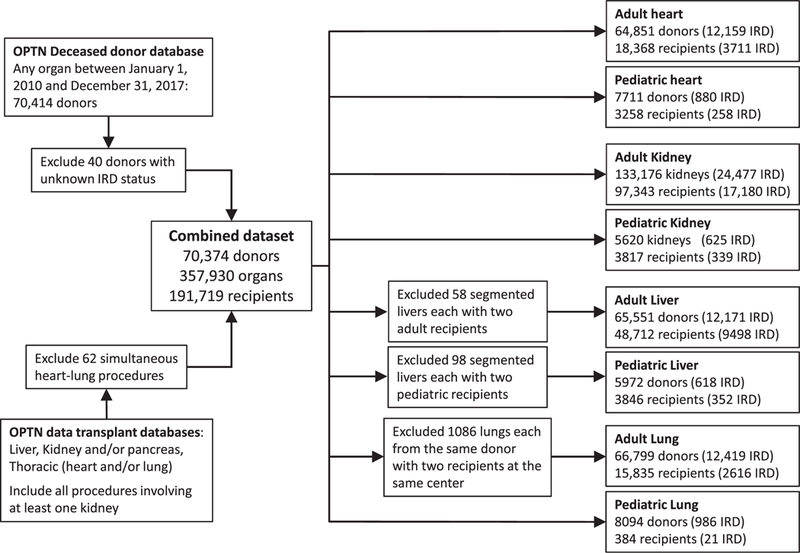
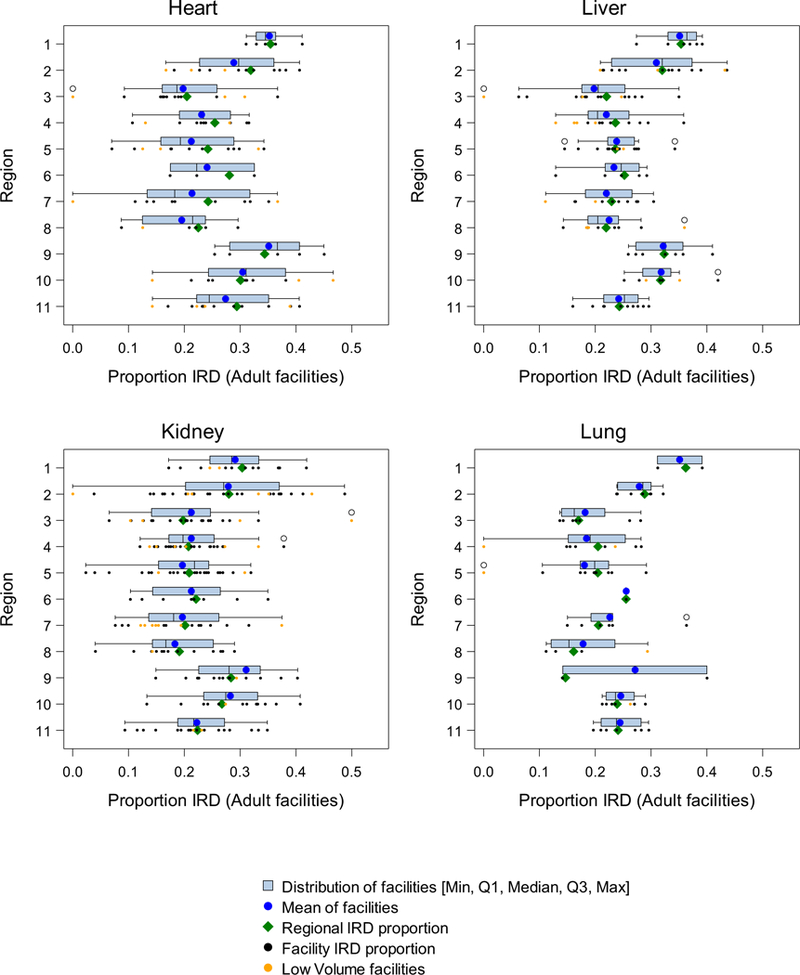
Description:Under US Public Health Service guidelines, organ donors with risk factors for human immunodeficiency virus (HIV), hepatitis B virus (HBV), or hepatitis C virus (HCV) are categorized as increased risk donors (IRD). Previous studies have suggested that IRD organs are utilized at lower rates than organs from standard risk donors (SRD), but these studies were conducted prior to universal donor nucleic acid test screening. We conducted risk-adjusted analyses to determine the effect of IRD designation on organ utilization using 2010-2017 data (21 626 heart, 101 160 kidney, 52 714 liver, and 16 219 lung recipients in the United States) from the Organ Procurement and Transplantation Network. There was no significant difference (P < .05) between risk-adjusted utilization rates for IRD vs SRD organs for adult hearts and livers and pediatric kidneys, livers, and lungs. Significantly lower utilization was found among IRD adult kidneys, lungs, and pediatric hearts. Analysis of the proportion of transplanted organs recovered from IRD by facility suggests that a subset of facilities contribute to the underutilization of adult IRD kidneys. Along with revised criteria and nomenclature to identify donors with HIV, HBV, or HCV risk factors, educational efforts to standardize informed consent discussions might improve organ utilization.
-
Subjects:
- Child
- Donor Selection
- HIV Infections
- Heart Transplantation
- Hepatitis B
- Hepatitis C
- Humans
- Kidney Transplantation
- Liver Transplantation
- Lung Transplantation
- Organ Transplantation
- Practice Guidelines as Topic
- Practice Patterns, Physicians'
- Process Assessment, Health Care
- Risk Assessment
- Risk Factors
- Tissue Donors
- Tissue and Organ Procurement
-
Pubmed ID:30959569
-
Pubmed Central ID:PMC6864734
-
Document Type:
-
Funding:
-
Corporate as Subject:
-
Place as Subject:
-
Volume:19
-
Issue:9
-
Download URL:
-
File Type:
 [PDF - 352.05 KB]
-
Collection(s):
-
Main Document Checksum:urn:sha256:8c28c1f39d9fba7e33a9f073f6d0cb4f42fd5aa57b6a6955b754ef4e62925e03
Supporting Files


File Language:
English
 Was this page helpful?
 Found an issue?



CDC STACKS serves as an archival repository of CDC-published products including
scientific findings, journal articles, guidelines, recommendations, or other public health information authored or
co-authored by CDC or funded partners.
As a repository, CDC STACKS retains documents in their original published format to ensure public access to scientific information.
You May Also Like
COLLECTION
CDC Public Access