


Negative life experiences contribute to racial differences in the neural response to threat
Supporting Files

-
August 08 2019
-
File Language:
English
Details
-
Alternative Title:Neuroimage
-
Personal Author:
-
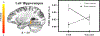
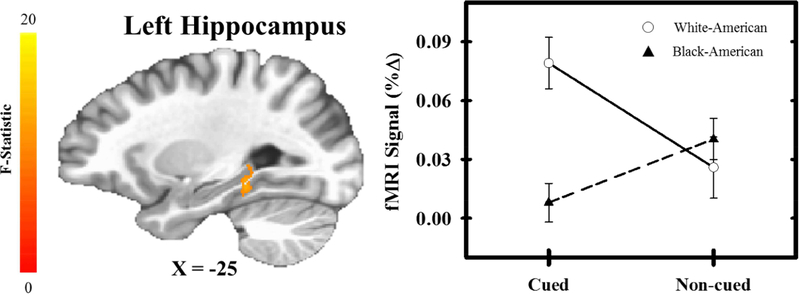
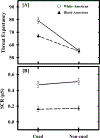
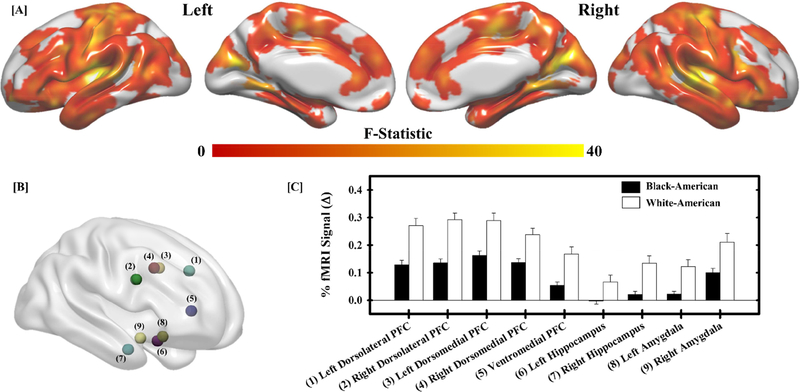
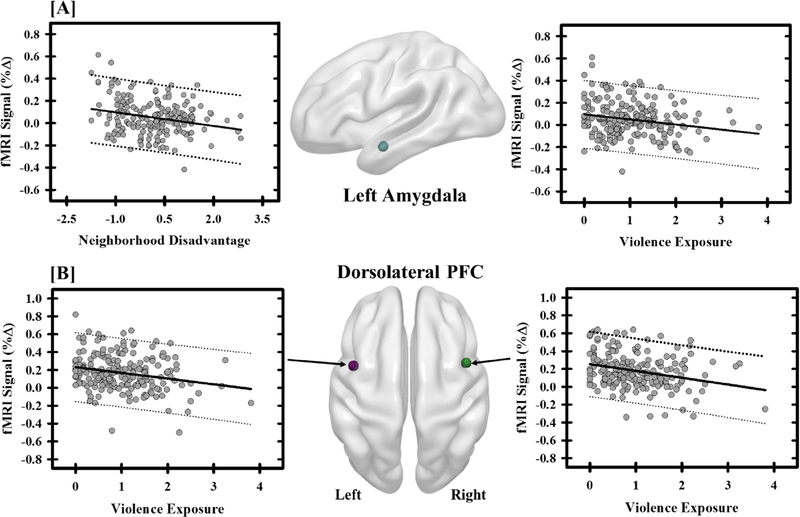
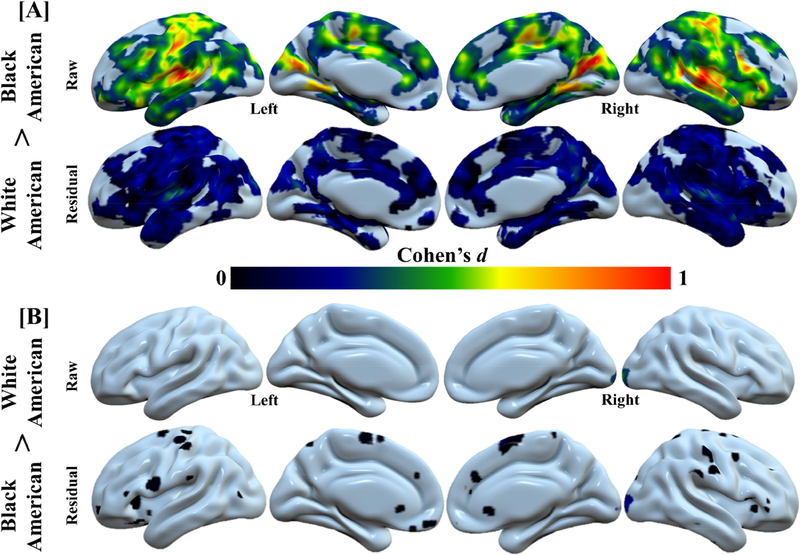
Description:Threat-related emotional function is supported by a neural circuit that includes the prefrontal cortex (PFC), hippocampus, and amygdala. The function of this neural circuit is altered by negative life experiences, which can potentially affect threat-related emotional processes. Notably, Black-American individuals disproportionately endure negative life experiences compared to White-American individuals. However, the relationships among negative life experiences, race, and the neural substrates that support threat-related emotional function remains unclear. Therefore, the current study investigated whether the brain function that supports threat-related emotional processes varies with racial differences in negative life experiences. In the present study, adolescent violence exposure, family income, and neighborhood disadvantage were measured prospectively (i.e., at 11-19 years of age) for Black-American and White-American volunteers. Participants then, as young adults (i.e., 18-23 years of age), completed a Pavlovian fear conditioning task during functional magnetic resonance imaging (fMRI). Cued and non-cued threats were presented during the conditioning task and behavioral (threat expectancy) and psychophysiological responses (skin conductance response; SCR) were recorded simultaneously with fMRI. Racial differences were observed in neural (fMRI activity), behavioral (threat expectancy), and psychophysiological (SCR) responses to threat. These threat-elicited responses also varied with negative life experiences (violence exposure, family income, and neighborhood disadvantage). Notably, racial differences in brain activity to threat were smaller after accounting for negative life experiences. The present findings suggest that racial differences in the neural and behavioral response to threat are due, in part, to exposure to negative life experiences and may provide new insight into the mechanisms underlying racial disparities in mental health.
-
Subjects:
-
Source:Neuroimage. 202:116086
-
Pubmed ID:31401241
-
Pubmed Central ID:PMC6819267
-
Document Type:
-
Funding:U19 DP002664/DP/NCCDPHP CDC HHS/United States ; U48 DP000046/DP/NCCDPHP CDC HHS/United States ; U48 DP000057/DP/NCCDPHP CDC HHS/United States ; U19 DP002663/DP/NCCDPHP CDC HHS/United States ; U48 DP000056/DP/NCCDPHP CDC HHS/United States ; R01 MH098348/MH/NIMH NIH HHS/United States ; T32 MH100019/MH/NIMH NIH HHS/United States ; U19 DP002665/DP/NCCDPHP CDC HHS/United States
-
Volume:202
-
Collection(s):
-
Main Document Checksum:urn:sha256:e1d350a3717370cb4c9066e8689d0fa7cc9ac0fa3afec5ea9fac1b51e5514c61
-
Download URL:
-
File Type:
 [PDF
- 1.26 MB
]
[PDF
- 1.26 MB
]
Supporting Files


File Language:
English
ON THIS PAGE




CDC STACKS serves as an archival repository of CDC-published products including
scientific findings,
journal articles, guidelines, recommendations, or other public health information authored or
co-authored by CDC or funded partners.
As a repository, CDC STACKS retains documents in their original published format to ensure public access to scientific information.
As a repository, CDC STACKS retains documents in their original published format to ensure public access to scientific information.
You May Also Like
COLLECTION
CDC Public Access