


Early Diagnosis of Tularemia by Flow Cytometry, Czech Republic, 2003–20151
Supporting Files
Public Domain

-
October 2019
-
File Language:
English
Details
-
Alternative Title:Emerg Infect Dis
-
Personal Author:
-
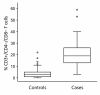
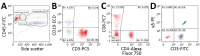
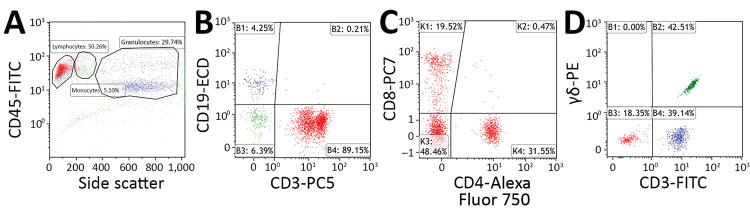
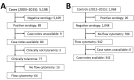
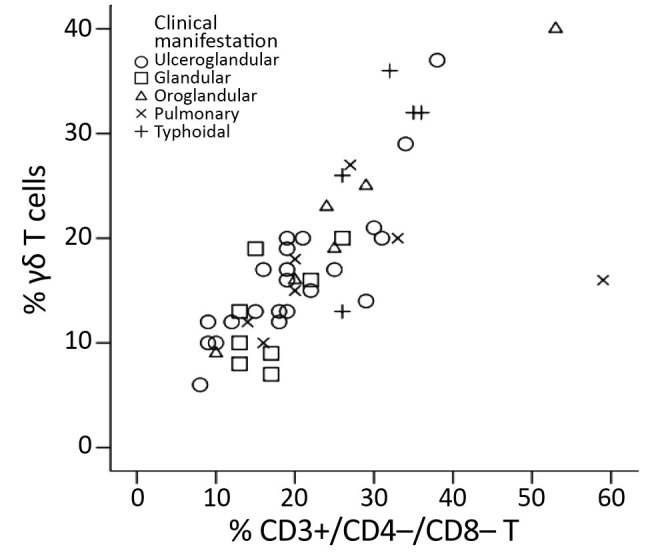
Description:We retrospectively assessed the utility of a flow cytometry-based test quantifying the percentage of CD3+ T cells with the CD4-/CD8- phenotype for predicting tularemia diagnoses in 64 probable and confirmed tularemia patients treated during 2003-2015 and 342 controls with tularemia-like illnesses treated during 2012-2015 in the Czech Republic. The median percentage of CD3+/CD4-/CD8- T cells in peripheral blood was higher in tularemia patients (19%, 95% CI 17%-22%) than in controls (3%, 95% CI 2%-3%). When we used 8% as the cutoff, this test's sensitivity was 0.953 and specificity 0.895 for distinguishing cases from controls. The CD3+/CD4-/CD8- T cells increased a median of 7 days before tularemia serologic test results became positive. This test supports early presumptive diagnosis of tularemia for clinically suspected cases 7-14 days before diagnosis can be confirmed by serologic testing in regions with low prevalences of tularemia-like illnesses.
-
Subjects:
-
Source:Emerg Infect Dis. 25(10):1919-1927
-
Pubmed ID:31538915
-
Pubmed Central ID:PMC6759275
-
Document Type:
-
Volume:25
-
Issue:10
-
Collection(s):
-
Main Document Checksum:urn:sha256:d5f02597cb7699b0abc106eaec13a257f8b1d7b45051bc4ea799a8f856788782
-
Download URL:
-
File Type:
 [PDF
- 1.22 MB
]
[PDF
- 1.22 MB
]
Supporting Files


File Language:
English
ON THIS PAGE





CDC STACKS serves as an archival repository of CDC-published products including
scientific findings,
journal articles, guidelines, recommendations, or other public health information authored or
co-authored by CDC or funded partners.
As a repository, CDC STACKS retains documents in their original published format to ensure public access to scientific information.
As a repository, CDC STACKS retains documents in their original published format to ensure public access to scientific information.
You May Also Like
COLLECTION
Emerging Infectious Diseases