



Rare Copy Number Variants Implicated in Posterior Urethral Valves
Supporting Files

-
3 2016 ; 3-2016
-
Available in CDC Stacks on 2018-10-29T00:00:00Z
File Language:
English
Details
-
Alternative Title:Am J Med Genet A
-
Personal Author:Boghossian, Nansi S. ; Sicko, Robert J. ; Kay, Denise M. ; Rigler, Shannon L. ; Caggana, Michele ; Tsai, Michael Y. ; Yeung, Edwina H. ; Pankratz, Nathan ; Cole, Benjamin R. ; Druschel, Charlotte M. ; Romitti, Paul A. ; Browne, Marilyn L. ; Fan, Ruzong ; Liu, Aiyi ; Brody, Lawrence C. ; Mills, James L.
-
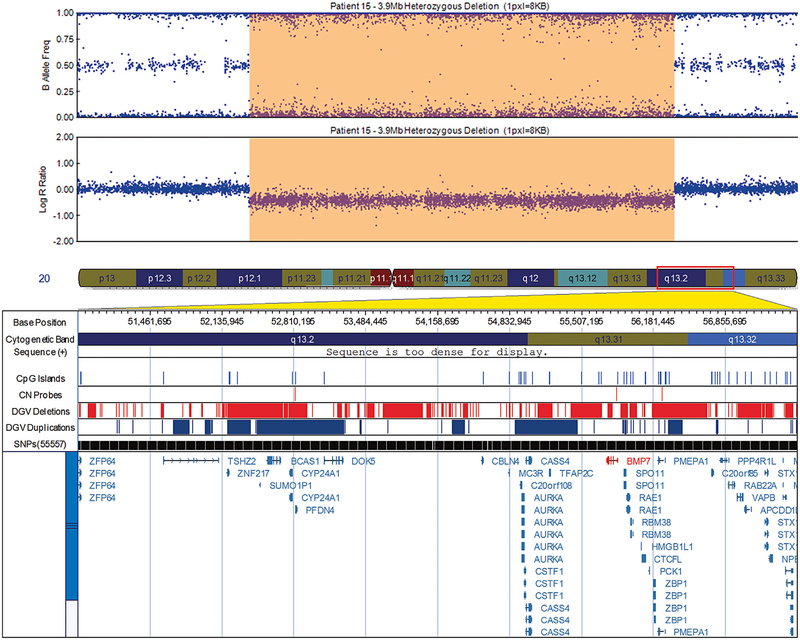
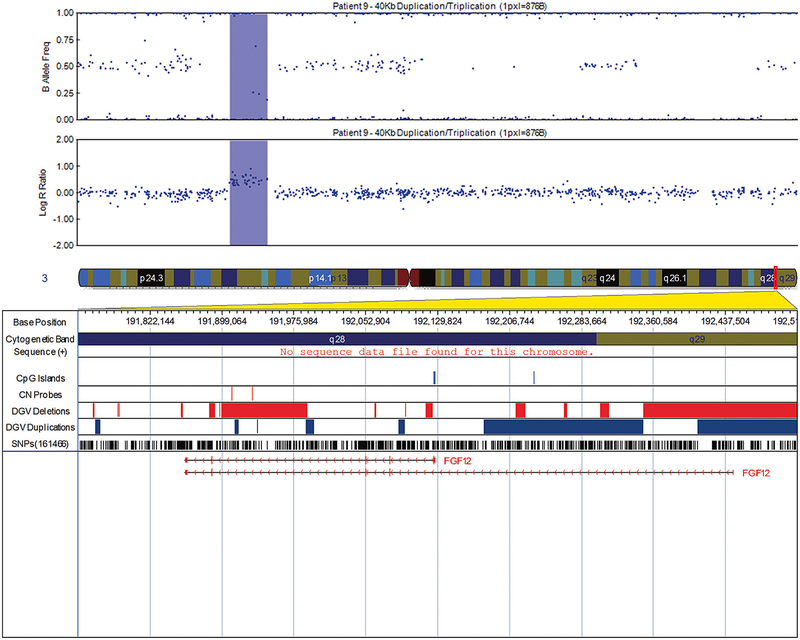
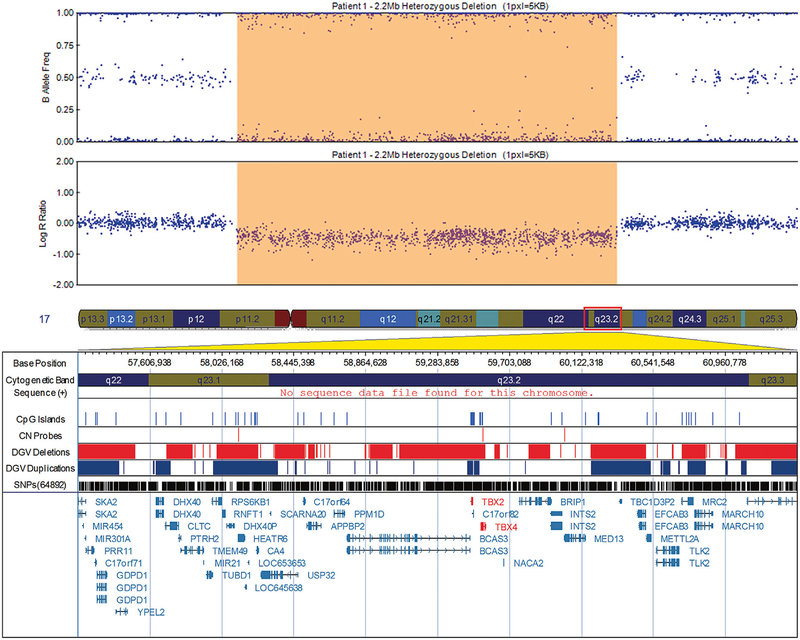
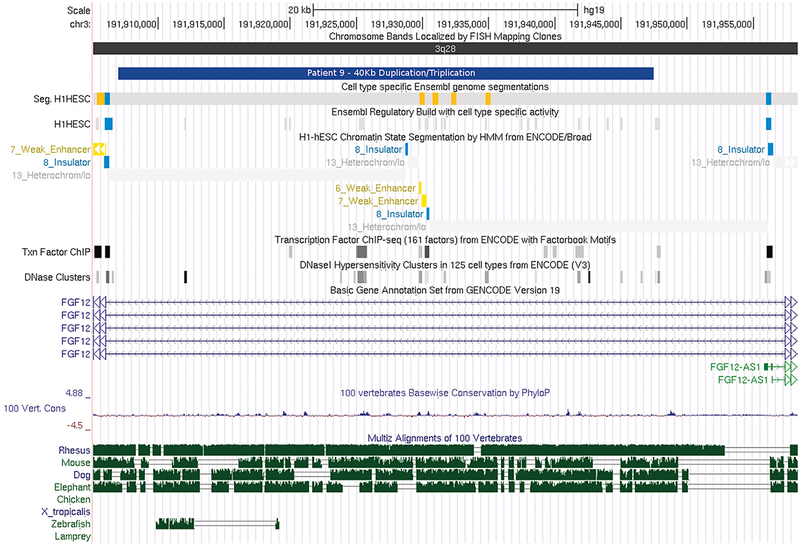
Description:The cause of posterior urethral valves (PUV) is unknown, but genetic factors are suspected given their familial occurrence. We examined cases of isolated PUV to identify novel copy number variants (CNVs). We identified 56 cases of isolated PUV from all live-births in New York State (1998-2005). Samples were genotyped using Illumina HumanOmni2.5 microarrays. Autosomal and sex-linked CNVs were identified using PennCNV and cnvPartition software. CNVs were prioritized for follow-up if they were absent from in-house controls, contained ≥ 10 consecutive probes, were ≥ 20 Kb in size, had ≤ 20% overlap with variants detected in other birth defect phenotypes screened in our lab, and were rare in population reference controls. We identified 47 rare candidate PUV-associated CNVs in 32 cases; one case had a 3.9 Mb deletion encompassing BMP7. Mutations in BMP7 have been associated with severe anomalies in the mouse urethra. Other interesting CNVs, each detected in a single PUV case included: a deletion of PIK3R3 and TSPAN1, duplication/triplication in FGF12, duplication of FAT1--a gene essential for normal growth and development, a large deletion (>2 Mb) on chromosome 17q that involves TBX2 and TBX4, and large duplications (>1 Mb) on chromosomes 3q and 6q. Our finding of previously unreported novel CNVs in PUV suggests that genetic factors may play a larger role than previously understood. Our data show a potential role of CNVs in up to 57% of cases examined. Investigation of genes in these CNVs may provide further insights into genetic variants that contribute to PUV.
-
Subjects:
- Base Sequence
- Bone Morphogenetic Protein 7
- Cadherins
- Case-Control Studies
- Child, Preschool
- Chromosomes, Human, Pair 17
- Chromosomes, Human, Pair 3
- Chromosomes, Human, Pair 6
- Comparative Genomic Hybridization
- DNA Copy Number Variations
- Fibroblast Growth Factors
- Gene Expression
- Genotype
- Humans
- Infant
- Male
- Molecular Sequence Data
- New York
- Oligonucleotide Array Sequence Analysis
- Phenotype
- Phosphatidylinositol 3-Kinases
- Polymorphism, Single Nucleotide
- Sequence Deletion
- Tetraspanins
- Urethra
- Urethral Stricture
-
Keywords:
-
Source:Am J Med Genet A. 170(3):622-633
-
Pubmed ID:26663319
-
Pubmed Central ID:PMC6205289
-
Document Type:
-
Funding:N01-DK-73431/DK/NIDDK NIH HHSUnited States/ ; R01 DA024411/DA/NIDA NIH HHSUnited States/ ; U01 DD001035/DD/NCBDD CDC HHSUnited States/ ; ImNIH/Intramural NIH HHSUnited States/ ; HHSN275201100001I/HD/NICHD NIH HHSUnited States/ ; WT_/Wellcome TrustUnited Kingdom/ ; N01DK73431/HD/NICHD NIH HHSUnited States/ ; R01 DA012995/DA/NIDA NIH HHSUnited States/ ; HHSN27500005/PHS HHSUnited States/
-
Volume:170
-
Issue:3
-
Download URL:
-
File Type:
 [PDF - 1.93 MB]
 -
Collection(s):
-
Main Document Checksum:urn:sha256:58365c0ab9b83d1cfb43c2b5016bc90c28902da97bdc2b731f3bbaf4af2e859c
Supporting Files


File Language:
English
 Was this page helpful?
 Found an issue?


CDC STACKS serves as an archival repository of CDC-published products including
scientific findings, journal articles, guidelines, recommendations, or other public health information authored or
co-authored by CDC or funded partners.
As a repository, CDC STACKS retains documents in their original published format to ensure public access to scientific information.
As a repository, CDC STACKS retains documents in their original published format to ensure public access to scientific information.
You May Also Like
COLLECTION
CDC Public Access