


Antibody Inhibition of a Viral Type 1 Interferon Decoy Receptor Cures a Viral Disease by Restoring Interferon Signaling in the Liver
Supporting Files
Public Domain

-
Jan 05 2012
-
File Language:
English
Details
-
Alternative Title:PLoS Pathog
-
Personal Author:
-
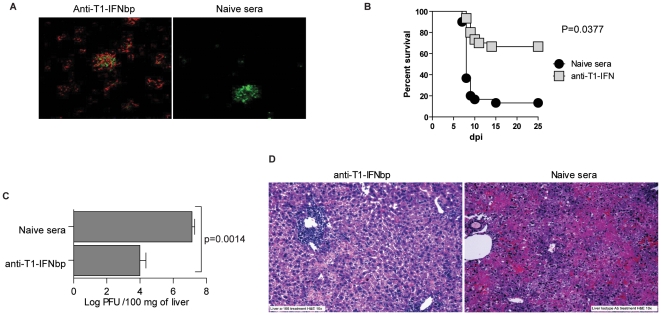
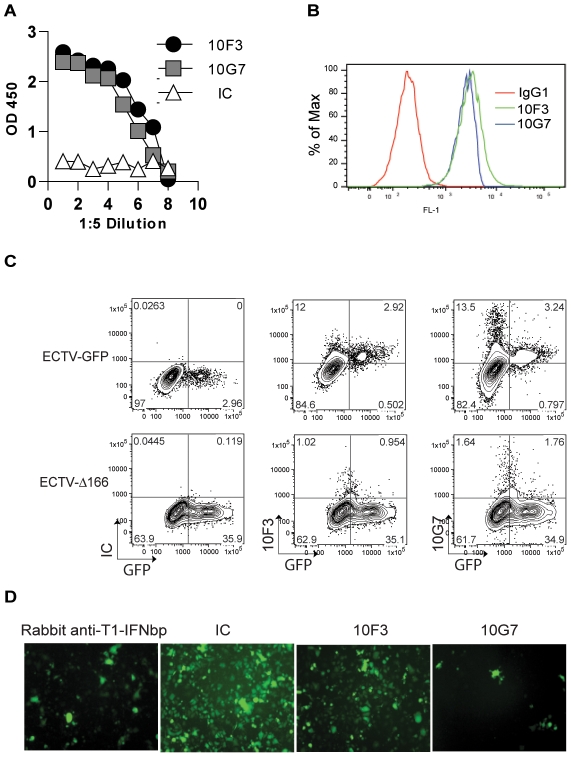
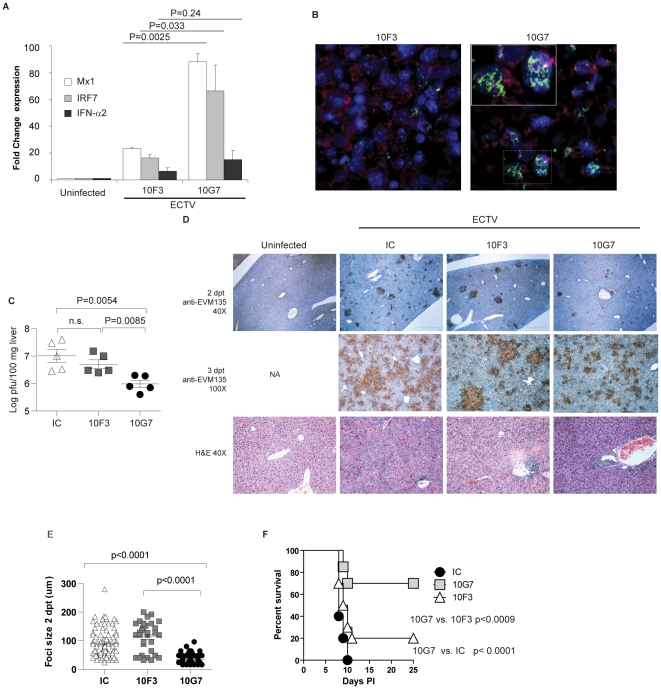
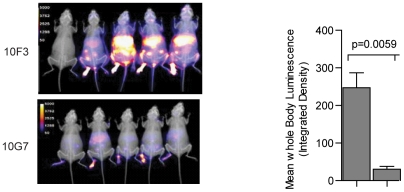
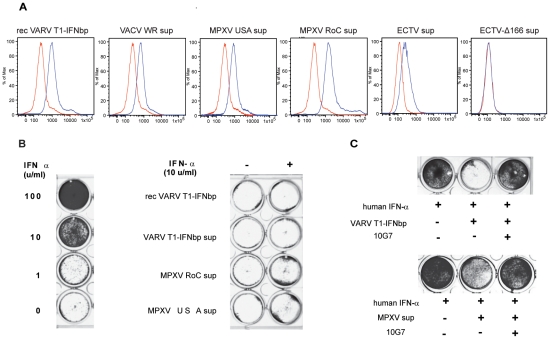
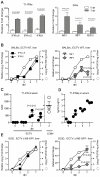
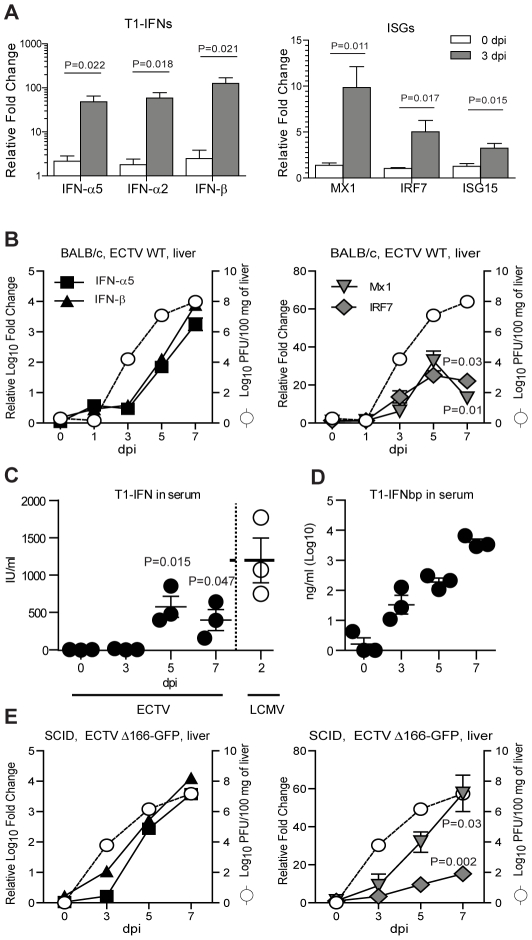
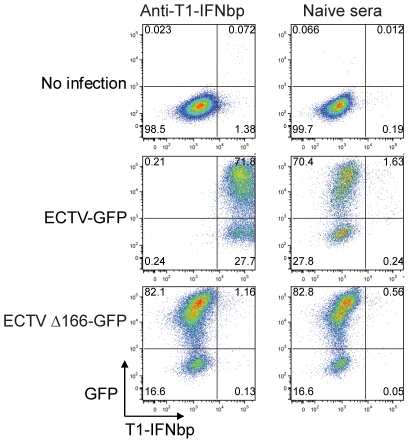
Description:Type 1 interferons (T1-IFNs) play a major role in antiviral defense, but when or how they protect during infections that spread through the lympho-hematogenous route is not known. Orthopoxviruses, including those that produce smallpox and mousepox, spread lympho-hematogenously. They also encode a decoy receptor for T1-IFN, the T1-IFN binding protein (T1-IFNbp), which is essential for virulence. We demonstrate that during mousepox, T1-IFNs protect the liver locally rather than systemically, and that the T1-IFNbp attaches to uninfected cells surrounding infected foci in the liver and the spleen to impair their ability to receive T1-IFN signaling, thus facilitating virus spread. Remarkably, this process can be reversed and mousepox cured late in infection by treating with antibodies that block the biological function of the T1-IFNbp. Thus, our findings provide insights on how T1-IFNs function and are evaded during a viral infection in vivo, and unveil a novel mechanism for antibody-mediated antiviral therapy.
-
Subjects:
-
Source:PLoS Pathog. 2012; 8(1).
-
Document Type:
-
Volume:8
-
Issue:1
-
Collection(s):
-
Main Document Checksum:urn:sha256:652a2952f1521822e2669fbf9df0d6bc11c89be28451005c933e71f45cfffe5e
-
Download URL:
-
File Type:
 [PDF
- 1.84 MB
]
[PDF
- 1.84 MB
]
Supporting Files


File Language:
English
ON THIS PAGE



CDC STACKS serves as an archival repository of CDC-published products including
scientific findings,
journal articles, guidelines, recommendations, or other public health information authored or
co-authored by CDC or funded partners.
As a repository, CDC STACKS retains documents in their original published format to ensure public access to scientific information.
As a repository, CDC STACKS retains documents in their original published format to ensure public access to scientific information.
You May Also Like
COLLECTION
CDC Public Access