


Long-term outcomes of Guillain-Barré syndrome possibly associated with Zika virus infection
Supporting Files
Public Domain

-
August 01 2019
-
File Language:
English
Details
-
Alternative Title:PLoS One
-
Personal Author:Walteros, Diana M. ; Soares, Jesus ; Styczynski, Ashley R. ; Abrams, Joseph Y. ; Galindo-Buitrago, Jose I. ; Acosta-Reyes, Jorge ; Bravo-Ribero, Elsa ; Arteta, Zuleima E. ; Solano-Sanchez, Alma ; Prieto, Franklyn E. ; Gonzalez-Duarte, Maritza ; Navarro-Lechuga, Edgar ; Salinas, Jorge L. ; Belay, Ermias D. ; Schonberger, Lawrence B. ; Damon, Inger K. ; Ospina, Martha L. ; Sejvar, James J.
-
Description:Background
This prospective cohort investigation analyzed the long-term functional and neurologic outcomes of patients with Zika virus-associated Guillain-Barré syndrome (GBS) in Barranquilla, Colombia.
Methods
Thirty-four Zika virus-associated GBS cases were assessed a median of 17 months following acute GBS illness. We assessed demographics, results of Overall Disability Sum Scores (ODSS), Hughes Disability Score (HDS), Zung Depression Scale (ZDS), and Health Related Quality of Life (HRQL) questionnaires; and compared outcomes indices with a normative sample of neighborhood-selected control subjects in Barranquilla without GBS.
Results
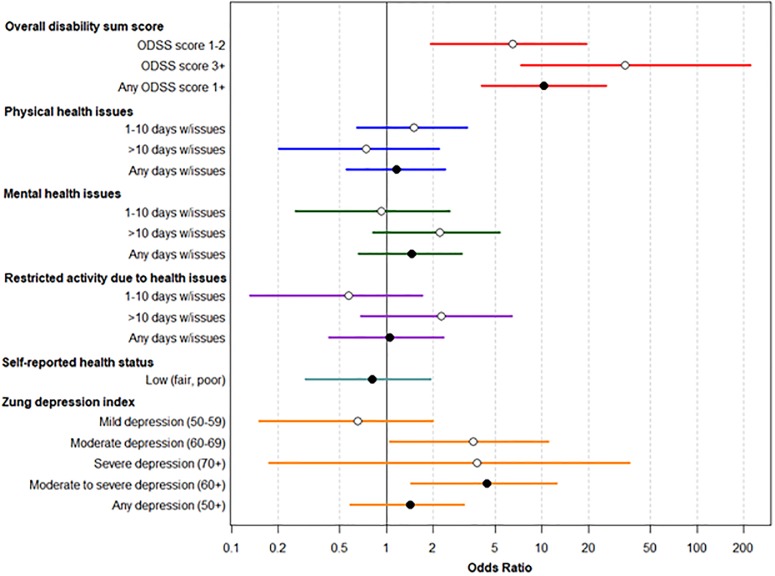
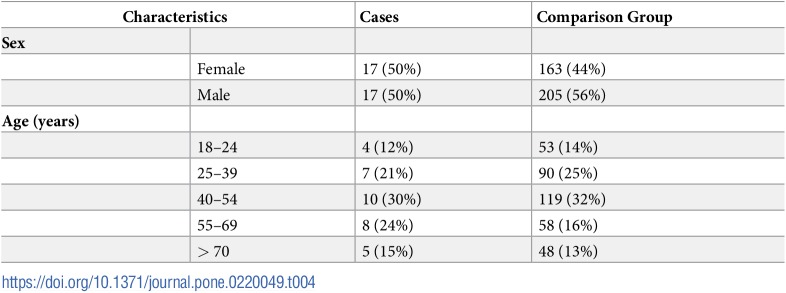
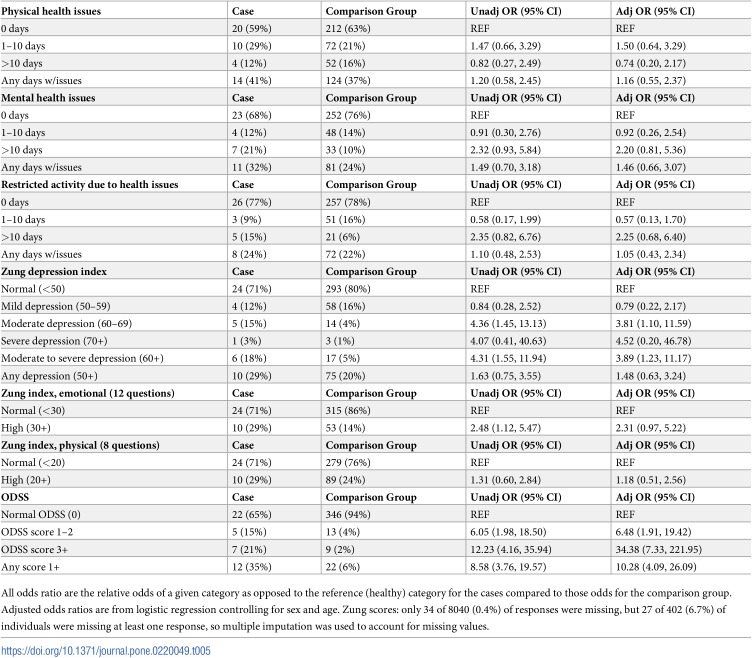
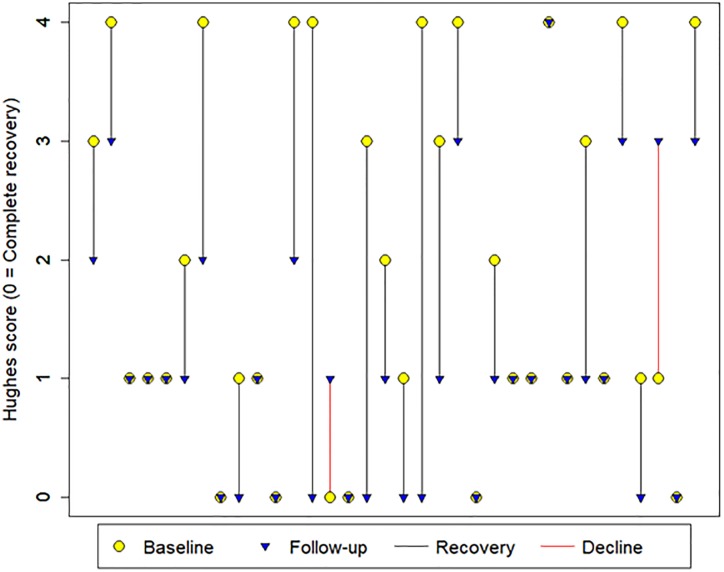
Median age at time of acute neurologic onset was 49 years (range, 10–80); 17 (50%) were male. No deaths occurred. At long-term follow-up, 25 (73%) patients had a HDS 0–1, indicating complete / near complete recovery. Among the group, HDS (mean 1.4, range 0–4), ODSS (mean 1.9, range 0–9) and ZDS score (mean 34.4, range 20–56) indicated mild / moderate ongoing disability. Adjusting for age and sex, Zika virus-associated GBS cases were similar to a population comparison group (n = 368) in Barranquilla without GBS in terms of prevalence of physical or mental health complaints, though GBS patients were more likely to have an ODSS of ≥ 1 (OR 8.8, 95% CI 3.2–24.5) and to suffer from moderate / moderate-severe depression (OR 3.89, 95% CI 1.23–11.17) than the comparison group.
Conclusions
Long-term outcomes of Zika virus-associated GBS are consistent with those associated with other antecedent antigenic stimuli in terms of mortality and ongoing long-term morbidity, as published in the literature. Persons with Zika virus-associated GBS more frequently reported disability and depression after approximately one year compared with those without GBS.
-
Subjects:
-
Source:PLoS One. 14(8)
-
Pubmed ID:31369576
-
Pubmed Central ID:PMC6675241
-
Document Type:
-
Place as Subject:
-
Volume:14
-
Issue:8
-
Collection(s):
-
Main Document Checksum:urn:sha256:8bf260b77520b6762ff07d16468a18bf53b3fe2e244772b9c1130ba13667e5ed
-
Download URL:
-
File Type:
 [PDF
- 1.34 MB
]
[PDF
- 1.34 MB
]
Supporting Files


File Language:
English
ON THIS PAGE









CDC STACKS serves as an archival repository of CDC-published products including
scientific findings,
journal articles, guidelines, recommendations, or other public health information authored or
co-authored by CDC or funded partners.
As a repository, CDC STACKS retains documents in their original published format to ensure public access to scientific information.
As a repository, CDC STACKS retains documents in their original published format to ensure public access to scientific information.
You May Also Like
COLLECTION
CDC Public Access