


Nationwide Surveillance of Influenza during the Pandemic (2009–10) and Post-Pandemic (2010–11) Periods in Taiwan
Supporting Files
Public Domain

-
Apr 24 2012
-
File Language:
English
Details
-
Alternative Title:PLoS One
-
Personal Author:
-
Description:Introduction
Although WHO declared the world moving into the post-pandemic period on August 10, 2010, influenza A(H1N1) 2009 virus continued to circulate globally. Its impact was expected to continue during the 2010–11 influenza season. This study describes the nationwide surveillance findings of the pandemic and post-pandemic influenza periods in Taiwan and assesses the impact of influenza A(H1N1) 2009 during the post-pandemic period.
Methods
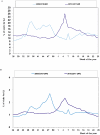
The Influenza Laboratory Surveillance Network consisted of 12 contract laboratories for collecting and testing samples with acute respiratory tract infections. Surveillance of emergency room visits and outpatient department visits for influenza-like illness (ILI) were conducted using the Real-Time Outbreak and Disease Surveillance system and the National Health Insurance program data, respectively. Hospitalized cases with severe complications and deaths were reported to the National Notifiable Disease Surveillance System.
Results
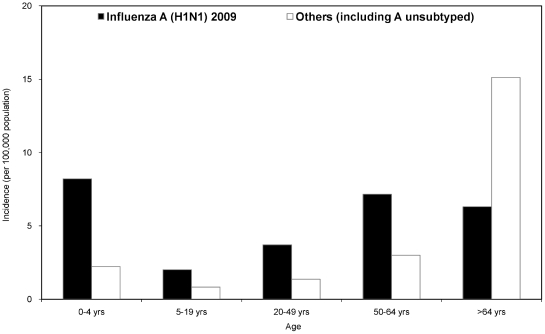
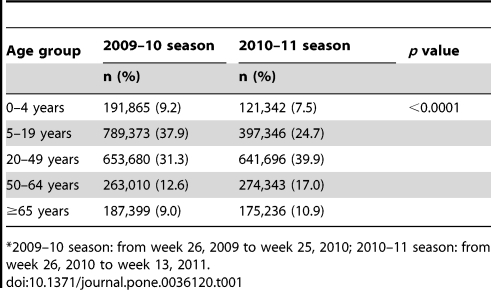
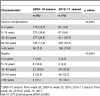
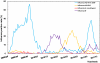
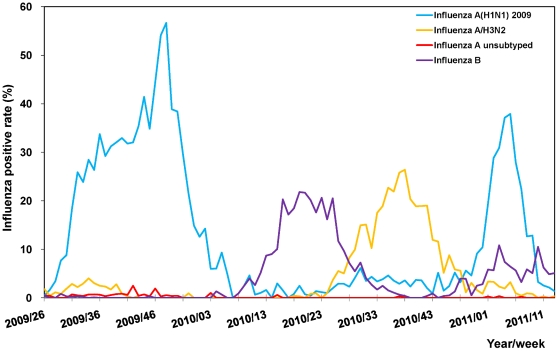
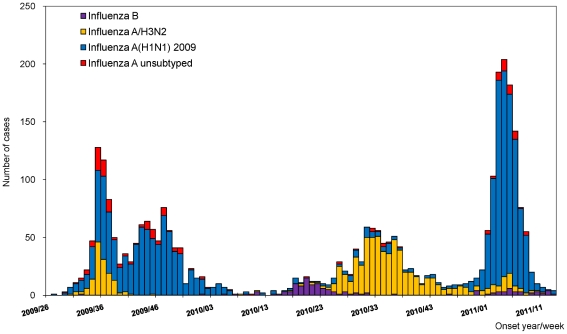
During the 2009–10 influenza season, pandemic A(H1N1) 2009 was the predominant circulating strain and caused 44 deaths. However, the 2010–11 influenza season began with A(H3N2) being the predominant circulating strain, changing to A(H1N1) 2009 in December 2010. Emergency room and outpatient department ILI surveillance displayed similar trends. By March 31, 2011, there were 1,751 cases of influenza with severe complications; 50.1% reported underlying diseases. Of the reported cases, 128 deaths were associated with influenza. Among these, 93 (72.6%) were influenza A(H1N1) 2009 and 30 (23.4%) A(H3N2). Compared to the pandemic period, during the immediate post-pandemic period, increased number of hospitalizations and deaths were observed, and the patients were consistently older.
Conclusions
Reemergence of influenza A(H1N1) 2009 during the 2010–11 influenza season had an intense activity with age distribution shift. To further mitigate the impact of future influenza epidemics, Taiwan must continue its multifaceted influenza surveillance systems, remain flexible with antiviral use policies, and revise the vaccine policies to include the population most at risk.
-
Subjects:
-
Source:PLoS One. 2012; 7(4).
-
Document Type:
-
Place as Subject:
-
Volume:7
-
Issue:4
-
Collection(s):
-
Main Document Checksum:urn:sha256:cb1b64d9f049c990fb66b1657f167a1ea8e3a9a0e3abf6956ab3c75dc3140317
-
Download URL:
-
File Type:
 [PDF
- 447.48 KB
]
[PDF
- 447.48 KB
]
Supporting Files


File Language:
English
ON THIS PAGE





CDC STACKS serves as an archival repository of CDC-published products including
scientific findings,
journal articles, guidelines, recommendations, or other public health information authored or
co-authored by CDC or funded partners.
As a repository, CDC STACKS retains documents in their original published format to ensure public access to scientific information.
As a repository, CDC STACKS retains documents in their original published format to ensure public access to scientific information.
You May Also Like
COLLECTION
CDC Public Access