


Substrate Stiffness-Dependent Carbon Nanotube-Induced Lung Fibrogenesis
Supporting Files

-
August 05 2019
-
File Language:
English
Details
-
Alternative Title:Nano Lett
-
Personal Author:
-
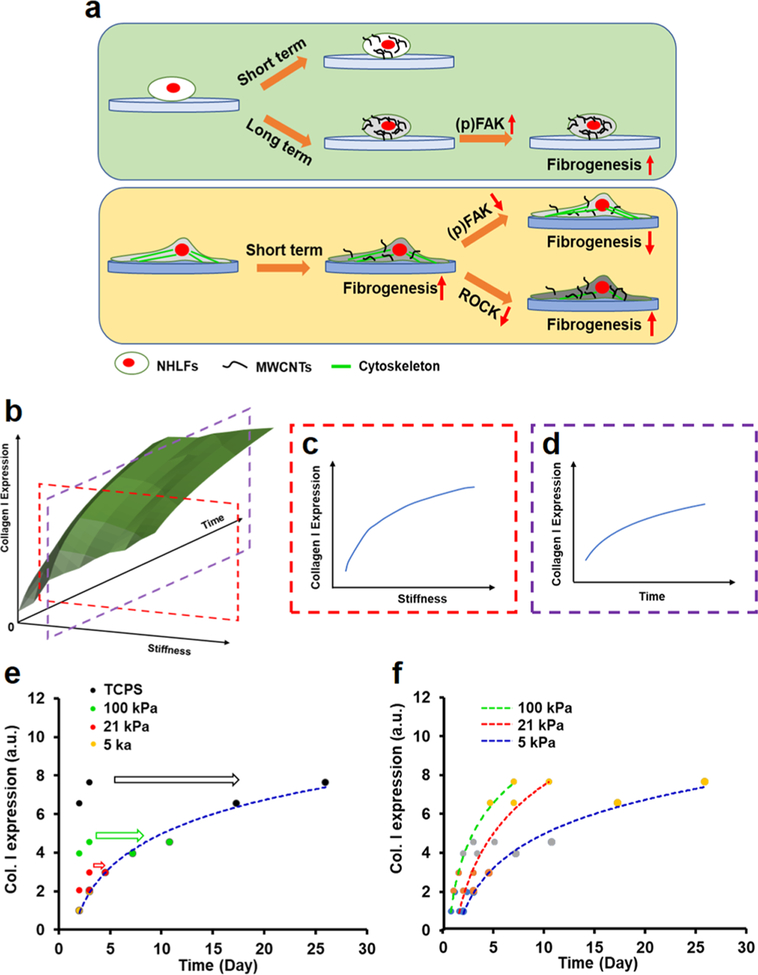
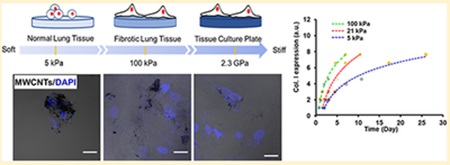
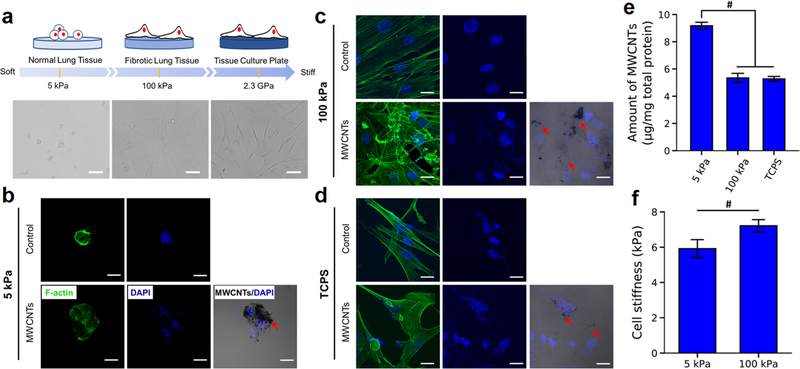
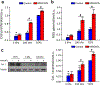
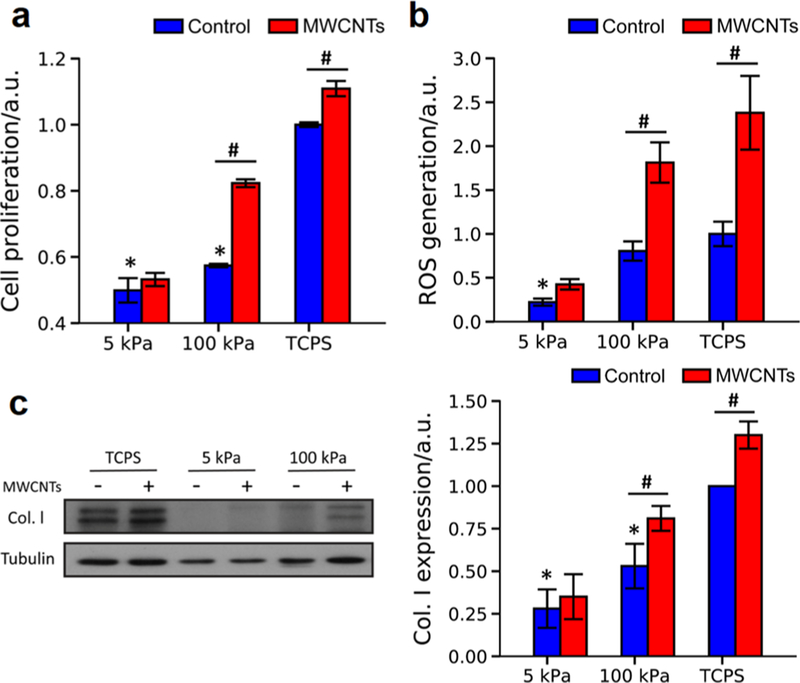
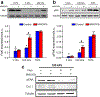
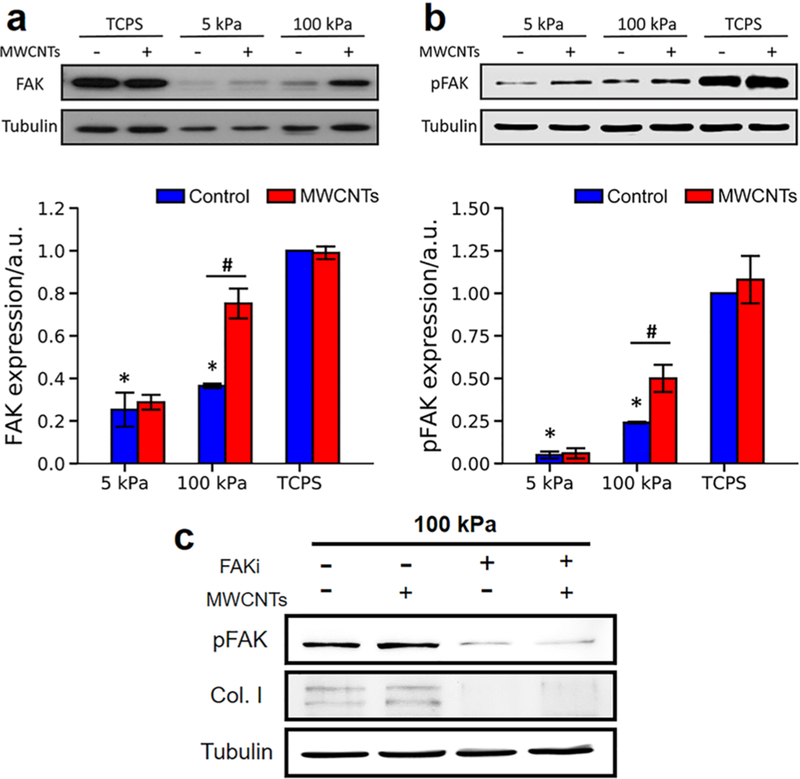
Description:Most living tissues exhibit the specific stiffness, which has been known to have profound influence on cell behaviors, yet how the stiffness affects cellular responses to engineered nanomaterials has not been elucidated. Particularly, discrepancies exist between | and | nanotoxicological studies. Here, we investigated the effects of substrate stiffness on the fibrogenic responses of normal human lung fibroblasts (NHLFs) to multiwalled carbon nanotubes (MWCNTs). NHLFs were grown on polyacrylamide (PAAm) hydrogels with the stiffness comparable to that of human normal and fibrotic lung tissues, and treated with MWCNTs for various time. The fibrogenic responses, including cell proliferation, reactive oxygen species production, and collagen I expression, of NHLFs to MWCNTs were observed to be regulated by substrate stiffness in a time-dependent manner. NHLFs generally were rounded on soft hydrogels and required a long treatment time to exhibit fibrogenic responses, while on stiff hydrogels the cells were well-spread with defined stress fibers and short-time MWCNTs treatment sufficiently induced the fibrogenic responses. Mechanistic studies showed that MWCNTs induced fibrogenesis of NHLFs through promoting expression and phosphorylation of focal adhesion kinase (FAK), while attenuating intracellular tension in the cells on stiff gels could increase MWCNTs uptake and thus elevate the induced fibrogenic responses. Moreover, we proposed a time-stiffness superposition principle to describe the equivalent effects of treatment time and substrate stiffness on nanomaterials-induced fibrogenesis, which suggested that increasing substrate stiffness expedited fibrogenesis and shed light on the rational design of | models for nanotoxicological study.
-
Subjects:
-
Source:Nano Lett. 19(8):5443-5451
-
Pubmed ID:31369708
-
Pubmed Central ID:PMC6724206
-
Document Type:
-
Funding:
-
Volume:19
-
Issue:8
-
Collection(s):
-
Main Document Checksum:urn:sha256:013898f160e7cc10e79551330ed0477c222207cd3136c29b03af83564dca569d
-
Download URL:
-
File Type:
 [PDF
- 1.68 MB
]
[PDF
- 1.68 MB
]
Supporting Files


File Language:
English
ON THIS PAGE




CDC STACKS serves as an archival repository of CDC-published products including
scientific findings,
journal articles, guidelines, recommendations, or other public health information authored or
co-authored by CDC or funded partners.
As a repository, CDC STACKS retains documents in their original published format to ensure public access to scientific information.
As a repository, CDC STACKS retains documents in their original published format to ensure public access to scientific information.
You May Also Like
COLLECTION
CDC Public Access