


Distinguishing patients with laboratory-confirmed chikungunya from dengue and other acute febrile illnesses, Puerto Rico, 2012–2015
Supporting Files
Public Domain

-
July 22 2019
File Language:
English
Details
-
Alternative Title:PLoS Negl Trop Dis
-
Personal Author:Alvarado, Luisa I. ; Lorenzi, Olga D. ; Torres-Velásquez, Brenda C. ; Sharp, Tyler M. ; Vargas, Luzeida ; Muñoz-Jordán, Jorge L. ; Hunsperger, Elizabeth A. ; Pérez-Padilla, Janice ; Rivera, Aidsa ; González-Zeno, Gladys E. ; Galloway, Renee L. ; Glass Elrod, Mindy ; Mathis, Demetrius L. ; Oberste, M. Steven ; Nix, W. Allan ; Henderson, Elizabeth ; McQuiston, Jennifer ; Singleton, Joseph ; Kato, Cecilia ; García-Gubern, Carlos ; Santiago-Rivera, William ; Muns-Sosa, Robert ; Ortiz-Rivera, Juan D. ; Jiménez, Gerson ; Rivera-Amill, Vanessa ; Andújar-Pérez, Doris A. ; Horiuchi, Kalanthe ; Tomashek, Kay M.
-
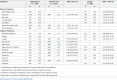
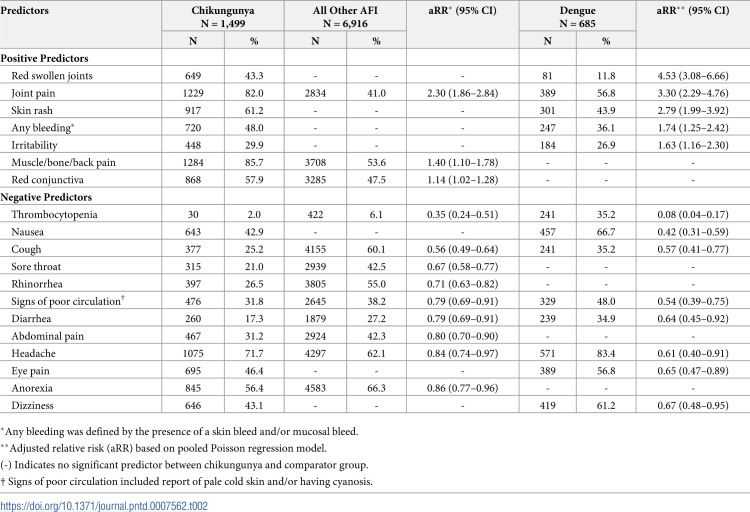
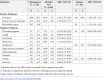
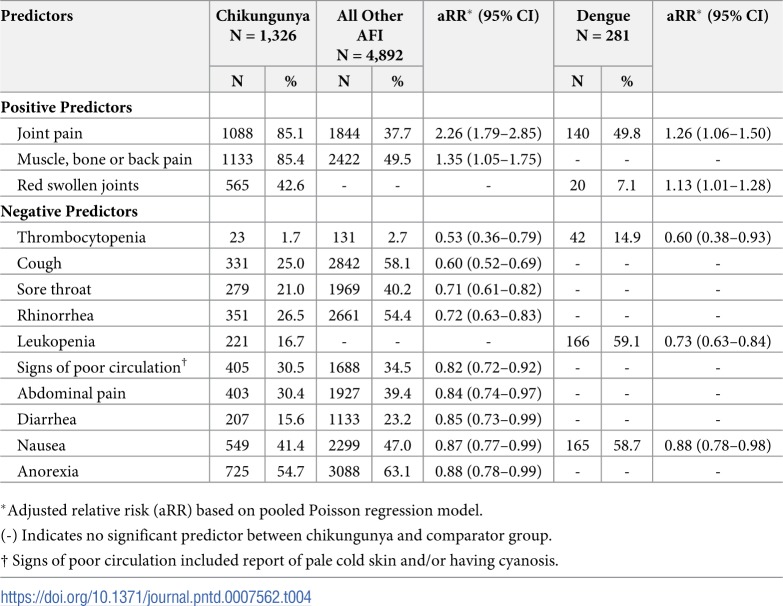
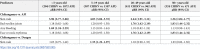
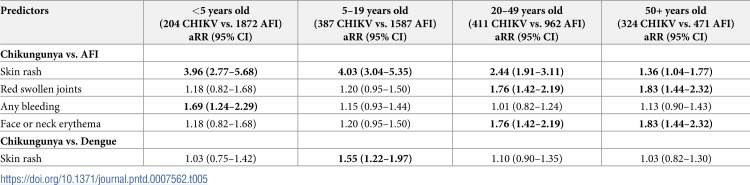
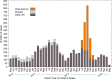
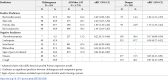
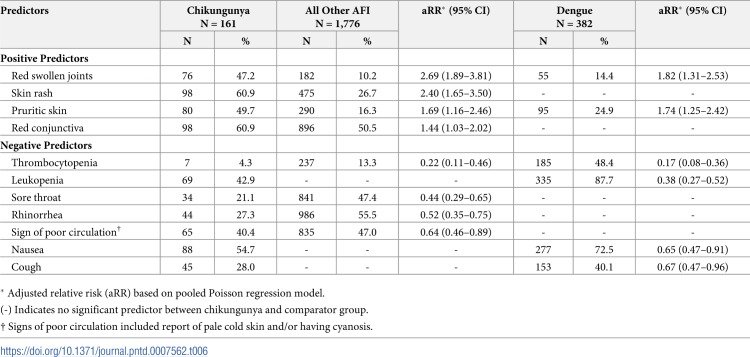
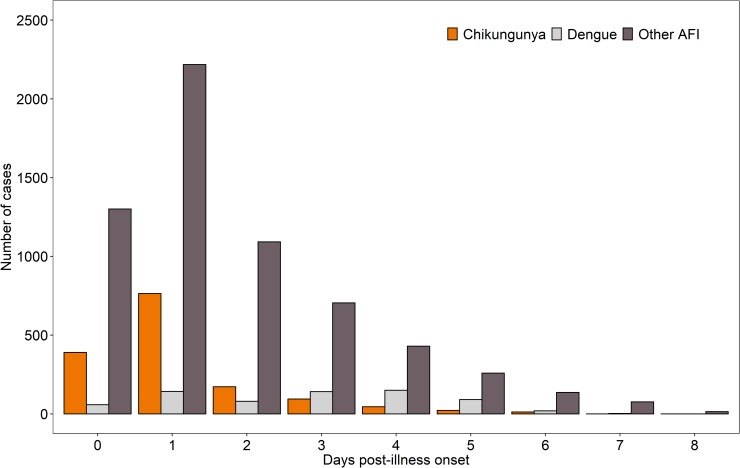
Description:Chikungunya, a mosquito-borne viral, acute febrile illness (AFI) is associated with polyarthralgia and polyarthritis. Differentiation from other AFI is difficult due to the non-specific presentation and limited availability of diagnostics. This 3-year study identified independent clinical predictors by day post-illness onset (DPO) at presentation and age-group that distinguish chikungunya cases from two groups: other AFI and dengue. Specimens collected from participants with fever ≤7 days were tested for chikungunya, dengue viruses 1-4, and 20 other pathogens. Of 8,996 participants, 18.2% had chikungunya, and 10.8% had dengue. Chikungunya cases were more likely than other groups to be older, report a chronic condition, and present <3 DPO. Regardless of timing of presentation, significant positive predictors for chikungunya versus other AFI were: joint pain, muscle, bone or back pain, skin rash, and red conjunctiva; with dengue as the comparator, red swollen joints (arthritis), joint pain, skin rash, any bleeding, and irritability were predictors. Chikungunya cases were less likely than AFI and dengue to present with thrombocytopenia, signs of poor circulation, diarrhea, headache, and cough. Among participants presenting <3 DPO, predictors for chikungunya versus other AFI included: joint pain, skin rash, and muscle, bone or back pain, and absence of thrombocytopenia, poor circulation and respiratory or gastrointestinal symptoms; when the comparator was dengue, joint pain and arthritis, and absence of thrombocytopenia, leukopenia, and nausea were early predictors. Among all groups presenting 3-5 DPO, pruritic skin became a predictor for chikungunya, joint, muscle, bone or back pain were no longer predictive, while arthritis became predictive in all age-groups. Absence of thrombocytopenia was a significant predictor regardless of DPO or comparison group. This study identified robust clinical indicators such as joint pain, skin rash and absence of thrombocytopenia that can allow early identification of and accurate differentiation between patients with chikungunya and other common causes of AFI.
-
Subjects:
-
Source:PLoS Negl Trop Dis. 13(7)
-
Document Type:
-
Place as Subject:
-
Volume:13
-
Issue:7
-
Collection(s):
-
Main Document Checksum:urn:sha-512:38357f3f04266c145783b6d0584269de75e382e6e65159035e60c012ebbfcef3a201366e129f471f14c055b07ae4b0e86b2bb2f0e16ce53099954982af8b3f38
-
Download URL:
-
File Type:
 [PDF
- 993.70 KB
]
[PDF
- 993.70 KB
]
Supporting Files


File Language:
English
ON THIS PAGE






CDC STACKS serves as an archival repository of CDC-published products including
scientific findings,
journal articles, guidelines, recommendations, or other public health information authored or
co-authored by CDC or funded partners.
As a repository, CDC STACKS retains documents in their original published format to ensure public access to scientific information.
As a repository, CDC STACKS retains documents in their original published format to ensure public access to scientific information.
You May Also Like
COLLECTION
CDC Public Access